
.jpg?width=26&height=26&name=image%20(27).jpg)

Choosing the right leisure battery for your motorhome is one of the most crucial decisions you will...
.png?width=26&height=26&name=facebookmobile%20(Custom).png)
.png?width=26&height=26&name=instgrammobile%20(Custom).png)
.png?width=26&height=26&name=twittermobile%20(Custom).png)
.jpg?width=26&height=26&name=image%20(28).jpg)


An overnight flat battery is usually a question of starting charge, hidden current draw or lost battery capacity. The answer comes from testing in the right order, not from buying parts at random.
A motorhome can seem to use almost nothing in the evening, then greet you with a worried control panel, weak pump or reluctant engine battery the following morning. The obvious suspect is the battery, but it is often only the final clue. A battery that was not genuinely full, a small load running all night or a charger that is not reaching the battery can all produce the same frustrating result.
The sensible approach is to establish which battery is affected, prove its condition, measure the real parked current and only then start isolating accessories. That order saves money and usually reveals the answer far faster than pulling fuses at random.
Start by proving which battery is losing charge
Most motorhomes have a starter battery for the base vehicle and a leisure battery for the habitation area. They may be connected through a charger, solar controller, relay or battery to battery charger, but they are not one system. A tracker, alarm or dash camera may affect the starter battery, while the water pump, control panel, lights and much of the living area normally rely on the leisure battery.
Write down the exact symptom before testing. Is the engine slow to crank, are the habitation lights dim, or has only the control panel percentage fallen? Does it happen on electric hook up, when stored at home or only away from mains power? Those details stop a starter battery problem being chased through the leisure system, or the other way round.
State of charge is not the same as battery health
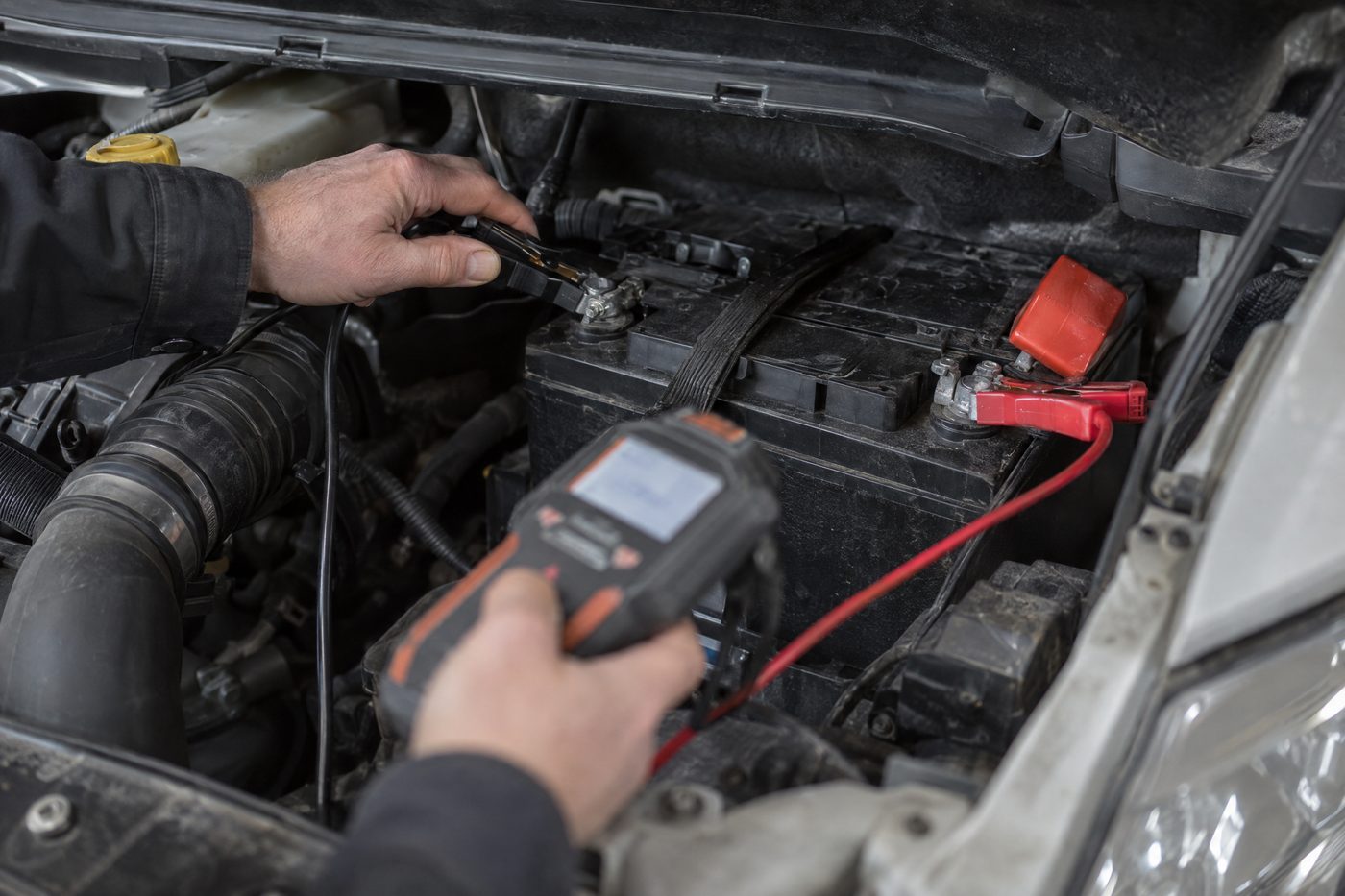
A battery display gives useful clues, but voltage alone is not a verdict. A charger or solar panel can lift the displayed voltage while it is supplying power, and a pump or fridge can pull it down temporarily when it starts. Readings taken while charging or under a decent load tell you what is happening in that moment, not necessarily how much energy the battery can store.
For a conventional lead acid starter battery, VARTA’s battery testing guidance describes an open circuit result of about 12.8V as ideal and says a result below 12.4V should be recharged. Treat that as useful context rather than a universal leisure battery rule. Battery chemistry, temperature, recent charging and load all matter. More importantly, a battery can show a respectable voltage yet have lost much of its usable capacity.
A battery can look charged and still be tired
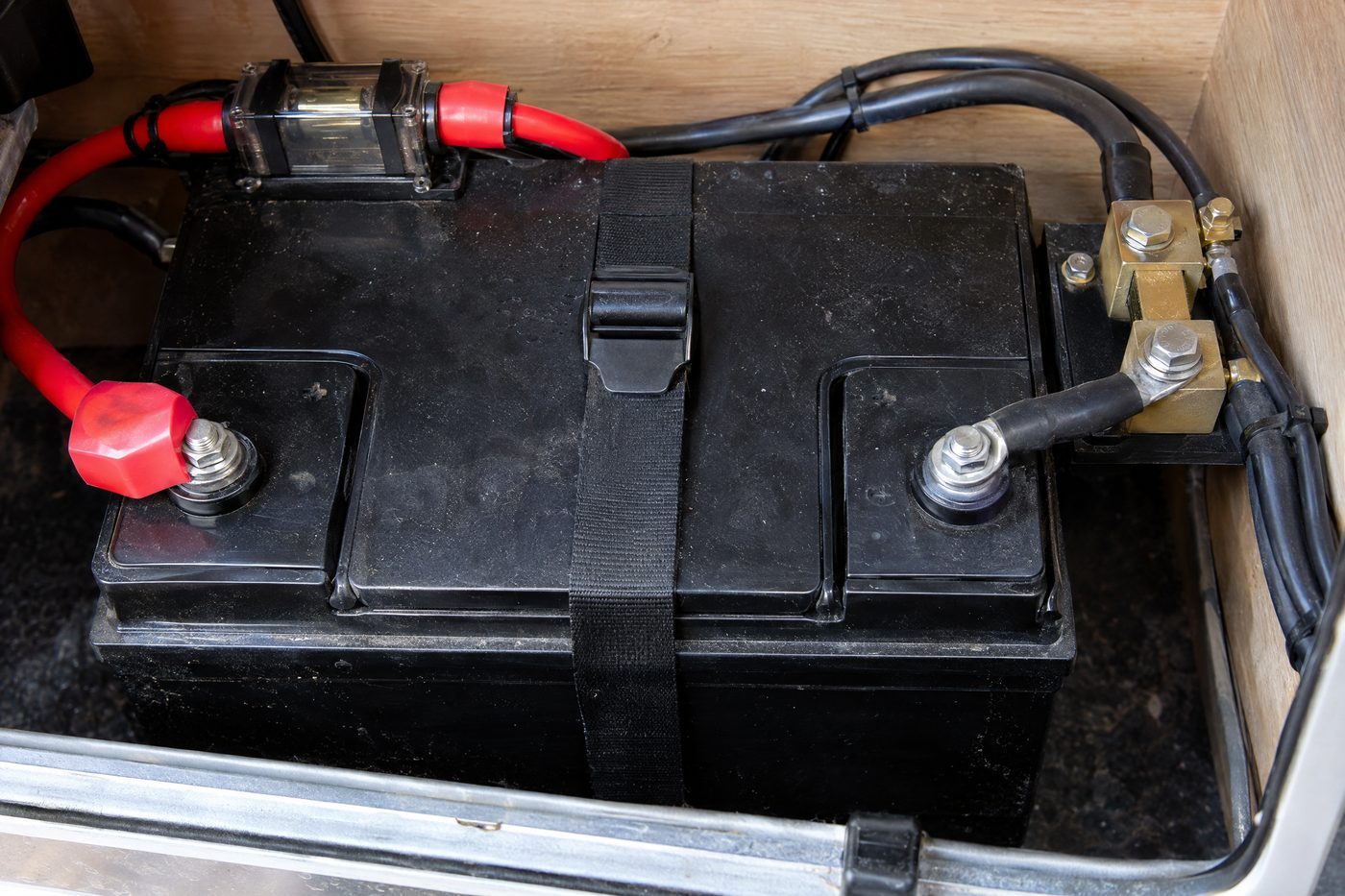
An ageing lead acid battery can reach charging voltage without holding anything close to its original amp hour capacity. Long periods partly charged can contribute to this, as can repeated deep discharge or a storage period without proper charging. Lithium batteries have different behaviour and their voltage remains fairly steady through much of the discharge cycle, so judging them by voltage alone is even less useful.
Charge the battery fully using a charger set for the exact battery chemistry fitted, then let it settle in line with the battery manufacturer’s advice. If it still sags quickly under a modest, known load, arrange a proper capacity or battery health test. A weak battery may indeed need replacing, but replacing it before checking the charging path and real overnight draw is an expensive guess.
Small overnight loads can add up surprisingly quickly
A parasitic draw is simply current used while you assume the motorhome is doing nothing. Some draw is normal. Control panels, alarms, trackers, battery monitors, radio memories and certain safety equipment need a small standby supply. The aim is not to achieve zero current. It is to know what is taking power and decide whether the total is sensible for your battery capacity and the length of time parked.
The arithmetic is simple. A steady 0.1A load uses 1.2Ah in twelve hours. A steady 0.5A load uses 6Ah over the same period. Either figure may be manageable on a healthy battery, but the picture changes when the battery is partly charged, ageing or already supporting a fridge, an inverter or several little accessories. One small load rarely creates a mystery. Several ordinary loads together often do.
Check the loads people forget are on
Start with the items that are easy to leave running. A compressor fridge cycles on and off but can be a meaningful overnight load. An absorption fridge operating on 12V is also a heavy consumer and should be used only as its manufacturer specifies. Check the selected fridge mode before assuming the leisure battery is at fault. An inverter can consume power in standby even when nothing is plugged into it, and WiFi routers, televisions, satellite equipment, USB sockets and aftermarket lighting are all worth checking.
Do not disconnect safety or security equipment casually. Carbon monoxide alarms, gas detectors, alarms and trackers may be essential, and some trackers form part of an insurance condition. Instead, find the maker’s stated current draw, confirm which battery supplies it and speak to the installer if a recently fitted item coincides with the problem. A new accessory is useful evidence, not an automatic conviction.
Measure the real draw rather than chasing a hunch
A correctly installed shunt monitor is one of the most useful tools in a motorhome electrical system. It measures current in and out of the battery and can show amp hours used over time. The installation matters. If an accessory negative is connected on the battery side of the shunt, its consumption can be invisible to the monitor. That can make a control panel look reassuring while the battery is quietly losing energy elsewhere.
State of charge figures also depend on the monitor being set up and synchronised correctly. As the Victron SmartShunt guidance explains, the monitor decides that a battery is full only after configured voltage, tail current and time conditions are met. Check the battery capacity, chemistry and charging settings against the battery manufacturer’s specification before treating a percentage display as fact.
Use a DC clamp meter properly
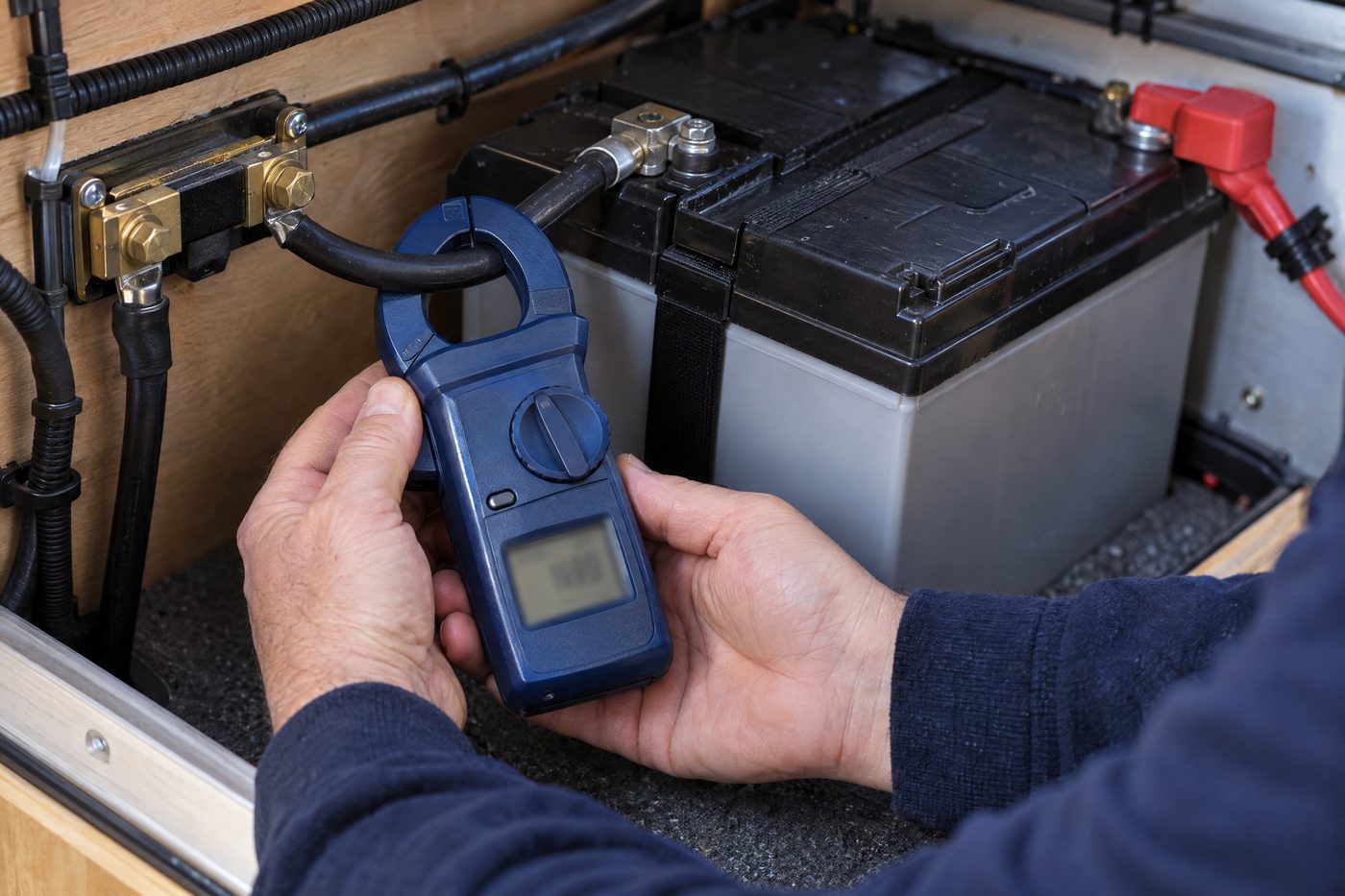
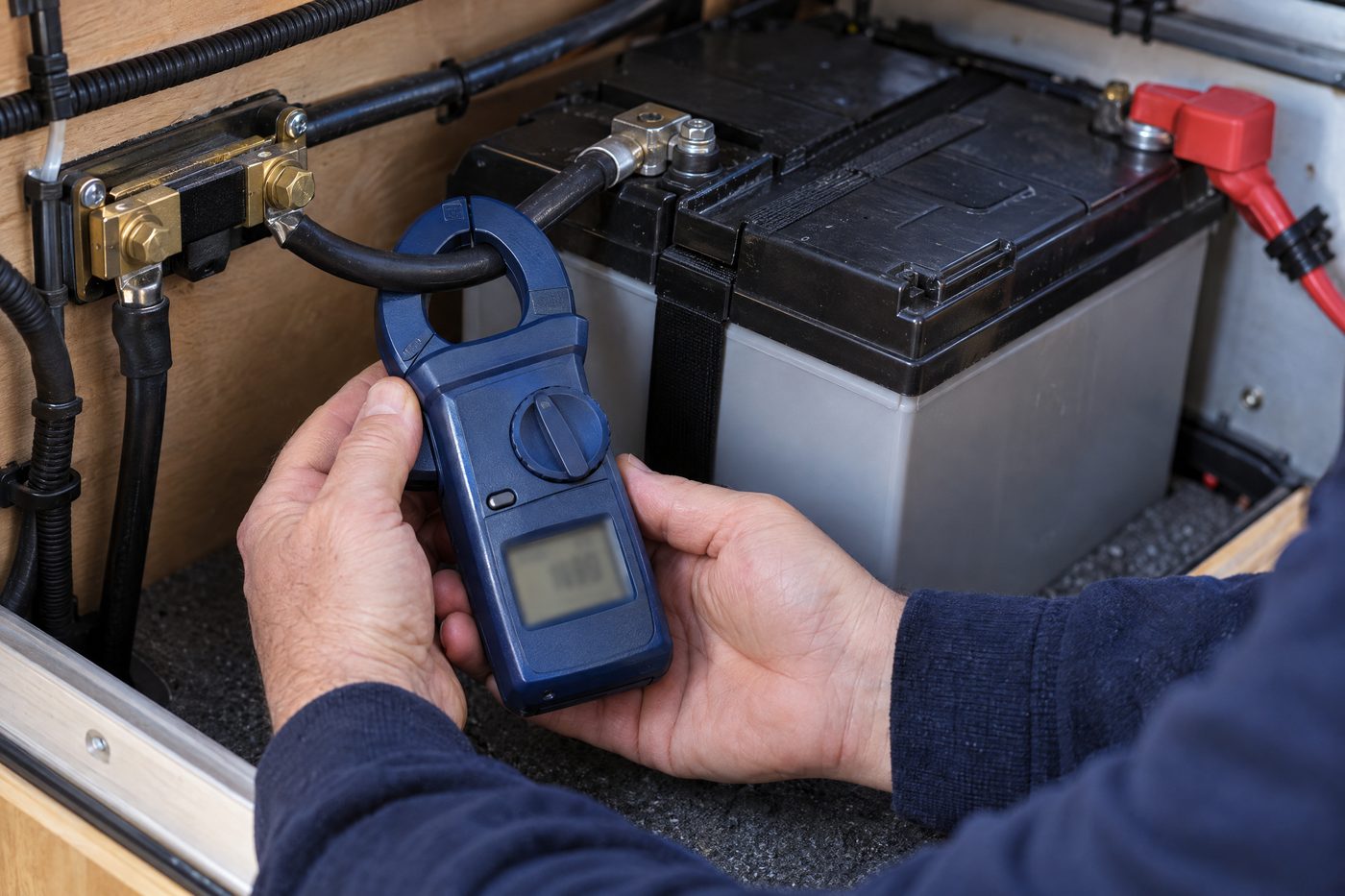
A DC clamp meter can reveal a parked current draw without disconnecting battery cables, provided it is sensitive enough for the small current involved. Clamp it around one conductor only. If both the positive and negative cables sit inside the jaws, their magnetic fields largely cancel and the reading is not useful. Use the correct DC current setting and zero the meter with its jaws shut before measuring, as set out in Fluke’s clamp meter instructions.
An inline multimeter can also measure current, but it has to be connected in series and used correctly. Never place a meter set to measure current directly across a battery. Start on the highest appropriate current range and do not start the engine or switch on a large load while the meter is in the circuit. If that feels outside your comfort zone, a motorhome electrician can do the test quickly and safely.
Run one controlled overnight test
Begin with a fully charged battery and record the readings at the actual battery terminals where possible. Then follow a simple routine:
• Identify the affected battery and note the time.
• Record the battery monitor percentage, voltage and current draw, or the terminal voltage if no monitor is fitted.
• Switch off non essential 12V items, while leaving safety and security equipment operating as intended.
• Leave the motorhome undisturbed overnight.
• Take the same readings in the morning before using the pump, lights or engine.
Repeat the test on another night after safely changing one thing, such as switching off an inverter or unplugging an accessory. One controlled change is far more informative than a scattergun evening of pulling fuses. The amp hours used and the steady current draw will tell you much more than a single morning voltage reading.
Do not assume electric hook up is charging the battery
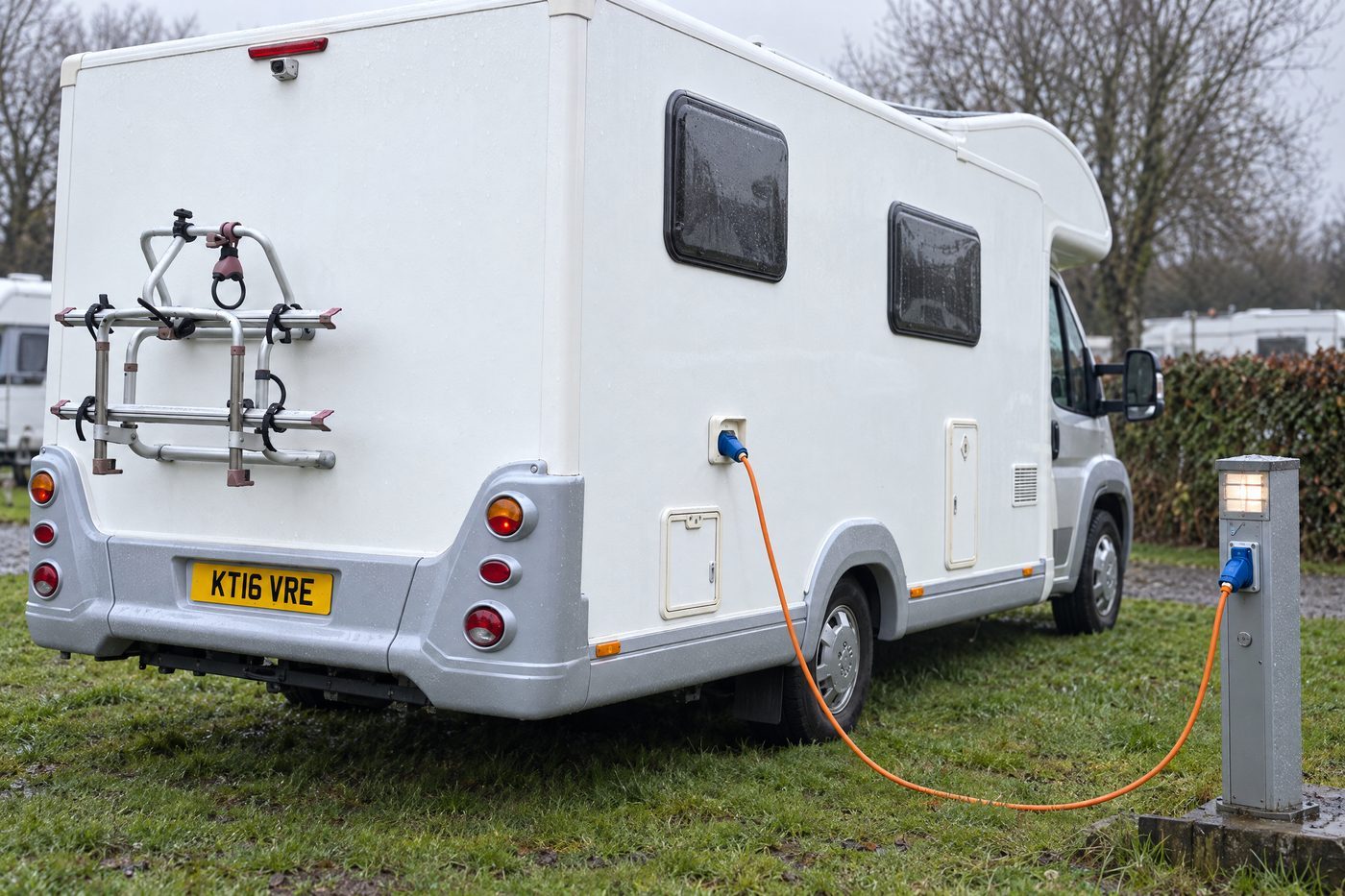
A live hook up supply does not prove that the leisure battery is receiving a proper charge. The onboard charger may be switched off, set for the wrong battery chemistry, affected by a fuse or wiring issue, or no longer working as it should. A control panel that shows mains power may only confirm that the motorhome is connected to the post, not that the charger is delivering the right voltage and current at the battery.
With mains connected, compare the voltage at the battery terminals with the reading after the charger is disconnected and the battery has settled. If the voltage never rises as expected, rises only briefly or falls away unusually fast, the charger, cabling, fuse or battery needs further diagnosis. Do not open the 230V consumer unit or attempt mains repairs yourself. That part belongs with a competent electrician or motorhome service engineer.
Know when the problem needs professional diagnosis
Ask for help sooner if there is heat at a battery terminal, damaged insulation, a blown fuse that returns, a swollen battery case, a sulphur smell, unexplained heat from a charger or repeated low voltage warnings. Lithium systems need particular care because a battery management system can disconnect the battery for protection, which can make the symptom look like an ordinary flat battery when it is not.
The practical rule is simple: prove the battery, measure the draw and check the charging path in that order. Most overnight power losses turn out to be a tired battery, an unexpected load or a charging issue that was hidden by an optimistic control panel. Once every current draw is known, the problem usually stops being mysterious and starts being fixable.
Subscribe to our newsletter and get the latest articles delivered straight to your inbox

Choosing the right leisure battery for your motorhome is one of the most crucial decisions you will...
One of the most common issues that motorhome owners can face is a flat battery - especially if the...
Adding a second leisure battery to your motorhome is one of the most effective upgrades you can...
