
.jpg?width=26&height=26&name=image%20(27).jpg)

Right then, let's be honest. You have bought the motorhome, you have packed the tea bags, and you...
.png?width=26&height=26&name=facebookmobile%20(Custom).png)
.png?width=26&height=26&name=instgrammobile%20(Custom).png)
.png?width=26&height=26&name=twittermobile%20(Custom).png)
.jpg?width=26&height=26&name=image%20(28).jpg)
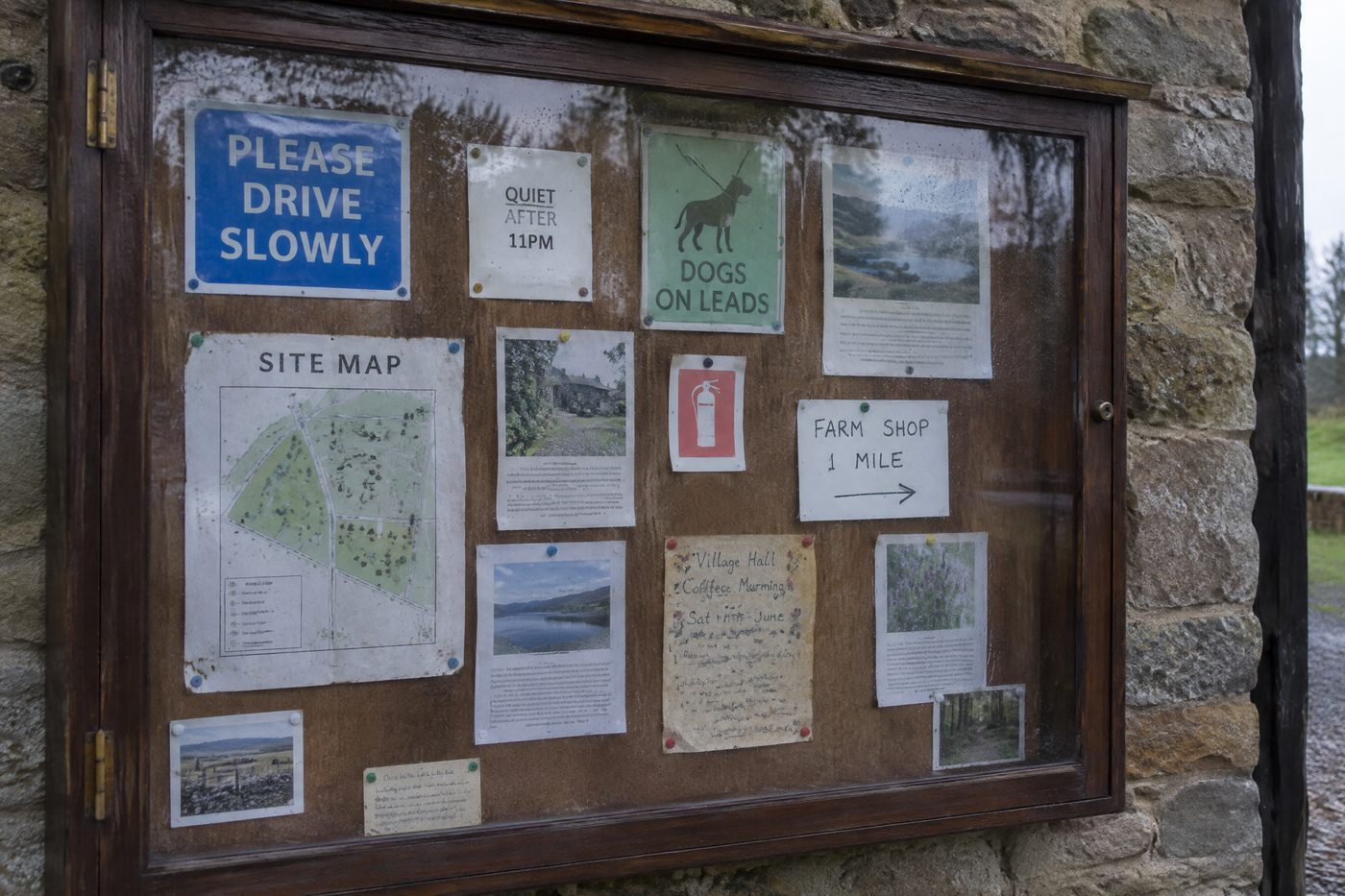
Right then, let us be honest. A campsite noticeboard is not simply a place for information. It is a living document of everything that has ever gone wrong in a field since 1987. At first glance it is all quite cheery: a map of the toilet block, a reminder about checkout, perhaps a laminated poster advertising a quiz night with a suspiciously large photograph of a chicken in a hat. Then you look closer. The tone changes. The capital letters get bigger. Somebody, somewhere, has driven over a flower bed, emptied something unspeakable into a hedge or tried to use the laundry room as a workshop.
Every sign has a backstory. No campsite owner wakes up one morning and decides to make a bespoke plaque saying “Please do not feed the ducks from your awning.” That sign exists because Dave from pitch 14 spent an entire August bank holiday throwing slices of tiger bread at a mallard called Kevin. This is my entirely unofficial ranking of campsite notices, from the ones that make you nod politely to the ones that make you quietly check whether you have ever been photographed near a flowerpot.
Rank 10: please drive at walking pace
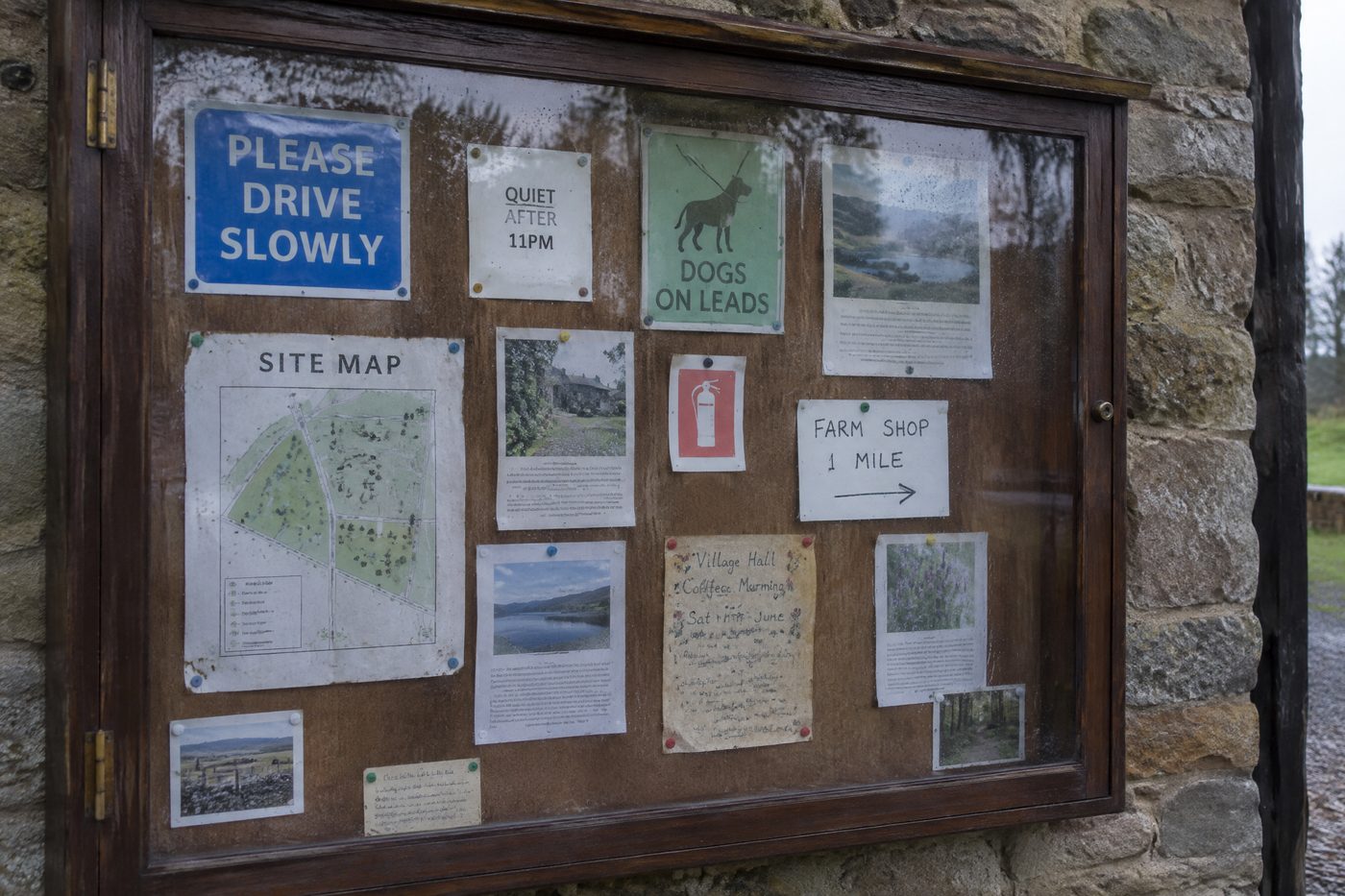
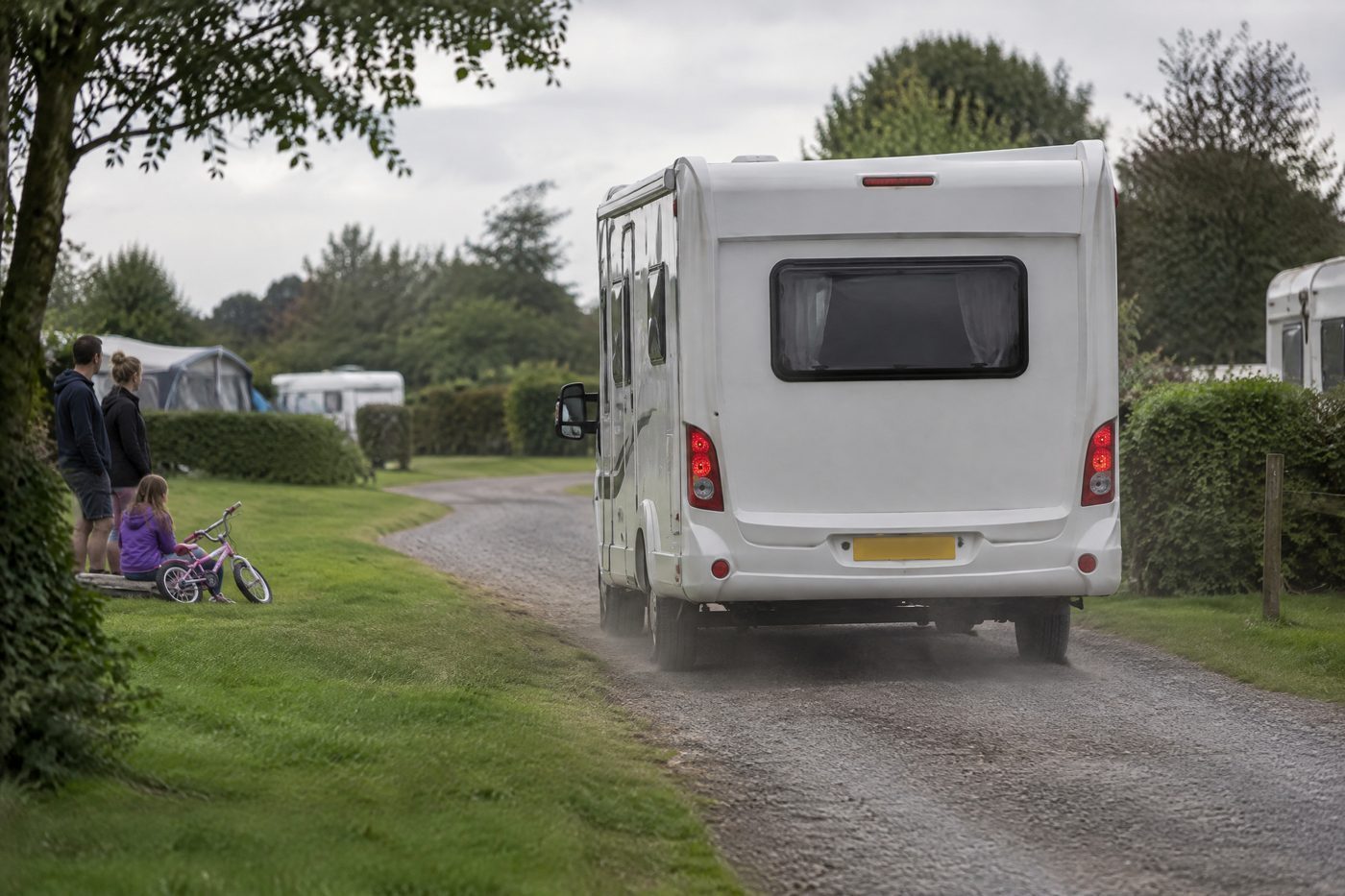
This is the friendly gateway notice. It usually features a little cartoon child chasing a ball, which gives the impression that every campsite is one badly judged accelerator pedal away from becoming an episode of Casualty. Fair enough. Children, dogs, cyclists and people who have somehow forgotten where they parked all exist on campsites. Nobody wants a motorhome arriving at its pitch like it is qualifying for Silverstone.
Still, “walking pace” is one of those phrases that raises questions. Whose walking pace are we talking about? A brisk retiree with a walking pole and somewhere to be, or the man from reception who appears to move at the speed of continental drift? The safest approach is to crawl along so slowly that the couple in the tent beside the lane have time to finish a crossword, make a cup of tea and ask whether you are lost.
Rank 9: dogs must be kept on leads at all times
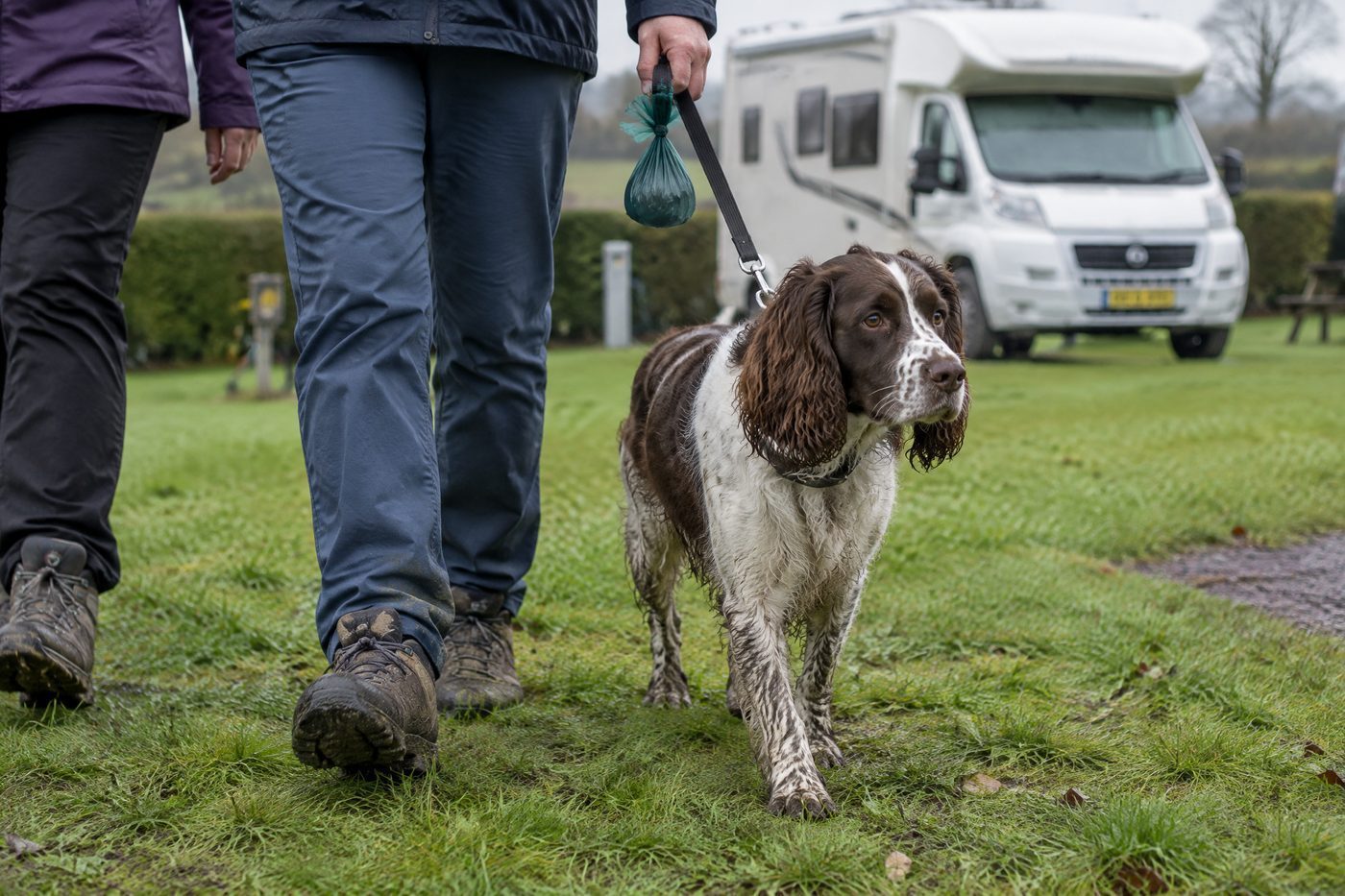
A perfectly reasonable instruction, obviously. Most dogs are lovely. Most dog owners are lovely too. But the notice exists because every site has met a spaniel called Monty who believes personal space is a bourgeois concept. Monty has no interest in your breakfast, your picnic rug or your carefully positioned camping chair. He is simply conducting a detailed investigation into all three with his nose and, if permitted, the full weight of his muddy body.
The wording becomes more serious when it adds “including around the toilet block”. That is when you know the management has seen things. Somewhere in the archive, there is a security camera recording of a Labrador making an unscheduled entrance while a man in flip flops tried to hold the door shut with one hand and preserve his dignity with the other. The rule is not anti dog. It is pro civilisation.
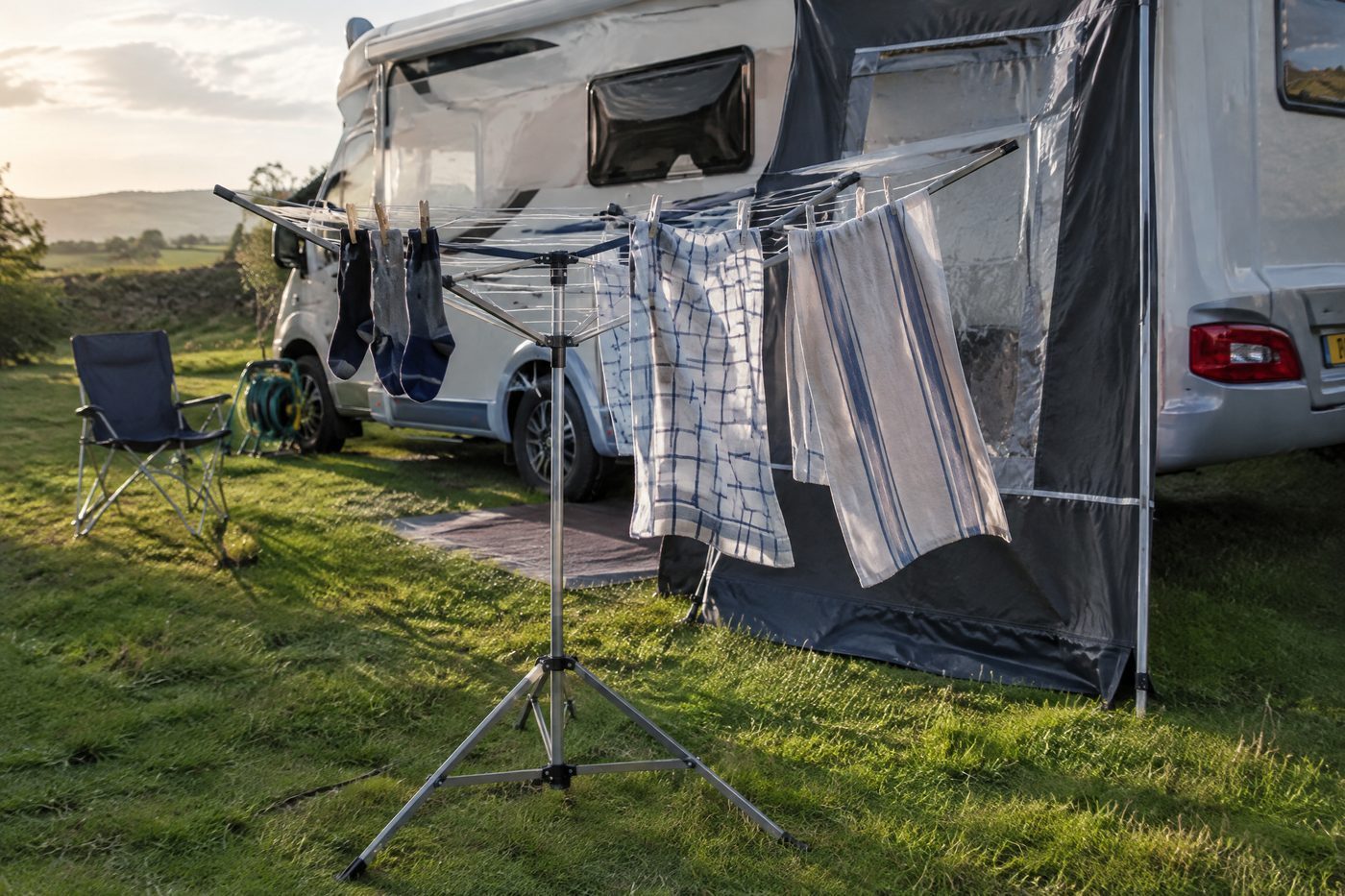
Rank 8: washing lines must not be attached to trees, fences or other people’s motorhomes
The first two are self explanatory. Trees are not laundry fixtures, and a fence does not become yours just because you have brought pegs. The third part is there because somebody looked at a stranger’s gleaming motorhome, saw a useful height for a sheet and thought, “That will do.” You cannot argue with the evidence. People have attached washing lines to things that should never have been involved in washing.
There is a particular breed of campsite drying operation that begins with one pair of socks and escalates into a municipal display. By late afternoon, the pitch resembles a small Mediterranean town after an unexpectedly productive laundry day. Every camping chair, mirror arm and corner of the awning is pressed into service. The notice is not trying to deny anyone fresh pants. It is merely asking that a family of four does not turn pitch 32 into a flapping tribute to synthetic fabrics.
Rank 7: quiet time is from 11pm to 8am
This is where the noticeboard starts to develop a slight tremor in its voice. The polite version asks guests to respect other visitors. The version written after a difficult weekend simply says: “QUIET AFTER 11PM.” The final full stop is doing a great deal of emotional labour. It does not mean no sound whatsoever, of course. Everyone understands that a cupboard will slam, somebody will laugh too loudly and a bottle opener will vanish at the precise moment it is needed.
What it definitely does mean is that 11.17pm is not the moment to discover that your Bluetooth speaker has a bass setting called Party Mode. Nor is it the time for a strategic family meeting outside the motorhome about whether Dad took the wrong turning at Taunton. These discussions must take place in the sacred campsite whisper, which is somehow louder than normal speech but has the added benefit of making every sentence sound more hostile.
Rank 6: children must be supervised at all times
Nobody ever reads this and thinks, “Good point. I was planning to hand my seven year old a compass and ask them to report back on Tuesday.” Yet there it is, often beside a pond, a play area or a gate that opens onto a road. It is sensible, straightforward and difficult to dispute. Children have a remarkable ability to locate precisely the one place on a campsite where they should not be, often before their parents have managed to put the kettle on.
The notice becomes slightly more ominous when it states that children must not play in the shower block. Again, this is not something a campsite has invented for a laugh. At some point, a group of children saw a building full of tiled surfaces, echo effects and intermittent bursts of warm water, and concluded it was a leisure centre. Their parents probably only realised when a small person reappeared wearing one sandal and a look of tremendous achievement.
Rank 5: no ball games near pitches
The innocent football is responsible for more campsite diplomacy than the United Nations. It starts gently enough. A child kicks a foam ball across the grass. Everyone smiles. Then a sibling joins in, the ball becomes a regulation football and suddenly there is a free kick being taken directly at a £90,000 motorhome with a panoramic front window. The parents look concerned. The owners look as though they are calculating the price of a new windscreen in their heads.
This notice is especially important near the motorhome belonging to the man who washes it every morning with a cloth the size of a postage stamp. He has not travelled 146 miles through rain, flies and road spray to see a football bounce off his bike rack. The correct compromise is a wide open space, a soft ball and a strict rule that anyone who shouts “top bins” is immediately sent to buy everyone an ice cream.
Rank 4: please do not walk across occupied pitches
This one feels so obvious that it should not need to exist. A pitch is not a shortcut. It is somebody’s temporary garden, dining room, drying area and place where the dog is currently sleeping upside down on a rug. Yet there is always one person who sees a lovely clear diagonal route between the toilet block and their motorhome and takes it with the calm confidence of a rambling enthusiast crossing open moorland.
The problem is not usually the first person. It is the second, who notices the freshly created track and assumes it is an official path. Then comes a third carrying a washing up bowl, followed by a child on a scooter, followed by Monty the spaniel, who is delighted to be involved. By Sunday morning, your pitch has become the A303 of the campsite. The sign is not fussy. It is simply asking people to walk around the edge like civilised humans rather than cutting through someone else’s dinner.
Rank 3: please clear up after your dog immediately
Now we are into the notices that have stopped pretending to be cheerful. There is no illustration of a smiling golden retriever. There is usually a little black bag symbol, a bright red circle and wording that suggests the person who printed it had already had a very long day. Nobody needs a lecture on this one. You pick it up. You put it in the right bin. You do not leave it dangling from a hedge like a tiny, deeply unpleasant Christmas decoration.
And yet the signs persist, because there is a small but dedicated group of people who believe dog waste becomes less real if they walk away from it quickly. These people are why every campsite owner has a story that begins, “You would not believe what we found by the water tap.” The rest of us would rather not believe it, thank you very much. We are on holiday. We have just put sandals on.
Rank 2: do not remove flowers, pots or garden ornaments from the site
This is an extraordinary instruction because it suggests an actual theft catalogue. Not valuables. Not bicycles. Flowerpots. Somewhere in Britain, there is a motorhome garage containing three terracotta planters, a painted wooden duck and a small solar powered mushroom light, all acquired during what its owner still calls a “lovely little break in Dorset”.
The mystery deepens when the sign specifies that decorations may not be moved “for photographic purposes”. This implies a person has dragged a wheelbarrow full of begonias across a campsite to improve the background of a social media post. Perhaps they wanted the perfect shot of their breakfast tray. Perhaps the flowerpot had better light. Whatever happened, it was serious enough for the campsite to create a sentence that nobody imagined they would ever need to write.
Rank 1: anyone found tampering with the barrier, electrics or CCTV will be asked to leave immediately
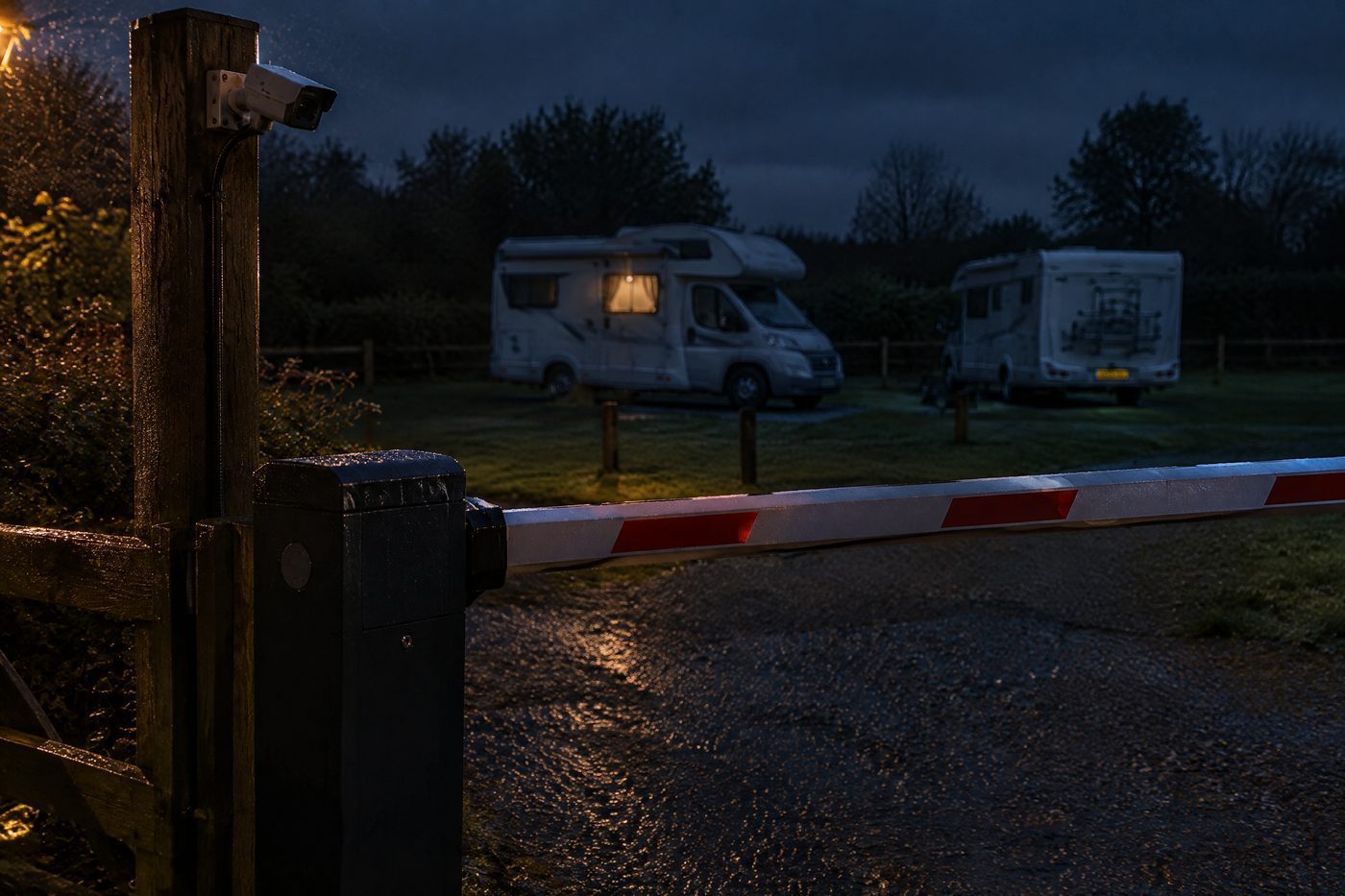
And here it is. The campsite notice that is not a notice at all. It is a warning issued by a small country about to close its borders. Notice how the friendly language has gone. There is no “please”. There is no charming little picture. There is just a statement of fact, usually printed in bold type and mounted at eye level beside a barrier that has clearly survived some things.
You read it and immediately start wondering what happened. Did somebody try to lift the barrier with a tow rope? Has a guest attempted to persuade the electric bollard to provide more power by hitting it with a mallet? Was there a late night scheme involving a ladder, a hoodie and the belief that CCTV cameras are decorative? We will never know, and perhaps that is for the best. The sign does its job beautifully. It makes you feel like the most law abiding motorhomer in Britain just for standing there holding your key fob.
The final verdict
Campsite notices are easy to laugh at, but most of them are little paper monuments to someone else’s spectacularly poor decision. They are the reason your stay is quieter, safer and less likely to involve a dog, a football or a washing line in places where none of them belong. Every “do not” was once a “would anybody really?” until somebody proved, beyond all doubt, that they really would.
So next time you arrive and find a sign asking guests not to rinse barbecue grills in the shower block, do not roll your eyes. Take a moment. Respect the sign. Appreciate the unseen drama that brought it into being. Then check that your dog is on a lead, your washing is nowhere near a fence and that the begonias are still exactly where you found them. It is not paranoia. It is good campsite citizenship.
Subscribe to our newsletter and get the latest articles delivered straight to your inbox

Right then, let's be honest. You have bought the motorhome, you have packed the tea bags, and you...
When it comes to living life on the road, even the simple task of doing the washing up raises a...
Right then, let's be honest. There are few things more frustrating than pulling up to a sun...

