
.jpg?width=26&height=26&name=image%20(27).jpg)


When you’re preparing for your motorhome adventures, it’s easy to focus on the essentials - for...
.png?width=26&height=26&name=facebookmobile%20(Custom).png)
.png?width=26&height=26&name=instgrammobile%20(Custom).png)
.png?width=26&height=26&name=twittermobile%20(Custom).png)
.jpg?width=26&height=26&name=image%20(28).jpg)

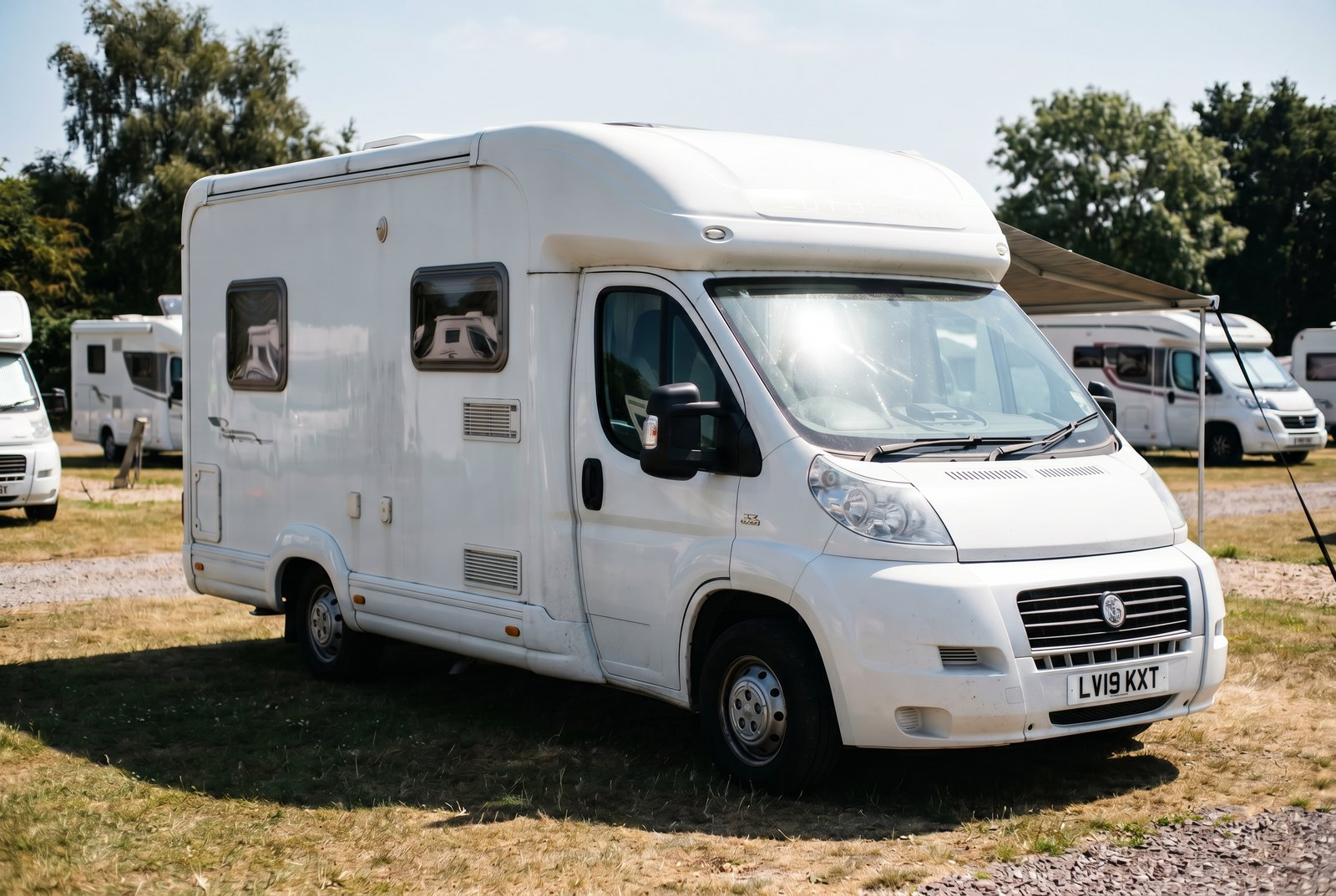
Right then, let's be honest. There are few things more frustrating than pulling up to a sun drenched campsite, setting up the awning, and reaching into the fridge for a cold drink, only to find it slightly cooler than room temperature. If you own a motorhome, you have likely experienced this. It is a common complaint during the summer months, and it often leads owners to believe their fridge is broken. However, more often than not, it is simply a matter of physics.
To understand why this happens, we need to look at how motorhome fridges work. The vast majority of motorhomes are fitted with absorption fridges, commonly known as three way fridges because they can run on 12 volt battery power, 240 volt mains hook up, or LPG gas. Unlike the compressor fridge in your kitchen at home, an absorption fridge has no moving parts. It uses heat to drive a chemical reaction involving ammonia, water, and hydrogen gas to extract heat from the interior cabinet.
The limits of ambient temperature cooling
The fundamental issue is that an absorption fridge does not "make cold" in the absolute sense. Instead, it moves heat from the inside of the fridge to the outside environment. Because of this design, the fridge can only cool to a certain temperature differential below the ambient outside air. Typically, a good quality absorption fridge can achieve a drop of around 25 to 30 degrees Celsius below ambient.
If the outside temperature is a pleasant 20 degrees, the fridge will happily maintain a safe 4 degrees inside. However, if you are travelling through southern Europe, or experiencing an increasingly common British heatwave where the temperature hits 35 degrees, the fridge will struggle. Even operating perfectly, it may only manage to bring the internal temperature down to 10 degrees, which is not cold enough to safely store perishable food. This is not a fault, it's the limit of the technology.
The importance of the chimney effect
For an absorption fridge to work, the heat it extracts from the interior must be expelled efficiently from the rear of the unit. This relies on the "chimney effect" created by the upper and lower ventilation grilles on the outside of your motorhome. Cool air is drawn in through the lower vent, passes over the hot condenser fins at the back of the fridge, and rises out through the upper vent.
When the weather is extremely hot, this airflow can become sluggish. The air behind the fridge can reach temperatures of up to 65 degrees Celsius. If this trapped heat cannot escape quickly enough, the cooling process stalls entirely. This is why proper ventilation is absolutely critical. Some motorhome manufacturers install fridges in ways that restrict this airflow, compounding the problem during the summer months.
Levelling is more critical than you think
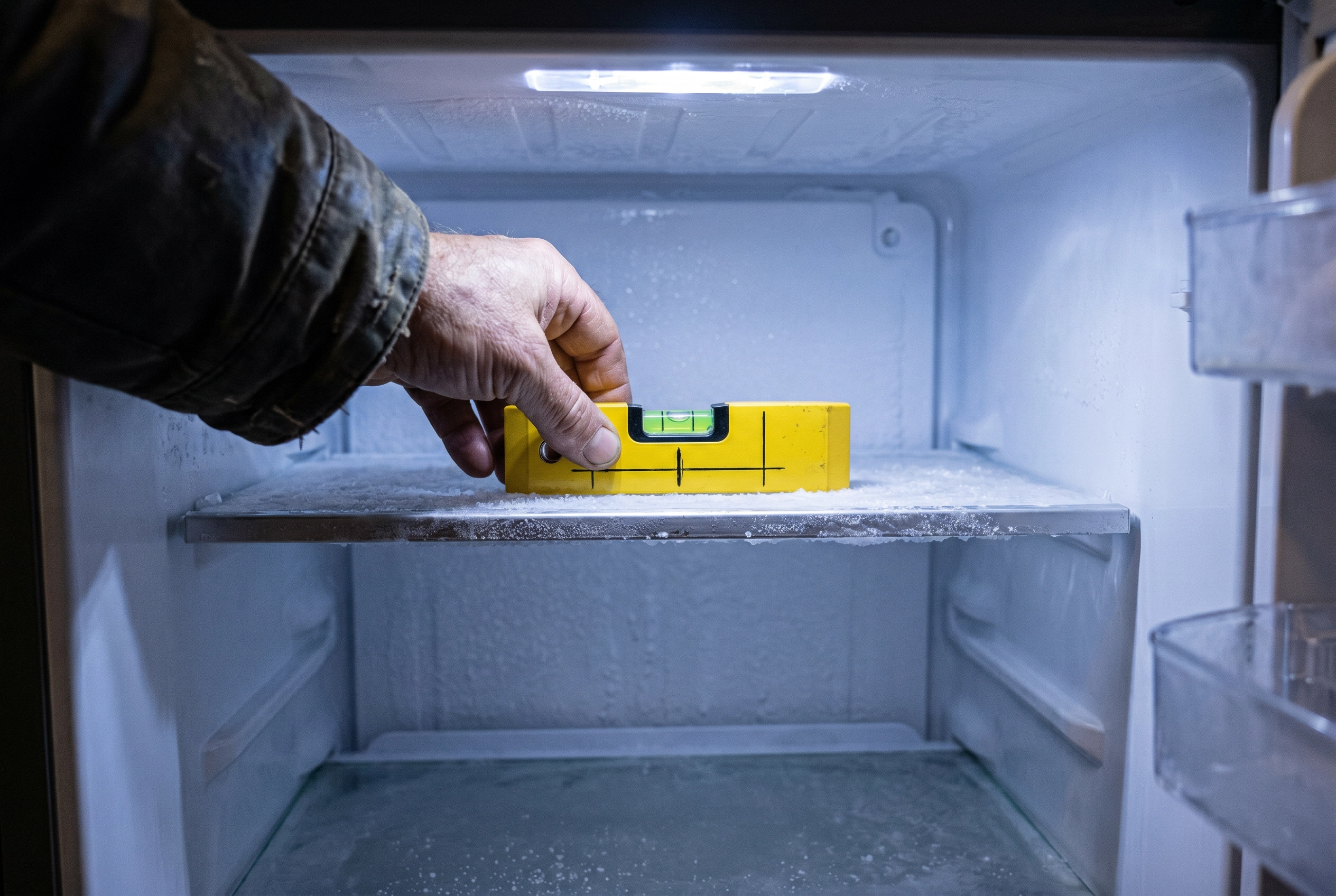
Because absorption fridges rely on gravity and convection to circulate the chemical refrigerants, they must be level to operate correctly. If your motorhome is parked on a slope, the liquids pool in the wrong places, and the cooling cycle stops.
While being slightly off level might not be noticeable in cooler weather, it becomes a critical failure point when the ambient temperature rises above 30 degrees. If the fridge is fighting against both extreme heat and poor fluid circulation, it will simply give up. The most reliable method is to place a small spirit level directly inside the freezer compartment and level the vehicle to that point.
Practical steps to improve cooling performance
So, what can you do when the mercury rises? The first and most effective step is positioning. Whenever possible, park your motorhome so that the side with the fridge vents is facing away from the direct sun. If the sun is beating down on the vents all day, the fridge has to work twice as hard. If you cannot avoid the sun, deploying a shade sail or your awning can help, but you must ensure the fabric is far enough away from the vents so it does not restrict the airflow.
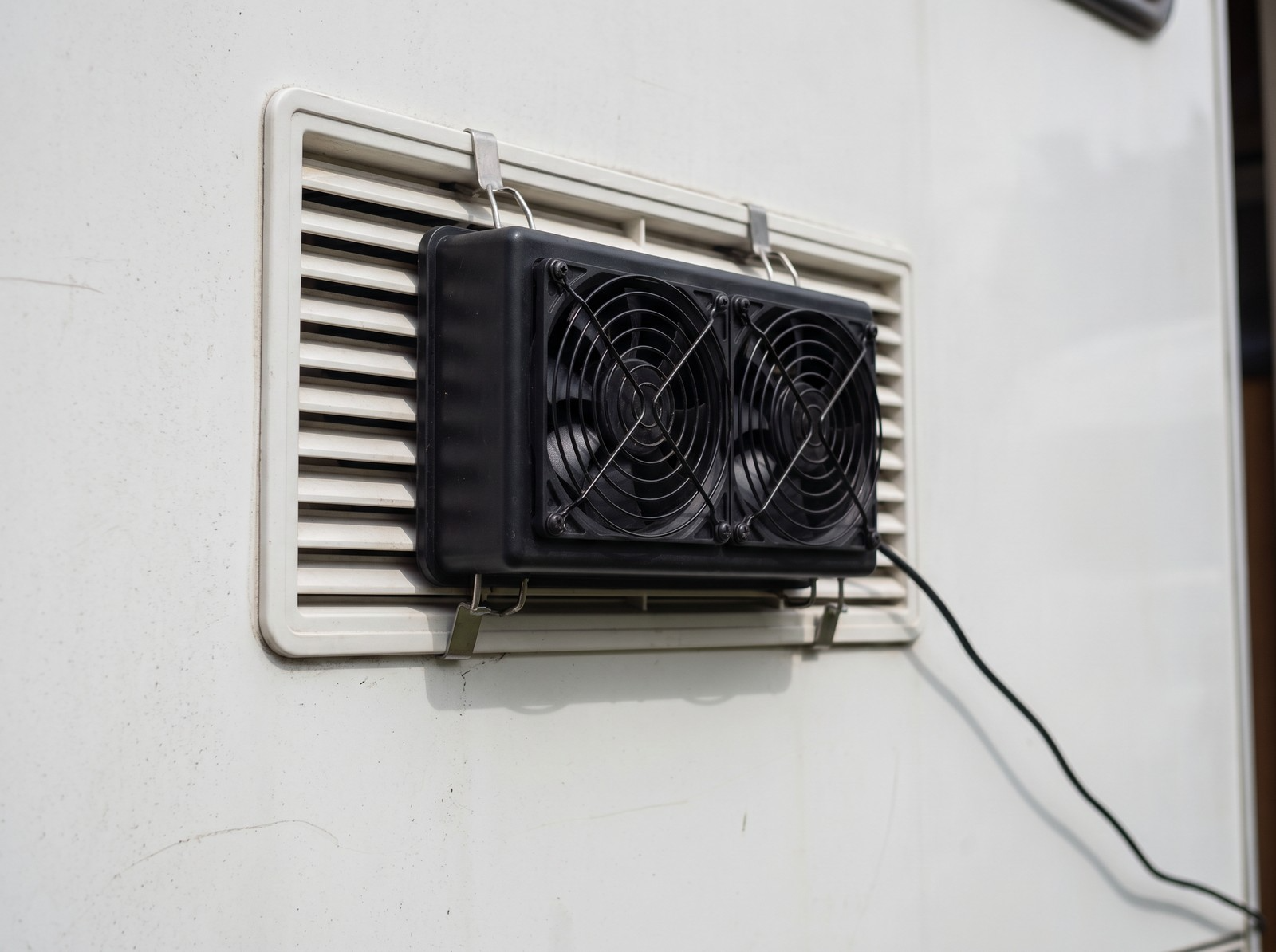
You can also give the chimney effect a helping hand. Installing small, thermostatically controlled vent fans is a popular and effective modification, and you have almost certainly seen photographs of them online. There are two common approaches, and they both aim for the same thing, which is moving more air over the hot cooling unit at the back of the fridge.
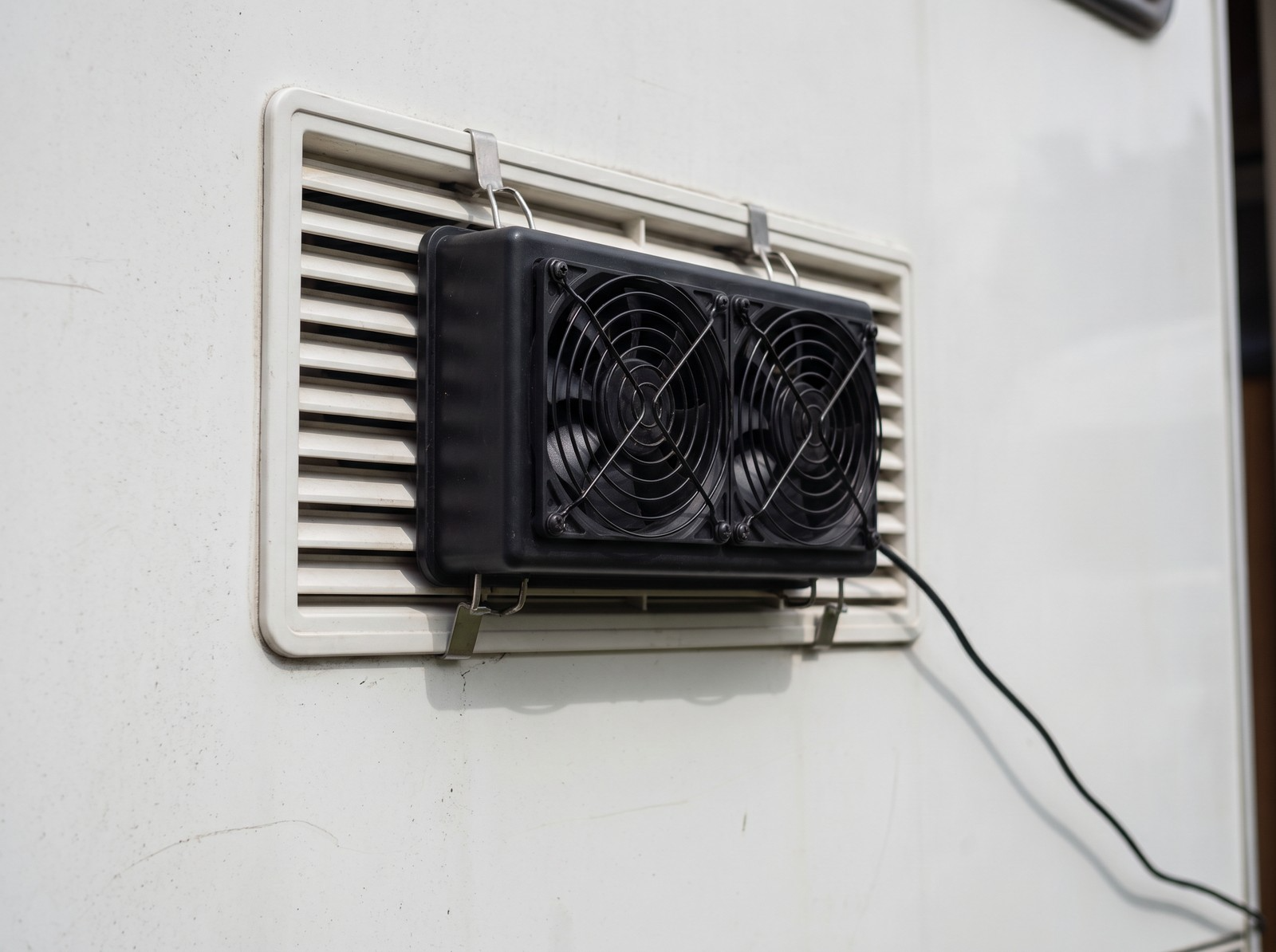
Vent fans and removing the vent cover
The first approach is to fit fans to the lower external vent so they blow cool air upwards over the fins and the boiler. Both Dometic and Thetford generally recommend this method, with the fan placed at the bottom pushing air up through the cavity. The second approach is to fit extractor fans at the top to pull the hot air out. Either way, the goal is to stop heat sitting and stewing behind the fridge. Crucially, choose one method and stick to it, because a fan blowing in at the bottom while another sucks at the top can work against the natural convection rather than with it.
The more drastic step you have seen, where people remove the external vent cover entirely during hot weather, does genuinely help airflow, since the plastic grilles are a restriction by design. However, there is an important warning attached. If you run your fridge on gas, you should not permanently remove or block the vents, because the burner needs that ventilation to operate safely and to exhaust its combustion gases. Taking the cover off for a short period while parked in extreme heat is one thing, but the vents are there for a reason, and on a gas absorption fridge they are not optional. If you find yourself removing vents just to get usable cooling, that is often a sign the original installation has poor airflow and would benefit from being improved properly.
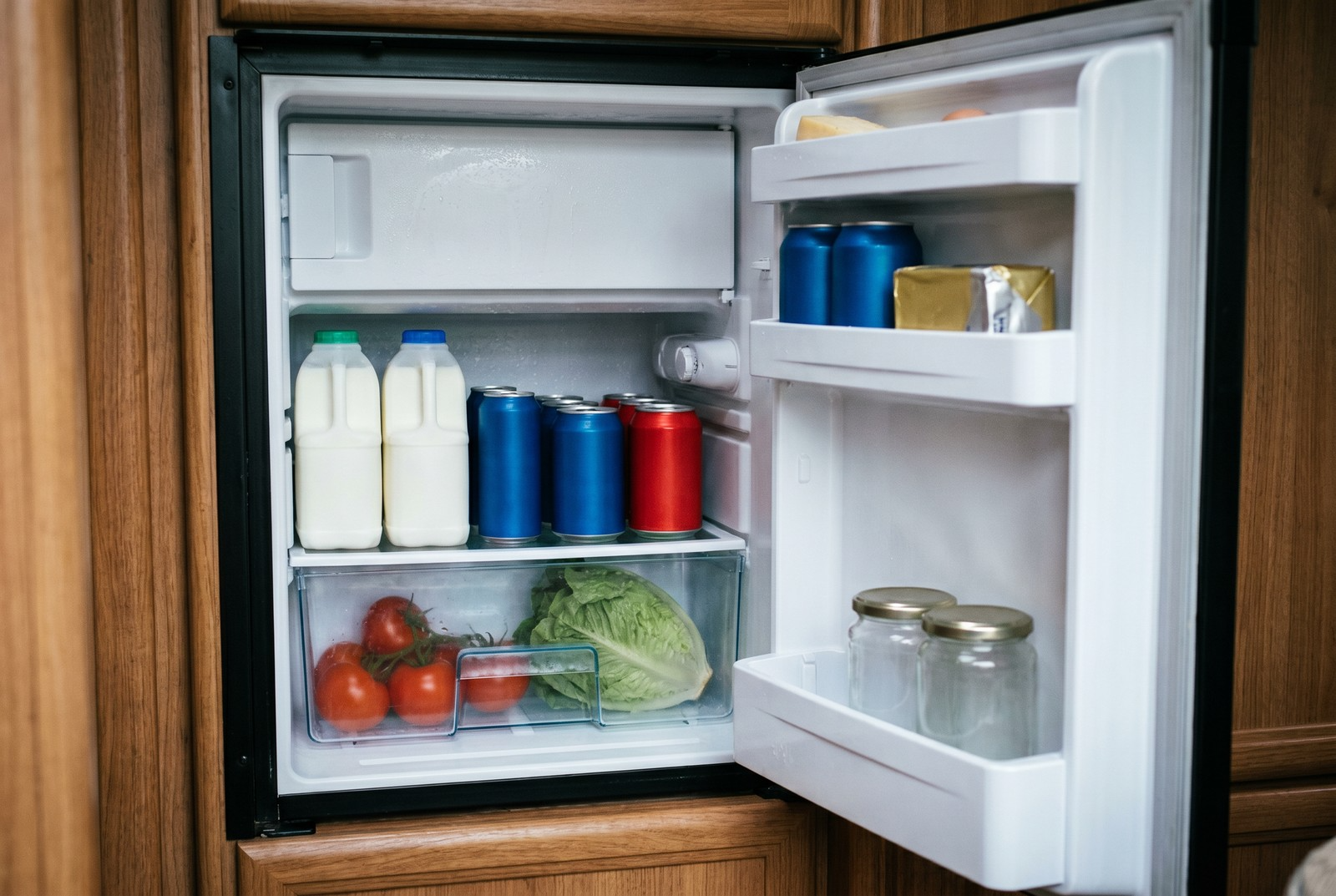
Smart packing and fridge management
How you use the fridge makes a significant difference. Absorption fridges are slow to cool down, often taking four to eight hours. You should always turn the fridge on the night before you travel. Furthermore, never load the fridge with warm items during the heat of the day. Only pack items that are already cold, and if you must add room temperature drinks, do so late at night when the ambient temperature has dropped.
Every time you open the door, cold air falls out and warm air rushes in. In hot weather, it can take hours for the fridge to recover from a single door opening. To mitigate this, consider using a separate coolbox or a small portable compressor fridge for drinks and items you need to access frequently. Leave the main motorhome fridge closed as much as possible to protect your perishable food. Finally, keep an eye on ice build up on the internal cooling fins. Ice acts as an insulator, and if it builds up, the fridge cannot absorb heat effectively. Regular defrosting is essential for peak performance.
Subscribe to our newsletter and get the latest articles delivered straight to your inbox.

When you’re preparing for your motorhome adventures, it’s easy to focus on the essentials - for...

Right then, let's be honest. You've bought the motorhome, you've got the fancy folding chairs, and...

When you’re driving from the UK to the EU, there are quite a few requirements you need to meet, in...
