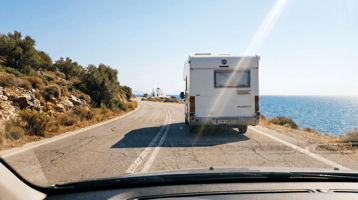
For many of us, reaching 70 is a milestone that brings more freedom, not less. It’s a time for hitting the open road in the motorhome, exploring new corners of the country, and enjoying a well earned retirement. But a new government proposal could introduce a significant new step to keeping your driving licence, and it’s something every driver over 70 needs to be aware of.
Under a new Road Safety Strategy, the government is considering bringing in compulsory eyesight tests for all drivers when they renew their licence at 70, and every three years after that. It’s a big change from the current system, and it’s sparked a lot of discussion. So, what’s actually being proposed, and what could it mean for you and your motorhome adventures?
What are the proposed changes?
The headline change is the introduction of mandatory eyesight tests. At the moment, when you renew your licence at 70, you simply have to declare that you meet the minimum eyesight standards. The new proposal would require you to prove it with a formal test. The government is currently consulting on the details, but the core idea is to move from a system of self-declaration to one of independent verification.
This isn’t just a UK-specific idea; many European countries already have similar rules in place. In Spain, for example, drivers have a medical and vision test every five years from age 65, and every two years from 70. The UK government is looking at a few different options, including how often the tests would be, what kind of test it would be, and who would pay for it.
Why is this being proposed now?
The simple answer is road safety. Government figures from 2024 showed that nearly a quarter of all car drivers killed on UK roads were aged 70 or over. As our population ages and more of us are driving for longer – the number of drivers over 70 has jumped by 60% in the last decade or so – the government is looking for ways to make sure our roads are as safe as possible for everyone.
Campaigners and experts have argued for years that the current self-declaration system has its flaws. Sight can deteriorate gradually, and it’s not always easy to notice the changes yourself. A 2024 roadside survey found that over 10% of drivers aged 81-90 who were stopped and tested failed to meet the minimum standard. The proposed changes aim to catch these issues early and ensure that every driver on the road has the visual acuity needed to drive safely.
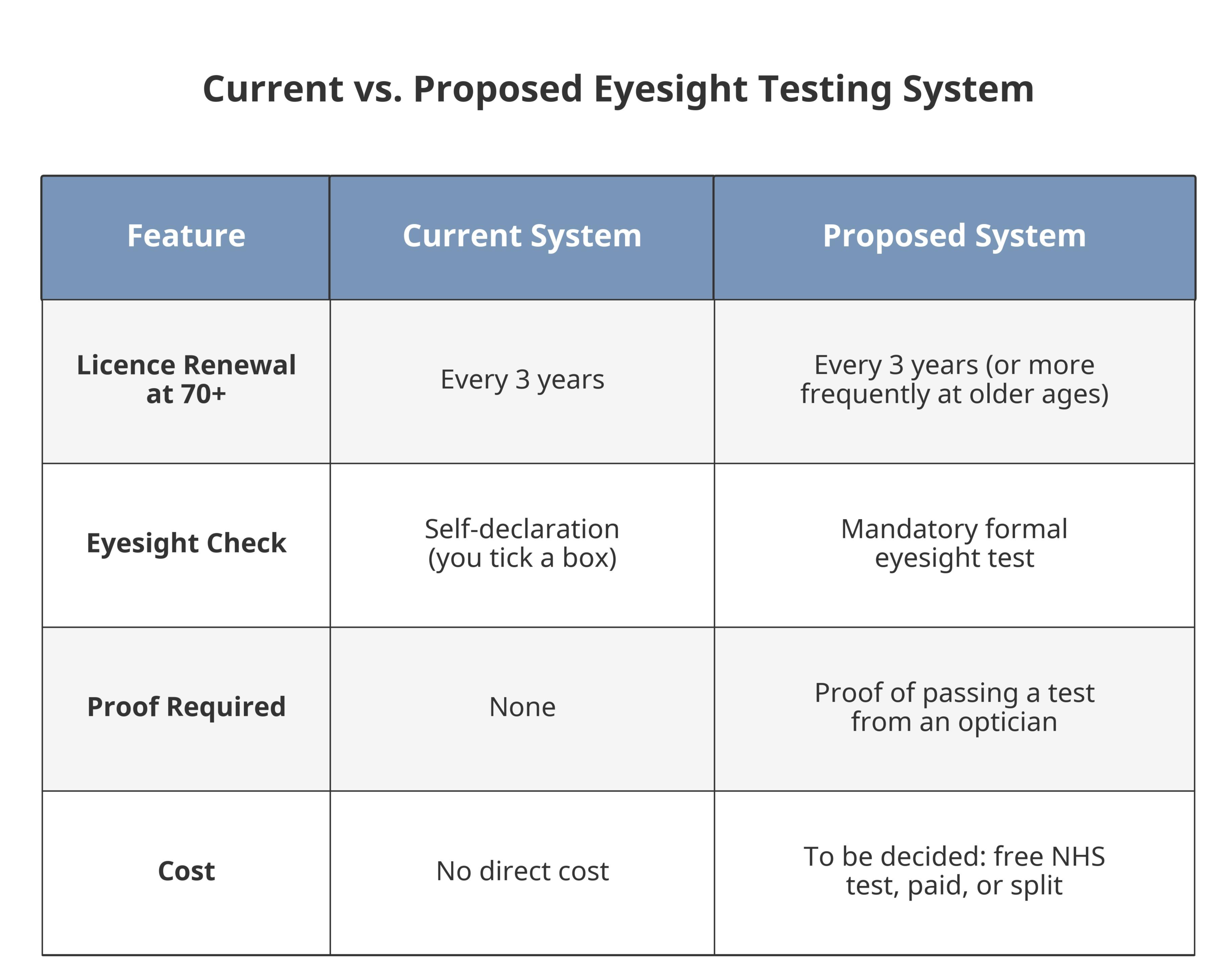
A Look at the Current vs. Proposed System
To make it clearer, here’s a simple breakdown of how things stand now versus what could be coming in:
What does this mean for you?
For most drivers, this change will likely be a straightforward extra step in the licence renewal process. Eye tests are already free on the NHS for everyone over 60, so for many, it will just be a case of providing the results to the DVLA. The consultation is exploring different ways this could work, from using the existing NHS test to developing a new, bespoke driving-focused assessment.
Of course, there are concerns. Some groups have raised the issue of what happens to older people in rural areas who might lose their licence and become socially isolated. The government has said it wants to balance preserving personal freedom with saving lives. The consultation period is open until the end of March 2026, so it’s a chance for everyone to have their say on how these changes should be implemented.
Staying Safe on the Road
Regardless of the outcome of this consultation, it’s a good reminder for all of us to take our eyesight seriously. The AA recommends an eye test every two years for all drivers, regardless of age. It’s not just about reading a number plate from 20 metres; good vision is about spotting hazards, judging distances, and reacting quickly – all essential skills for safely navigating your motorhome.
So, while the rules might be changing, the principle remains the same: safe driving is paramount. Keeping on top of your health, including your eyesight, is the best way to ensure you can continue to enjoy the freedom of the open road for many years to come.

.jpg?width=26&height=26&name=image%20(27).jpg)


.png?width=26&height=26&name=facebookmobile%20(Custom).png)
.png?width=26&height=26&name=instgrammobile%20(Custom).png)
.png?width=26&height=26&name=twittermobile%20(Custom).png)
.jpg?width=26&height=26&name=image%20(28).jpg)