
.jpg?width=26&height=26&name=image%20(27).jpg)


Your motorhome's speed limit depends on its unladen weight, the road and whether you are towing....
.png?width=26&height=26&name=facebookmobile%20(Custom).png)
.png?width=26&height=26&name=instgrammobile%20(Custom).png)
.png?width=26&height=26&name=twittermobile%20(Custom).png)
.jpg?width=26&height=26&name=image%20(28).jpg)


If your dog has already started wagging at the sight of the motorhome keys, I have good news and mildly annoying news. The good news is that holidays in Europe with your dog are still very much possible. The mildly annoying news is that, from 22 April 2026, the paperwork has changed for Great Britain residents taking dogs, cats or ferrets into the EU.1
And yes, I know. Nobody bought a motorhome because they were desperate for more forms. We bought them for freedom, fresh coffee with a view, and the ability to bring half the contents of the house because “we might need it”. Sadly, the EU has not yet introduced a special lane for people called Dave who just want to get to France with a spaniel, two folding chairs and a suspicious amount of cheese.
The big change is the EU pet passport
The main thing to know is this: if you live in England, Scotland or Wales, you should no longer rely on an EU pet passport to take your pet into the EU. GOV.UK says EU pet passports may now only be issued to people whose main home is in the EU, and pet passports issued to Great Britain residents before 22 April 2026 may no longer be valid for entry into the EU.1
That means even if your pet has a lovely little EU passport, complete with stamps, vet scribbles and the general air of a miniature international business traveller, it might not get them through the border. GOV.UK now advises Great Britain residents travelling from England, Wales or Scotland to get an Animal Health Certificate, usually called an AHC, for their dog, cat or ferret before travelling to an EU country.2

Your pet can still go, but they need the right document
An AHC is not new, but it has become much more important for Great Britain residents who had been using EU pet passports. You get it from your vet, and it confirms the important bits such as your pet’s microchip details, rabies vaccination and, where needed, tapeworm treatment.2
There is a slight silver lining. The certificate is still needed for each trip from Great Britain into the EU, so sadly it is not a one and done forever document. However, once you have entered the EU, it can now be used for up to six months for onward travel within the EU and for re entry into Great Britain, as long as the rabies vaccination remains valid.1 GOV.UK also states that it is valid for 10 days for entry into the EU from the date it is issued.2
Do not leave this until the night before the ferry
There are a few timings that matter, and this is where the “I’ll sort it later” approach can bite you on the backside. Your pet must be microchipped before, or at the same time as, their rabies vaccination. If the order is wrong, they may need to be vaccinated again.2
Your pet must also be vaccinated against rabies before travel, and they must be at least 12 weeks old before having that vaccination. After a first rabies vaccination, you normally have to wait at least 21 full days before travelling. If your pet is having a booster and there has been no break in vaccine cover, you do not need to wait again.2 In short, check the dates now, not while sitting in a queue at Dover trying to look calm.
Dogs may need tapeworm treatment too
If you are travelling with a dog, you also need to check whether tapeworm treatment is required for your destination. GOV.UK tells owners to check this before travelling, and the European Commission lists Finland, Ireland, Malta, Northern Ireland and Norway among the places where dogs need treatment for Echinococcus multilocularis before entry.2
The European Commission says this treatment must be given by a vet not more than 120 hours and not less than 24 hours before scheduled entry.3 That is a fairly tight window, so this is not a casual “we’ll pop in somewhere if we pass a vet” job. It is the kind of thing you plan around, ideally with a notebook, a cup of tea and someone in the household who enjoys being bossy.
There is also a new five pet limit per vehicle
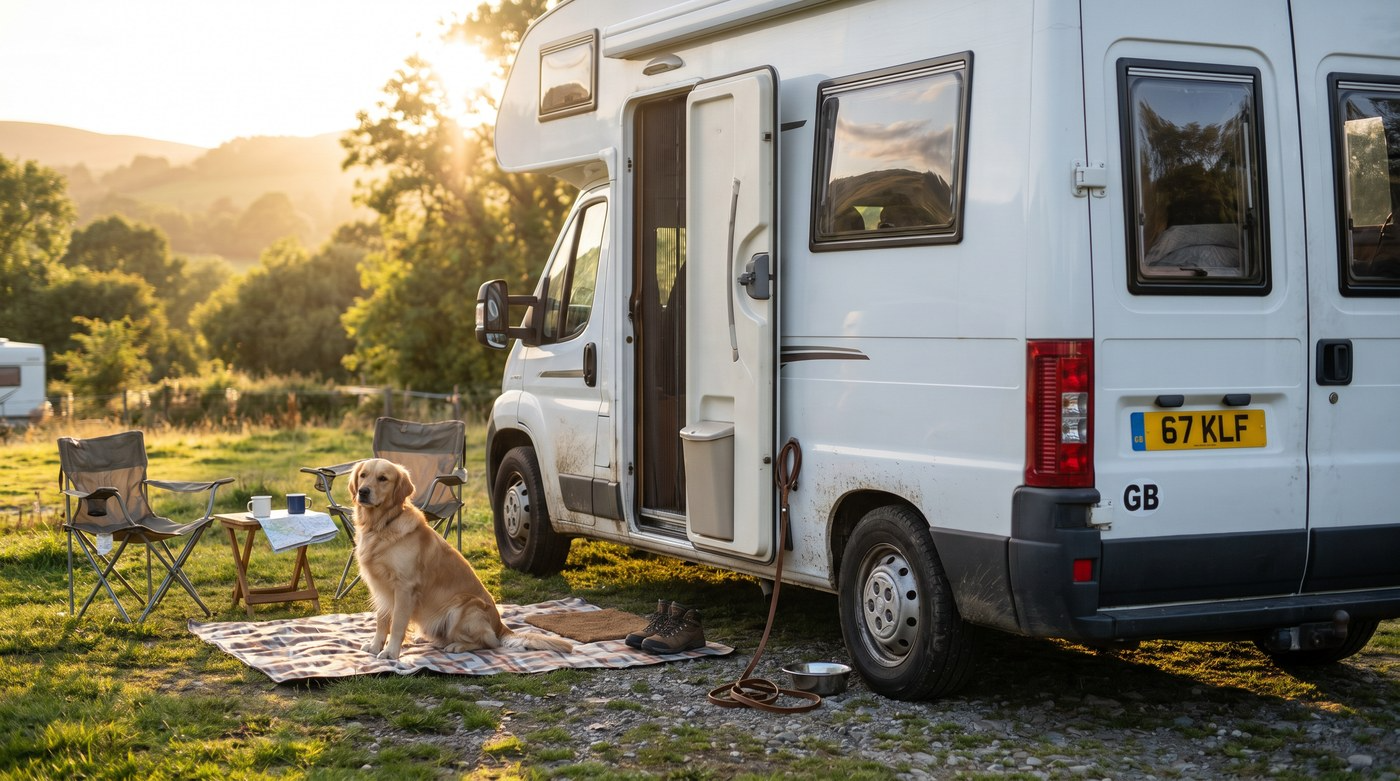
Another important change is the five pet limit. GOV.UK says non commercial travel into the EU is now limited to a maximum of five pets per private vehicle, rather than five per person.1 For most motorhome owners, this will not be an issue unless your idea of a relaxing European tour involves a small furry delegation.
Foot passengers can still travel with up to five pets, and there are exceptions for pets going to competitions, shows, sporting events or training, provided the right conditions are met.2 But for private motorhome travel, the simple version is this: five pets in the vehicle, not five pets each. So if you were planning to take nine dogs to Tuscany, you may need a rethink and possibly a larger sofa at home.
If someone else takes your pet, get written permission
The rules also cover situations where the owner is not travelling at exactly the same time as the pet. If someone else travels with your pet, the pet must travel within five days of the owner, and the person accompanying the animal must carry written permission from the owner.1
This matters for families who split travel plans, couples driving out at different times, or anyone who has ever said, “You take the dog and I’ll fly out later.” You may still be able to do it, but the paperwork needs to match the arrangement. The European Commission also says pets must travel with their owner and under the owner’s direct responsibility, unless an authorised person transports them under the permitted conditions.3
What about coming back to Great Britain
According to GOV.UK, there are no major changes to pet travel requirements for re entry into Great Britain.1 Your AHC can be used for re entry for up to six months after you enter the EU, provided the rabies vaccination remains valid.1
That said, this is not a reason to stop paying attention. Rules can vary depending on where you are coming from, and dogs may need tapeworm treatment before returning to Great Britain in some circumstances. The sensible approach is to check the GOV.UK return guidance before you leave and again before you come home, because border officials are not known for accepting “Siobhan said it was probably fine” as a legal argument.
Country rules still matter
One of the most important parts of the official advice is also the least glamorous: individual EU countries may have their own specific requirements.1 That means your paperwork for France may not be the whole story if you are then pootling through Spain, Portugal, Italy or anywhere else that looks nice on the sat nav.
Before you travel, check the rules for the country you are entering first, plus any countries you plan to visit afterwards. You should also arrive through a designated travellers’ point of entry, where you may need to show your pet’s travel document and proof of microchip, rabies vaccination and tapeworm treatment if required.2
The sensible motorhome owner’s checklist
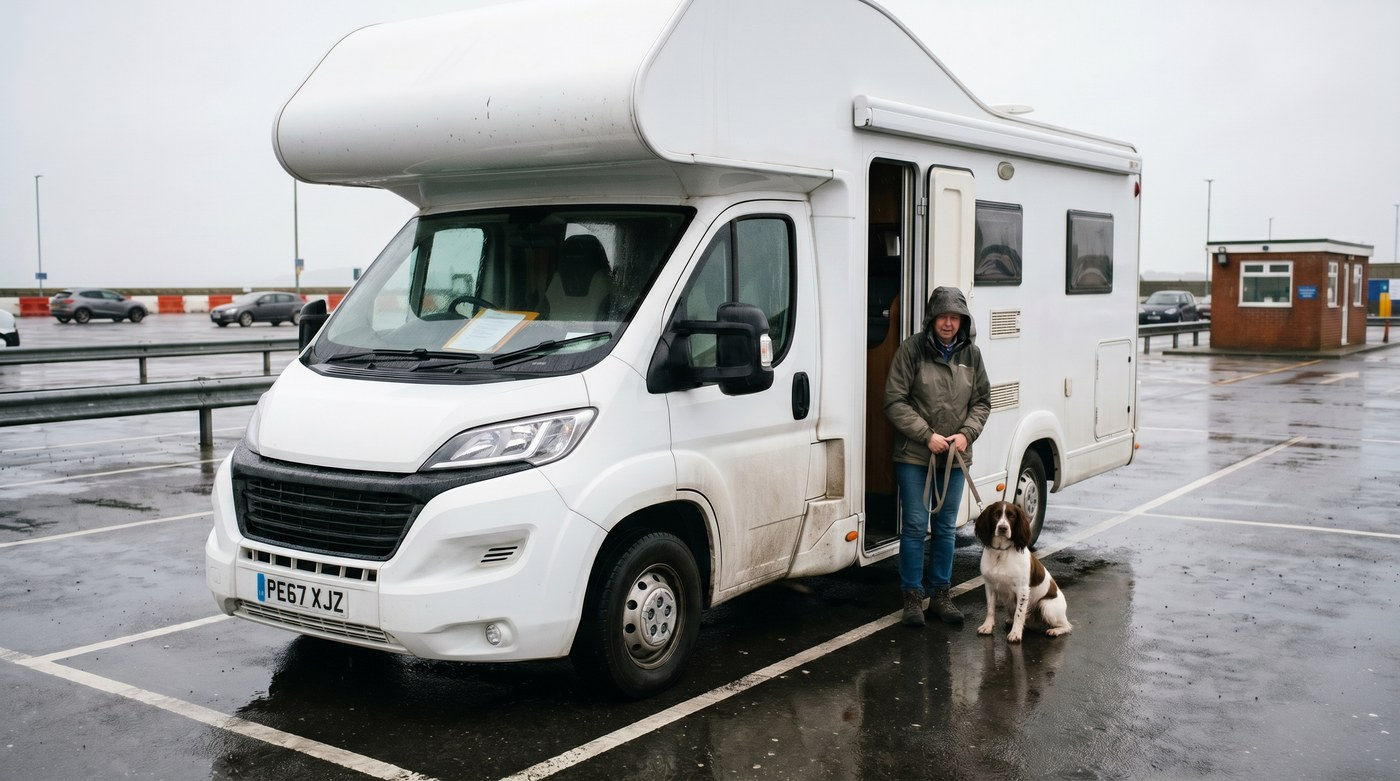
Start with your vet. Ask whether your pet’s rabies vaccination is current, whether the microchip record is correct, and when you should book the Animal Health Certificate appointment. Do not assume every vet can issue one at short notice, especially before school holidays, bank holidays or that magical week when everyone in Britain appears to be heading for a ferry.
Then check your route. Work out your first EU country of entry, your onward destinations, whether your dog needs tapeworm treatment, and where the nearest suitable vet is if you need treatment before returning home. This is not the fun bit of travel planning, I admit. It is nowhere near as exciting as choosing campsites with sea views. But it is much better than discovering at the border that your dog has better paperwork for a grooming appointment than for Europe.
My honest take
This is not the end of pet friendly motorhome travel in Europe. It is a paperwork change, not a locked gate. Your dog can still sniff French service stations, judge German campsites and look deeply unimpressed by your attempts to speak Spanish to a campsite receptionist.
But the days of assuming an old EU pet passport will do the job are over for Great Britain residents. If you live in England, Scotland or Wales and you are heading to the EU with a dog, cat or ferret, the safest plan is to speak to your vet early, get the AHC sorted, check the country rules, and keep every document where you can actually find it. Not under the picnic blanket. Not in the glovebox behind six old receipts. Somewhere sensible. I know, outrageous.
Final word before you pack the treats
Motorhome travel with pets is still one of life’s great joys. There is nothing quite like watching your dog discover a new beach, a new forest path, or a new and apparently irresistible bin beside a French aire.
Just give yourself time. Check the official guidance. Book the vet. Print the paperwork if you like having something real in your hand. Then you can get back to the important business of arguing over who forgot the corkscrew, why the dog has taken the best seat, and whether “just one more night” at that lovely little campsite is a valid travel plan. Spoiler: it usually is.
Subscribe to our newsletter and get the latest articles delivered straight to your inbox.

Your motorhome's speed limit depends on its unladen weight, the road and whether you are towing....

When you’re driving from the UK to the EU, there are quite a few requirements you need to meet, in...

Whatever your political and personal stance on the matter, there’s no doubt that Brexit has brought...
