
.jpg?width=26&height=26&name=image%20(27).jpg)


Picture the scene. You've spent the day wrestling with a new awning, navigating a particularly...
.png?width=26&height=26&name=facebookmobile%20(Custom).png)
.png?width=26&height=26&name=instgrammobile%20(Custom).png)
.png?width=26&height=26&name=twittermobile%20(Custom).png)
.jpg?width=26&height=26&name=image%20(28).jpg)
There are few phrases capable of flattening a motorhome owner’s mood quite like “your vehicle is a total loss”. One moment you are discussing a damaged corner and a replacement locker door, the next you are being introduced to Categories A, B, S and N as though you have accidentally enrolled on a very gloomy alphabet course.
Those letters matter long after the damage has been repaired. They affect whether the motorhome can ever return to the road, which insurers will cover it, what a future claim may pay and how much another buyer will offer when you sell. If you are considering a recorded motorhome because the price looks tempting, the important question is not simply whether it has been repaired. It is whether the repair is safe, documented and reflected honestly in the price.
What an insurance write off actually means
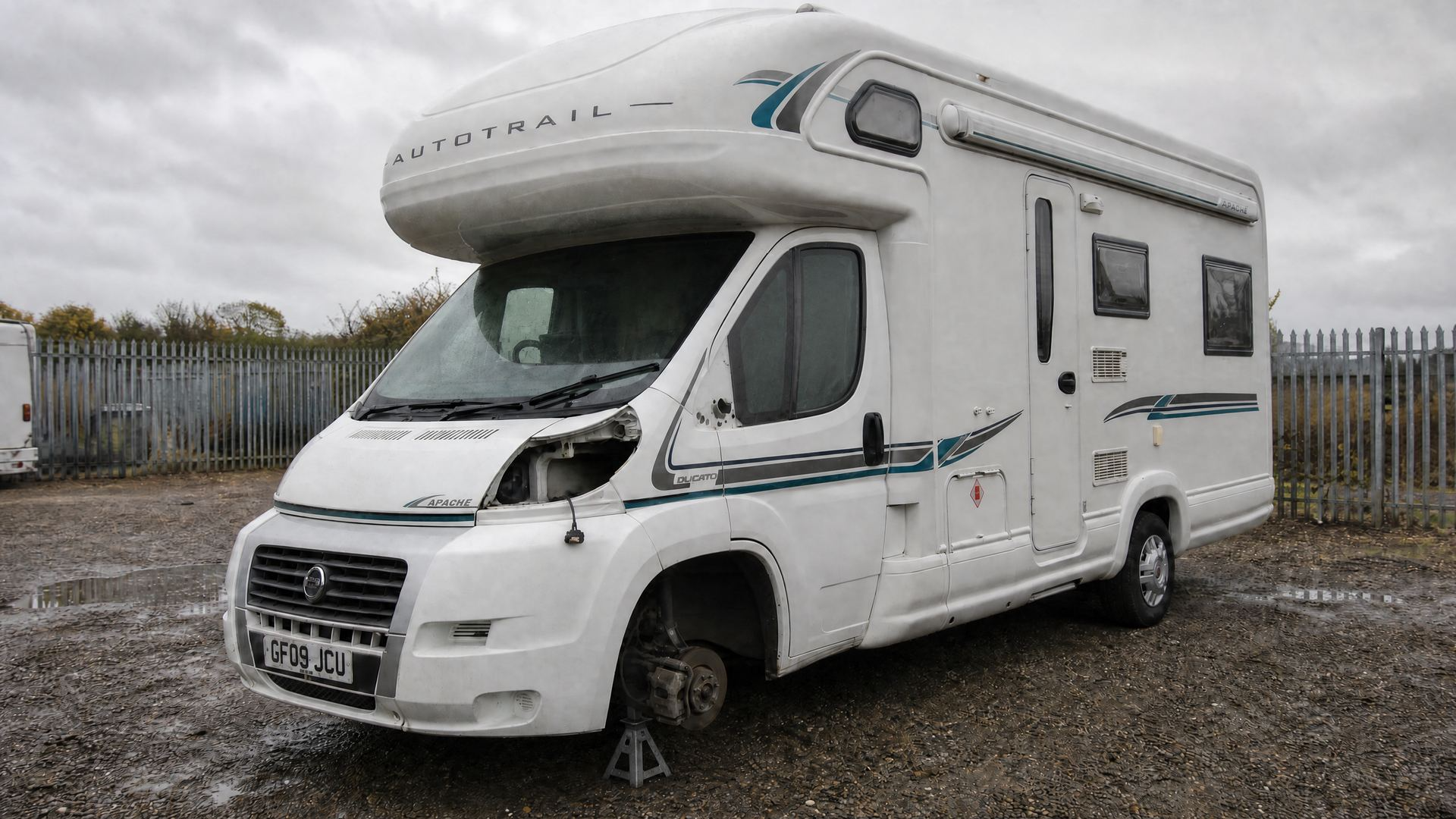
An insurance write off, also called a total loss, does not always mean a vehicle is beyond repair. It means the insurer has decided either that it cannot be repaired safely or that repairing it does not make financial sense. On a motorhome, perfectly repairable damage can become uneconomical surprisingly quickly because body panels, windows, furniture, graphics and model specific parts are expensive and sometimes painfully slow to obtain.
The current Association of British Insurers Salvage Code focuses on whether the vehicle is repairable and whether damage is structural. A qualified assessor assigns one of four categories, A, B, S or N. The record is entered on the Motor Insurance Anti Fraud and Theft Register and passed to vehicle history checking companies, so a good repair does not make the marker disappear.
Category A means the complete vehicle is finished
Category A is the most serious classification. The motorhome is not suitable for repair and must be crushed after it has been made safe and any permitted recyclable materials have been removed. It cannot return to the road and it is not a source of roadgoing second hand parts.
If somebody offers you a complete Category A motorhome that can supposedly be “put back on the road with a bit of work”, stop there. It cannot legally return as a vehicle. No bargain is improved by the possibility of explaining it to the police from the hard shoulder.
Category B means parts only
A Category B motorhome is also beyond safe repair as a complete vehicle. Its structural body, frame or chassis must be destroyed, although suitable reusable parts may be removed and sold. Those parts must be properly assessed, and safety items such as deployed airbags and affected seat belts are not casual salvage bin purchases.
A Category B identity must never be used to rebuild another motorhome. Engines, appliances or undamaged furniture may have legitimate value, but the original vehicle cannot legally return to the road. For an ordinary buyer looking for a usable motorhome, both A and B mean walk away.
Category S means repairable structural damage
Category S stands for structural. The motorhome has suffered damage to part of its structural frame or chassis, but an assessor believes it can be repaired safely. That could involve a chassis leg, welded frame, bulkhead, pillar reinforcement or another element that contributes to the strength and geometry of the vehicle.
This does not automatically mean the motorhome is dangerous forever. A properly measured and professionally repaired Category S vehicle can be roadworthy, but the standard of work matters enormously. With a coachbuilt motorhome, chassis movement can also disturb the habitation body, door apertures, floor, wall joints and roof seals, which is why a quick look at the shiny paint is nowhere near enough.
Category N does not mean nothing serious
Category N means the assessor found no damage to the structural frame or chassis. The vehicle is considered repairable, but safety critical parts may still need replacement. Brakes, steering, electrics, exterior panels, doors and other costly components can all be involved without turning the incident into Category S.
For motorhomes, Category N can be particularly misleading to the unwary. Water damage, damaged habitation electrics, broken windows, crushed furniture, ruined appliances or an expensive rear wall repair can create a huge bill without bending the chassis. Read the N as non structural, not negligible.
What happened to Categories C and D
Categories S and N replaced C and D on 1 October 2017. Older recorded motorhomes can still carry a C or D marker, and that record remains relevant. The old system placed more emphasis on repair cost compared with vehicle value, while the present system concentrates on the type of damage.
It is tempting to translate C directly into S and D directly into N, but that is too simplistic. A historic Category C or D entry does not tell you the structural story as clearly as the current code. If you are looking at an older recorded motorhome, the original damage photographs and repair documents become even more important.
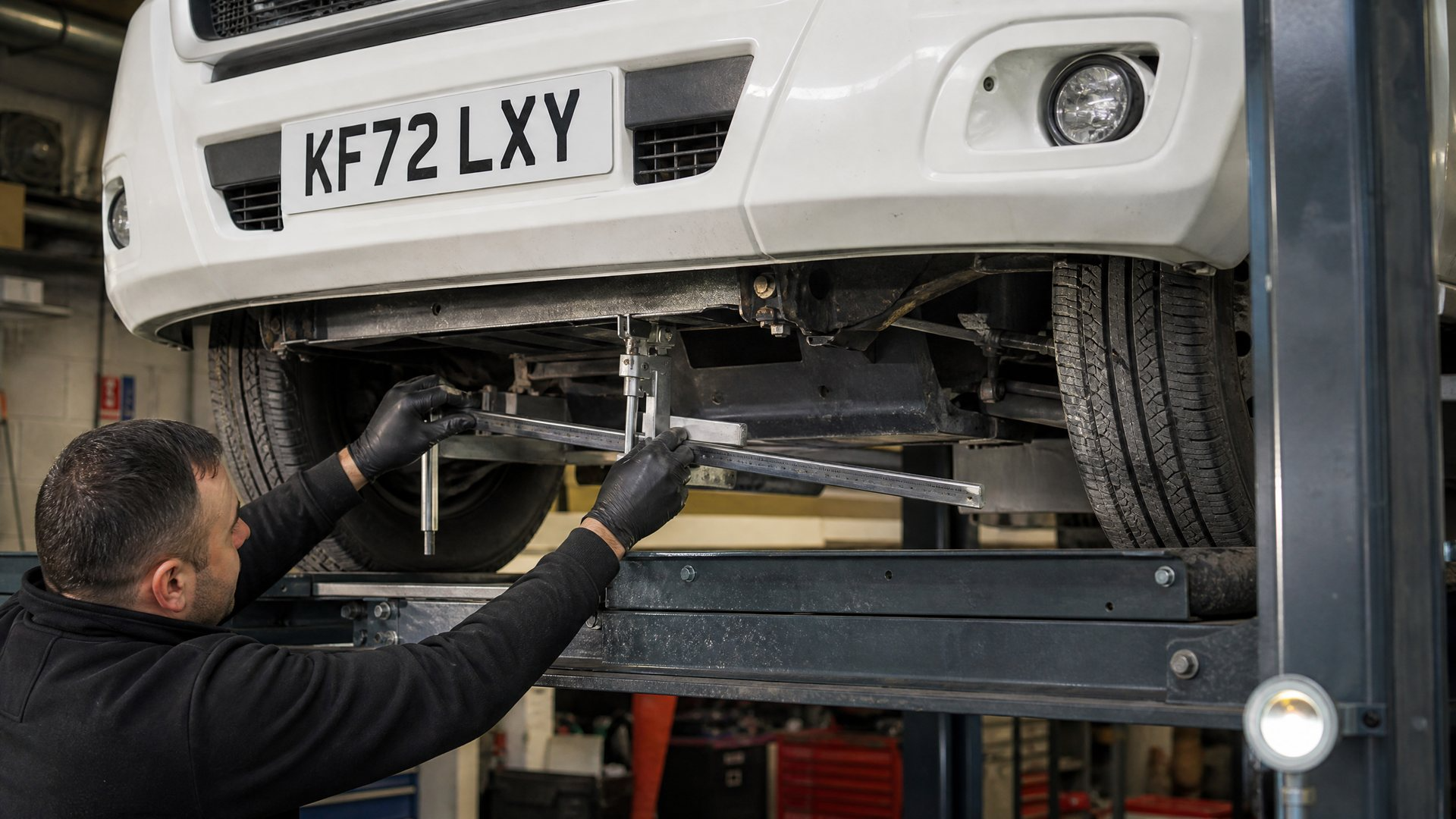
Can a Category S or N motorhome be insured?
Yes, a repaired and roadworthy Category S or N motorhome can be insured. The category does not automatically make it uninsurable, but it can reduce your choice. Some mainstream insurers will not quote, while specialist providers may be perfectly comfortable if the history and repairs are properly documented.
The premium may be higher, although there is no universal surcharge and some owners will see little difference. Insurers consider the vehicle, driver, repair evidence and their own risk appetite. Before buying, disclose the exact category and ask whether the insurer requires invoices, photographs or an independent engineer’s report. A cheap motorhome becomes rather less cheap when the only available policy costs a fortune.
Never hide the category from your insurer
When an insurer asks about previous write offs or damage, answer fully and accurately. The marker is recorded, so hoping nobody notices is not a strategy. Withholding material information can lead to a policy being changed, cancelled or treated as invalid, and it can create a serious dispute when you make a claim.
Ask the insurer to confirm its decision in writing before you pay a deposit on the motorhome. You should also confirm whether cover is based on ordinary market value or an agreed value accepted by the insurer. Simply typing your preferred figure into a quotation form does not guarantee that amount will be paid after a total loss.
A future claim may also be worth less
Motor insurance total loss settlements are normally based on the vehicle’s market value immediately before the new incident. A recorded Category S or N motorhome is already worth less than an equivalent vehicle with no write off history. If it is written off again, the insurer can therefore value it as a previously recorded motorhome rather than as a clean history example.
That reduction is not a separate punishment for having owned a repaired vehicle. It is the result of the lower market value. Keep the purchase invoice, repair file, independent reports and evidence of comparable recorded motorhomes for sale, because they may help if you later need to challenge a valuation.
How much does a write off marker reduce the value?
There is no official percentage and no honest valuer can give one without seeing the vehicle and its paperwork. As a broad buying guide, Category N vehicles are often priced around 10 to 25 per cent below an equivalent unrecorded example. Category S commonly attracts a reduction of roughly 20 to 40 per cent, while difficult vehicles with poor evidence can lose as much as half their clean history value.
Treat those figures as negotiating ranges, not a tariff. A £50,000 motorhome with a strong Category N repair file might sit somewhere around £37,500 to £45,000. A comparable Category S example might be nearer £30,000 to £40,000. Weak repairs, missing photographs, water ingress or an unusual body with scarce parts can push the value lower still.
Why motorhome values are harder to judge
A motorhome is not merely a van with curtains. It combines a base vehicle, chassis, habitation body, furniture, water system, gas installation, mains electricity, low voltage electrics, heating and appliances. An impact can affect several of those systems at once, and the visible dent may be the least interesting part of the story.
Buyers also worry about consequences that appear months later. A slightly distorted wall joint can allow water in. A repaired rear corner can alter locker alignment. A disturbed floor can hide delamination. Because those risks are difficult to price, uncertainty gets converted into a lower offer.
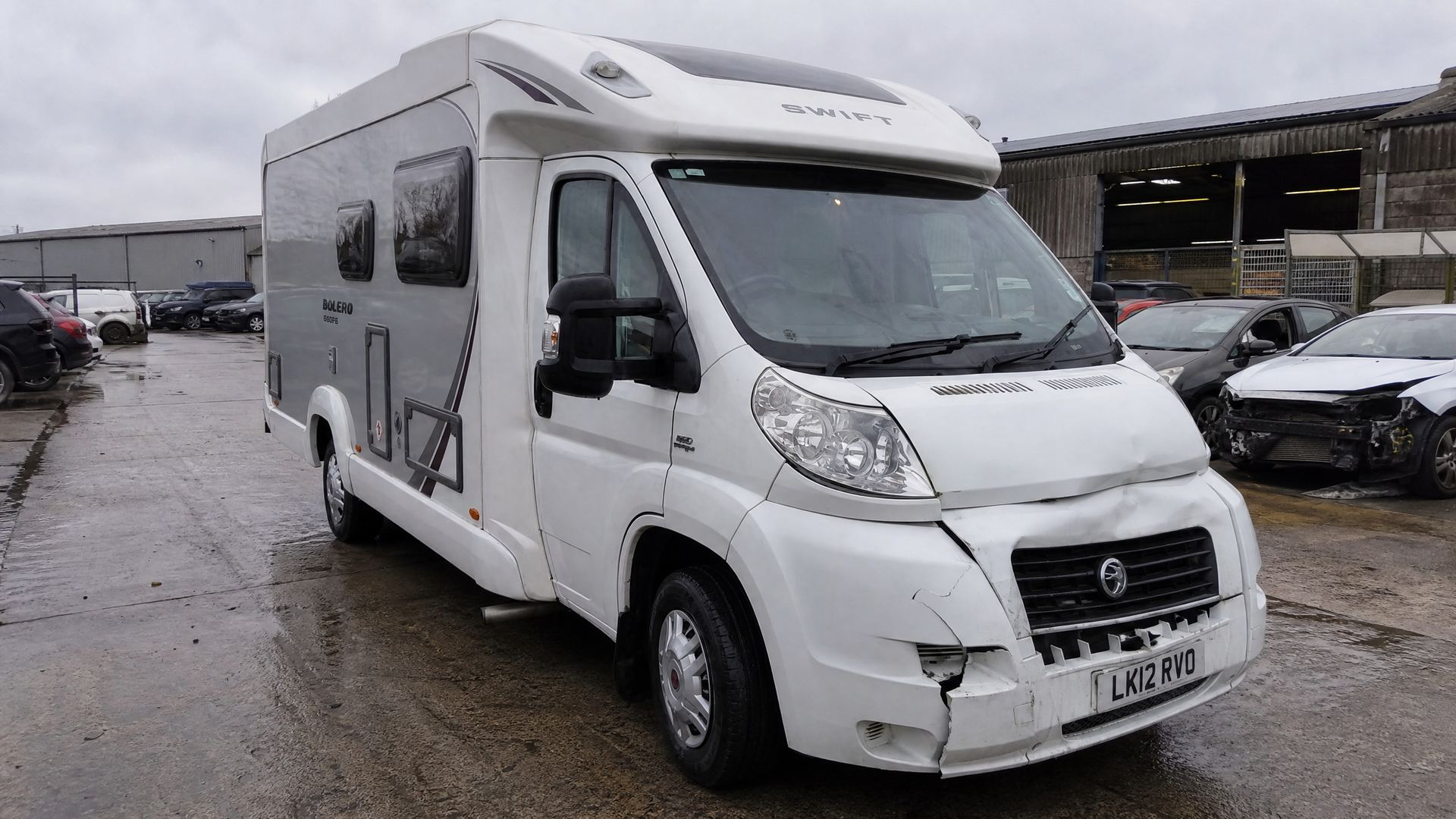
What a trade seller must disclose
A motor trader must not mislead a buyer or omit important information that would affect the decision to view, buy or pay a particular price. A known insurance write off history is material information. It should be made clear before you commit to the purchase, not whispered across the desk after the deposit has gone through.
A dealer must also comply with the Consumer Rights Act. The motorhome must be as described, fit for any purpose made known to the seller and of satisfactory quality when age, mileage, price and disclosed condition are considered. Phrases such as “sold as seen” do not make those rights vanish. If a trader hides a Category S or N record, obtain advice promptly and keep the advert, messages, invoice and history report.
The position with a private seller is different
A genuine private seller does not have the same broad consumer law duty as a trader to volunteer every material fact. The motorhome must still match the description given, the seller must have the right to sell it and it must be roadworthy unless it is clearly sold on a different basis for repair or breaking. A private advert claiming “never damaged” or “clean history” must be true.
Ask a direct written question before viewing: “Has this motorhome ever been recorded as an insurance write off, under any category, or suffered accident, flood or fire damage?” If the seller answers falsely, that answer can become important evidence in a misrepresentation or contract claim. Also be alert to people posing as private sellers while regularly trading vehicles, because the law looks at what they actually do, not the label on the advert.
Why the V5C is not enough
For a retained Category S vehicle, a replacement V5C is required and DVLA adds wording showing that it has been salvaged. Category N is different. There is no equivalent literal warning printed on the V5C, so a logbook that looks clean does not prove the motorhome has a clean insurance history.
Run an independent paid vehicle history check using the registration and vehicle identification number. Confirm the details against the motorhome itself and against the V5C. The check should cover insurance loss history, theft, outstanding finance, mileage concerns and identity issues. It costs very little compared with discovering that your new pride and joy is worth £10,000 less than you paid for it.
Demand the complete repair story
The best recorded motorhomes come with an uncomfortably thorough file. You want photographs showing the damage before dismantling, the insurer or assessor’s description, itemised invoices, parts receipts, repair photographs and the identity of the workshop. For Category S, look for chassis measurements, alignment results and a report from a suitably qualified independent engineer.
Match the paperwork to the visible repair. Dates, mileage, registration and vehicle identification numbers should make sense. Be suspicious of vague phrases such as “light damage” when there are no photographs, or “professionally repaired” when nobody can name the professional. If the seller says the paperwork was lost during a house move, the value should move too, downwards.
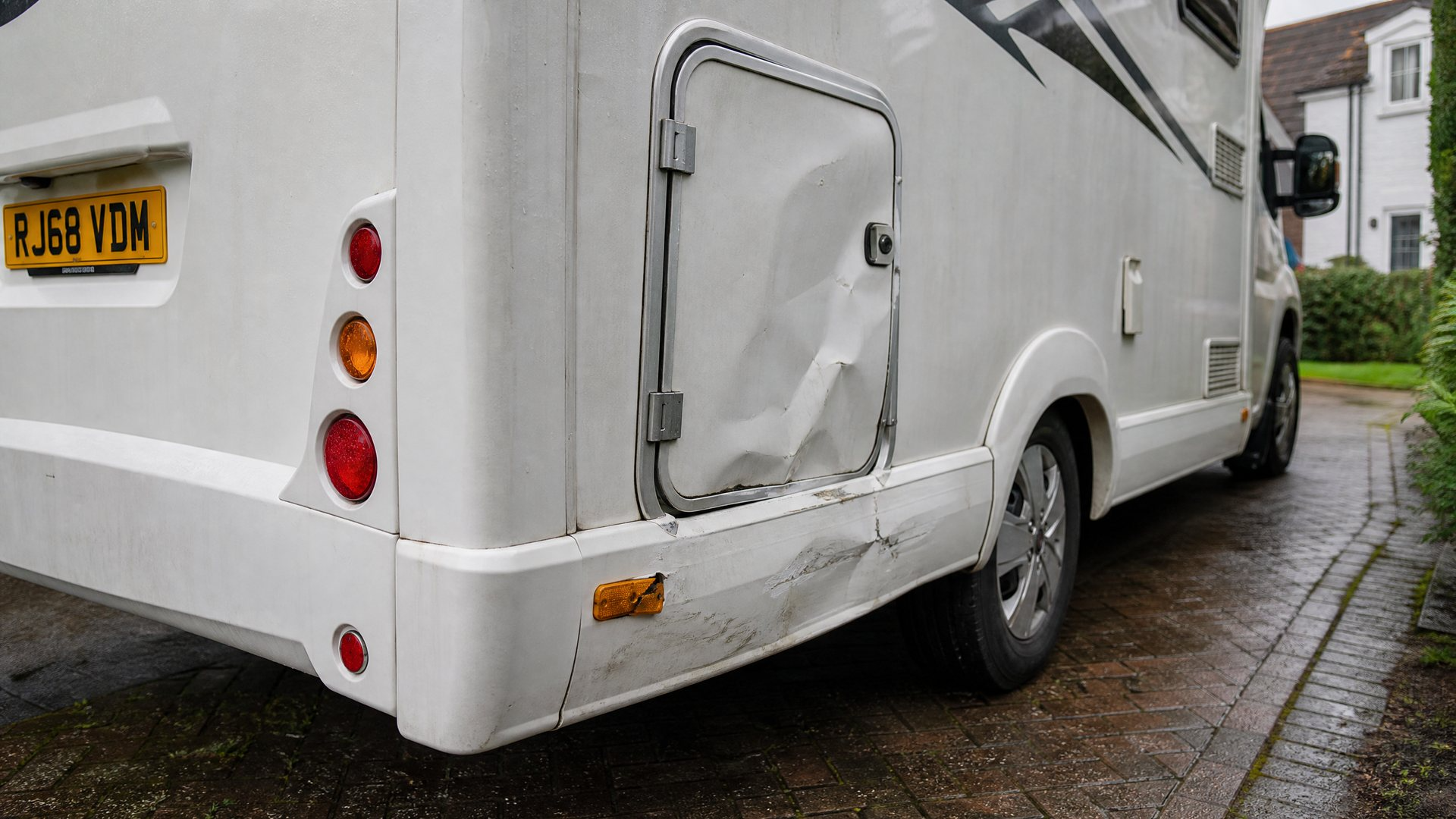
Inspect the base vehicle and structure
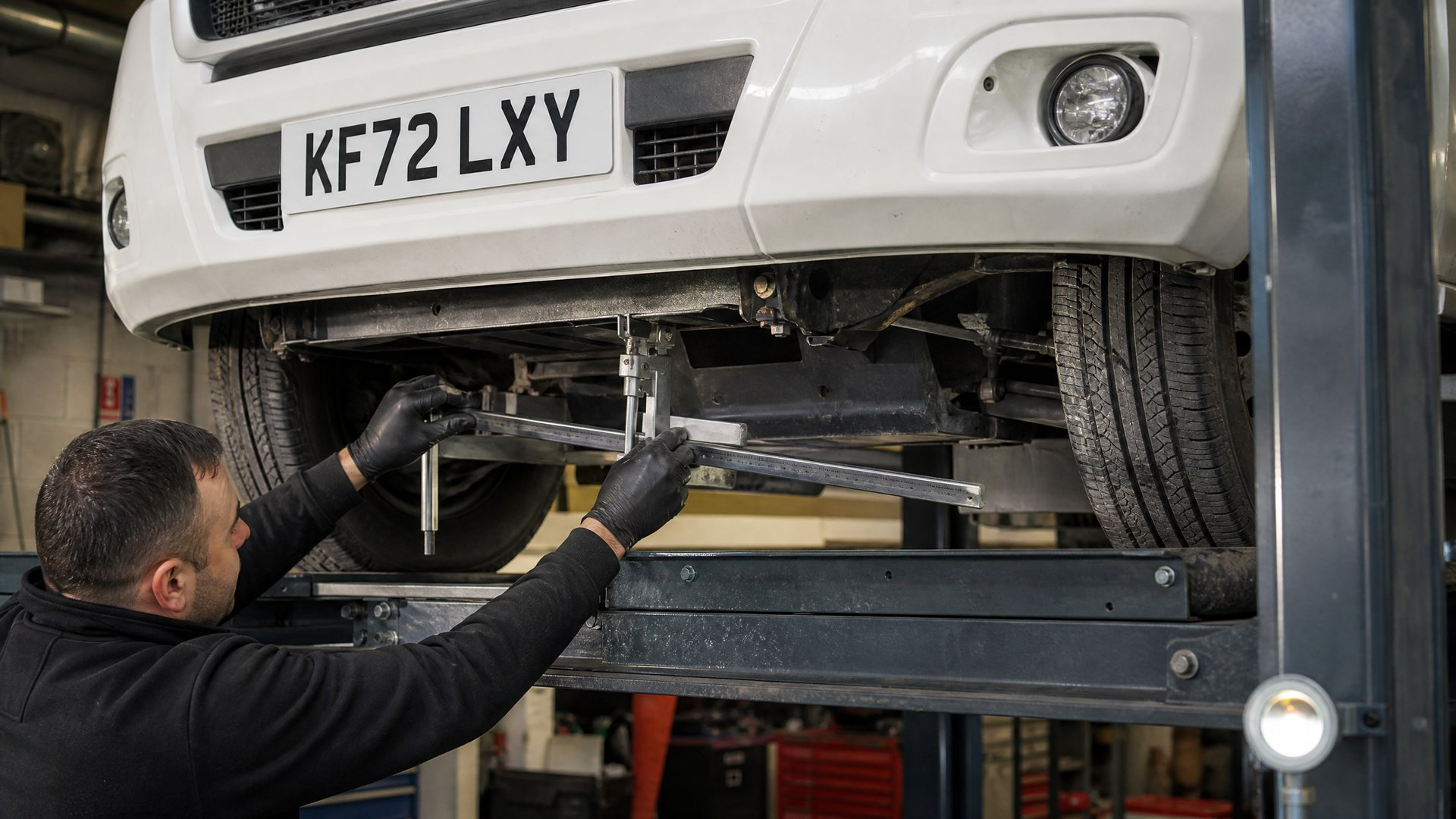
On a Category S motorhome, use a specialist who can assess chassis geometry and structural repair, not simply someone who performs routine servicing. Look for uneven tyre wear, a steering wheel that sits off centre, pulling under braking, poor panel gaps, rippled metal, fresh underseal over local repairs and disturbed seams or welds. Cab doors should open and close cleanly, and suspension mounting areas should be examined properly.
A normal MOT is useful, but it is not a certificate confirming that an old structural repair followed the manufacturer’s method. The test examines the condition presented on the day within its defined scope. It does not recreate the accident, inspect every concealed joint or verify every invoice, so do not let a fresh pass end the investigation.
Inspect the habitation body just as carefully
Check the repaired area inside and outside. Doors, windows and lockers should sit square and latch without force. Examine wall and roof joints, sealant lines, floor edges, furniture fixings and areas hidden inside cupboards. A damp survey should cover the whole habitation body, with extra attention around the original impact and any seam disturbed during repair.
All affected systems need testing, including mains electricity, the 12 volt system, battery charging, gas appliances, heating, water, pumps and lighting. If the incident involved fire or flood, demand specialist evidence showing how contamination, wiring and safety systems were handled. A motorhome can be structurally straight and still contain a small electrical horror story behind the wardrobe.
Commission the right independent inspections
One inspection may not cover everything. A Category S coachbuilt motorhome can justify both a structural or mechanical assessment and a full habitation inspection. The inspector should be independent of the seller, properly insured and experienced with motorhomes rather than only ordinary cars.
Give the inspector the damage photographs before the appointment and ask specific questions about the repair. Is the chassis within tolerance? Were correct replacement parts and joining methods used? Is there evidence of water ingress or body movement? Are gas and electrical systems safe? A report that merely says “vehicle inspected” is decorative paperwork, not protection.
Price the history, not the seller’s repair bill
Start with the realistic retail value of an equivalent unrecorded motorhome, then apply a reduction for the category, repair quality, evidence, insurance restrictions and future selling difficulty. Do not accept the argument that £15,000 of repairs makes the motorhome £15,000 more valuable. Repair spending restores damage; it does not erase the record.
Compare like with like. Age, mileage, base chassis, engine, gearbox, layout, number of berths, payload, damp history and specification all matter. A rare layout may support demand, but rarity can also make replacement body parts difficult to find. Your offer should leave enough room for the same difficult conversation when you eventually become the seller.
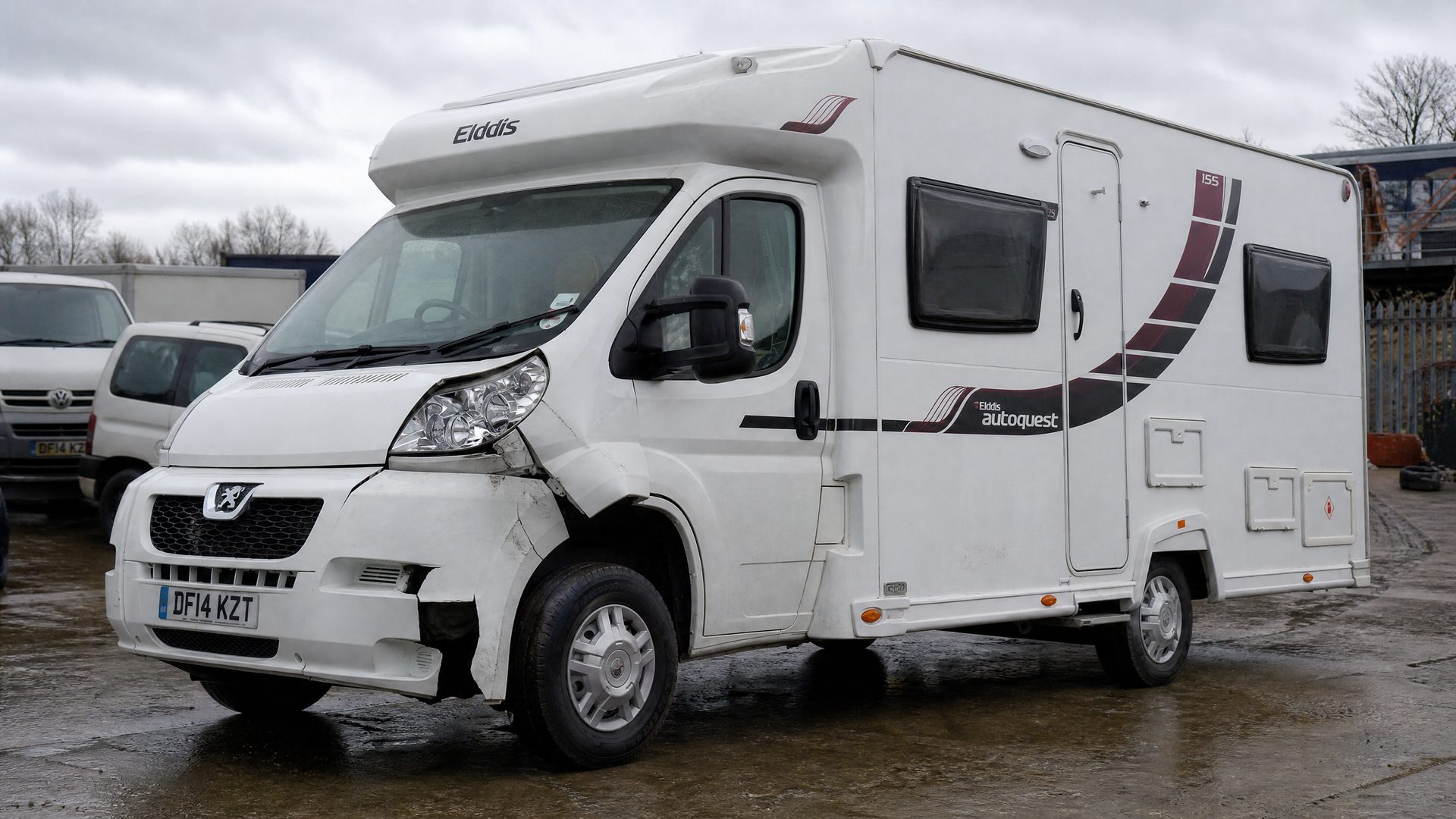
Should you buy a Category S or N motorhome?
A recorded motorhome is not automatically a bad purchase. Category N can make sense when the damage is understood, repairs are excellent, insurance is arranged and the discount is genuine. Category S demands greater caution, but a fully documented repair completed to the proper standard may suit an experienced buyer who plans to keep the vehicle for years.
Walk away when the history is vague, the seller resists an independent inspection, the motorhome is priced close to clean examples or the insurance arrangements are unclear. The discount is payment for accepting extra risk and reduced resale appeal. If there is no meaningful discount, you are taking the risk for free, which is generous of you but not especially wise.
The final verdict
The letter matters, but the evidence matters more. A and B are not roadgoing prospects. S and N can return to use, yet neither should be bought on the strength of a polished bumper, a fresh MOT and the seller saying, “It was only cosmetic.” Category N does not promise minor damage, and Category S does not prove a poor repair. Both demand investigation.
Run the history check, ask the seller in writing, inspect the base vehicle and habitation body, obtain an insurance quotation and price the permanent marker honestly. Do all of that and a recorded motorhome may be a calculated purchase. Skip it, and that bargain could spend the next few years quietly emptying your wallet from a locker you did not know was damp.
Subscribe to our newsletter and get the latest articles delivered straight to your inbox.

Picture the scene. You've spent the day wrestling with a new awning, navigating a particularly...
Your motorhome’s dashboard (or instrument) cluster consists of the set of gauges and warning lights...

Let us be honest for a moment. When you step into a pre-loved motorhome, you expect to be greeted...

