
.jpg?width=26&height=26&name=image%20(27).jpg)

Right then, let's be honest. You've bought the motorhome, you've packed the tea bags, and you're...
.png?width=26&height=26&name=facebookmobile%20(Custom).png)
.png?width=26&height=26&name=instgrammobile%20(Custom).png)
.png?width=26&height=26&name=twittermobile%20(Custom).png)
.jpg?width=26&height=26&name=image%20(28).jpg)
You have chosen an adult only campsite. Not because you dislike children, obviously. You simply wanted a few peaceful days without footballs bouncing off the motorhome, scooters rattling past the pitch at dawn and somebody else's little darling conducting a scientific experiment involving gravel and the fresh water tap. You arrive, settle down with a drink and congratulate yourself on your excellent decision.
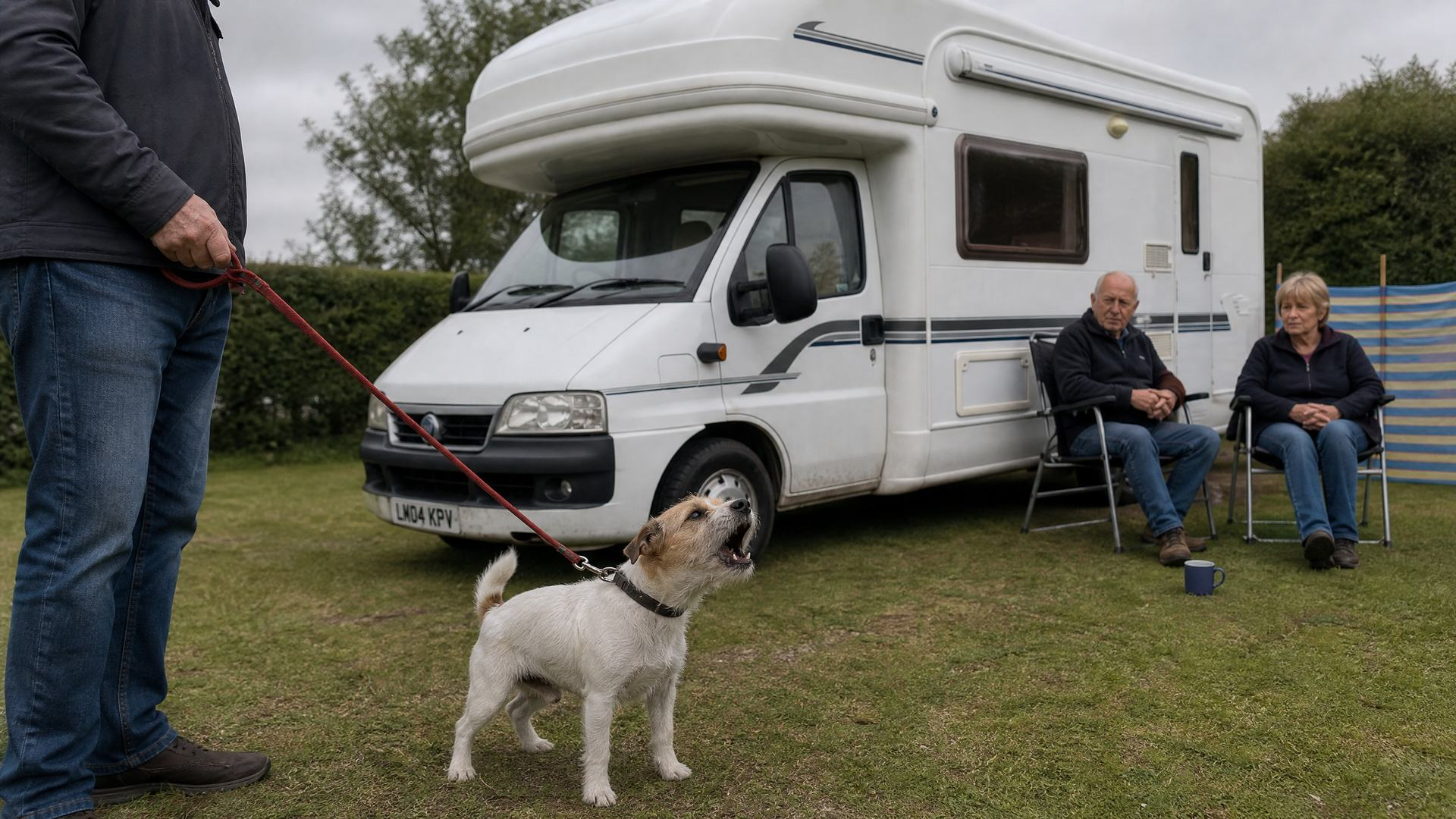
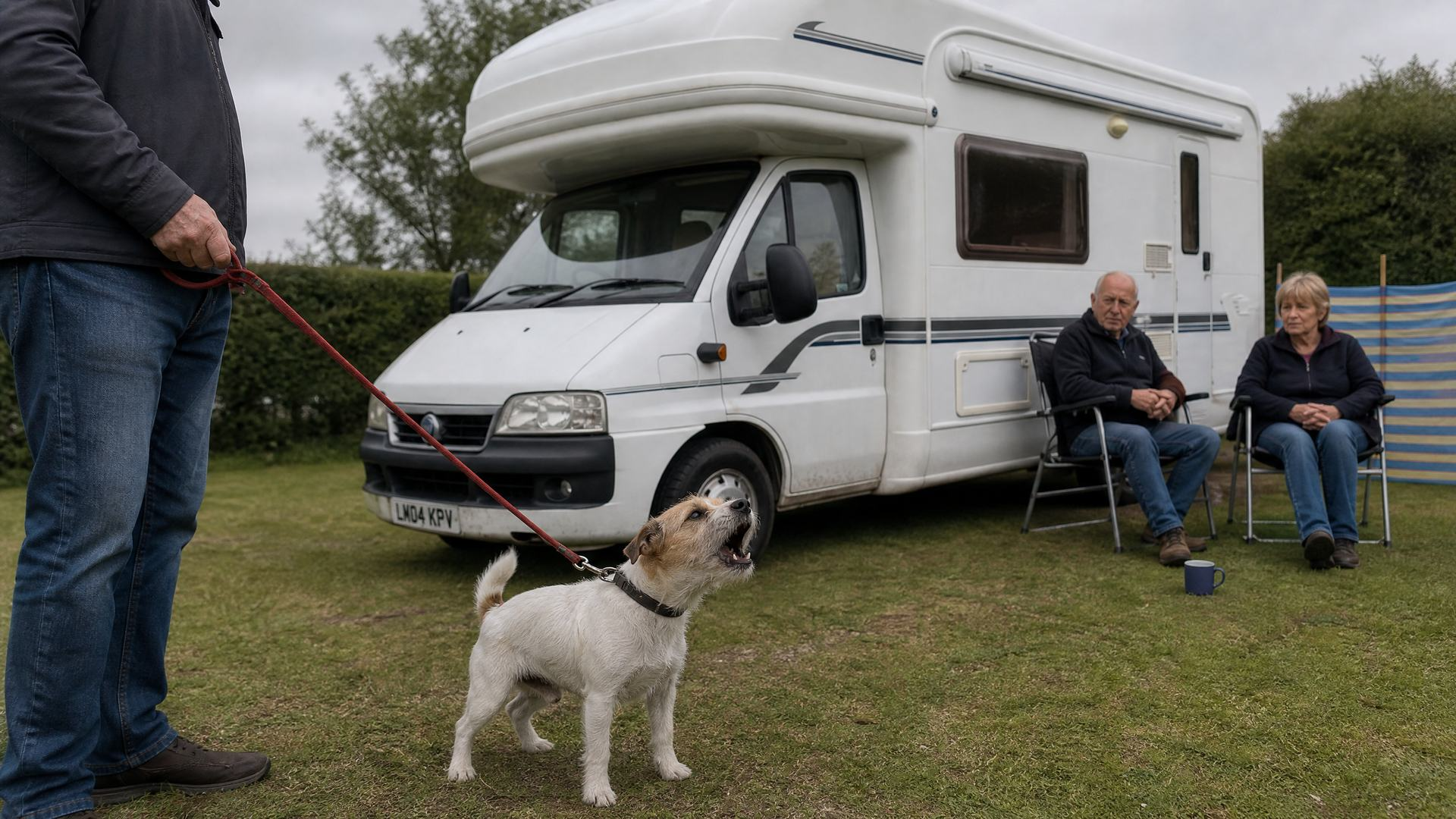
Then the dog three pitches away starts barking. It barks at a motorhome arriving. It barks at a man carrying a toilet cassette. It barks at a leaf with suspicious intentions. Its owners continue reading as though the soundtrack is coming from another county. By teatime, you are beginning to wonder whether an adult only site should also offer a section for adults who would quite like to hear themselves think.
Dogs bark, but that is not a blank cheque
Let us begin with the obvious. Dogs bark. It is how they communicate excitement, fear, boredom, frustration and the urgent news that a pigeon has landed nearby. The RSPCA describes barking as normal behaviour, and nobody sensible should object to the odd woof when someone passes the pitch or another dog appears. A campsite is a shared place, not a silent retreat run by monks.
However, normal behaviour can still become an unreasonable disturbance. Children laugh, adults talk and televisions make noise, but none of us gets unlimited permission to impose that noise on everybody else. Saying, “Dogs bark,” is not a complete defence. People snore too, but we do not generally drag the bed outside and invite the whole site to enjoy it.
So how much barking is acceptable?
There is no magic number. Three barks may be nothing, while three hundred will have you pricing up a move to the far end of the field. The sensible test is frequency, duration, time of day and whether the owner makes any effort to stop it. A brief burst of barking that is quickly settled is part of campsite life. Repeated barking at every person, dog, bicycle and opening cupboard is different.
The line has definitely been crossed when barking continues for long periods, repeatedly wakes people, prevents neighbours sitting outside or carries on while the owners do nothing. Noise late at night or early in the morning deserves less tolerance because people are trying to sleep. Some club sites specifically require guests not to disturb others after 10pm, although every campsite has its own rules and you should check the ones where you are staying.
Adult only does not mean noise free
This is where the argument becomes deliciously awkward. An adult only campsite promises no children. It does not promise no dogs, no snoring, no reversing alarms and no chap called Derek explaining his solar panel setup at full volume. If dogs are allowed, some barking is inevitable. Anyone demanding complete silence from a field full of people and animals may be happier in a remote cottage with very thick walls.
But dog owners should not use that as an excuse. Many guests choose adult only sites precisely because they value a calmer atmosphere. Replacing the shriek of a five year old with the relentless yap of a bored terrier is not really a victory for peace. A site can welcome dogs and still expect their owners to control avoidable noise. Those two ideas are perfectly capable of sharing a pitch.
Should you say something to the owner?
Usually, yes, provided you feel comfortable doing it. The RSPCA recommends speaking to the owner first because they may genuinely be unaware of the problem. This is particularly likely if the dog barks when left alone. From the owner's point of view, their pet may curl up quietly whenever they are present. They return from lunch convinced little Pickle has spent two hours meditating, while the rest of the site knows Pickle has been staging a one dog protest.
A friendly approach gives a reasonable owner the chance to put things right. Choose a calm moment rather than marching over during the barking with your jaw clenched and a saucepan in your hand. Describe what happened and when. “I thought you might want to know that he barked for most of the time you were out” is useful. “Your horrible dog has ruined my life” is less likely to lead to a productive exchange.
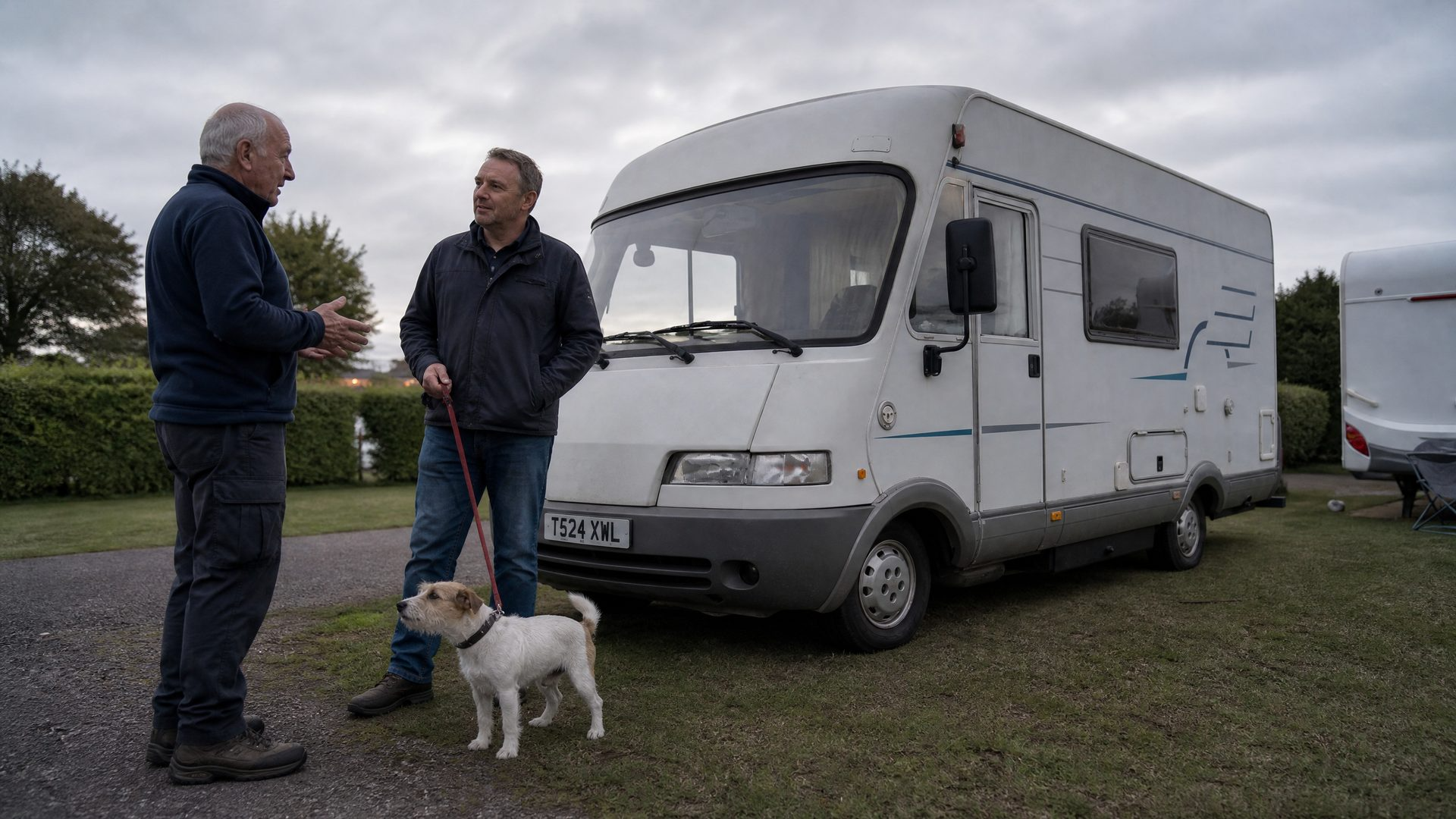
How to avoid a campsite war
Keep the conversation about the noise, not the dog owner's entire character. They may be embarrassed, defensive or simply surprised. If they apologise and take action, let them. There is no need to deliver a closing speech to the whole field. Most campsite disputes become ridiculous because both sides decide they are defending a principle rather than solving a fairly ordinary problem.
It is also worth being honest about your own tolerance. If the dog gave four barks at midday and you have spent the next hour documenting the incident, complete with times and witness statements, the problem may not be entirely canine. A little patience is part of camping. The aim is not to eliminate every sound, but to stop persistent noise from dominating everybody else's stay.
When should the warden step in?
Go to the warden if the barking continues after a polite conversation, if the owner is absent, if it happens during quiet hours or if you do not feel safe approaching the owner. You are not being petty. Site staff are there to manage problems that affect guests, and it is far better to raise the matter calmly than to spend three days glaring across the field while muttering into your mug.
The rules support this approach. The Camping and Caravanning Club tells owners to keep pet noise to a minimum and says that a pet causing an unresolved nuisance may have to be removed from the site, or the owners may be asked to leave. Caravan and Motorhome Club rules also put responsibility on guests not to disrupt other people's enjoyment and direct guests to speak to site staff when an issue needs resolving. In other words, asking the warden is not an act of betrayal. It is the recognised next step.
What if the dog has been left alone?
A dog barking continuously in an unattended motorhome may not merely be annoying. It could be anxious, distressed, too hot or frightened by unfamiliar sounds. Excessive barking can be a sign that something is wrong. If the owners are away, tell the warden promptly rather than waiting to see whether the dog runs out of enthusiasm. The welfare of the animal matters as much as the comfort of the neighbours.
This is also why leaving an unhappy dog alone and hoping for the best is not acceptable campsite etiquette. Motorhomes are small spaces, campsite noises are unpredictable and a dog that settles beautifully at home may struggle somewhere new. Owners need a plan that suits the dog in front of them, not the wonderfully behaved imaginary dog they described when booking.
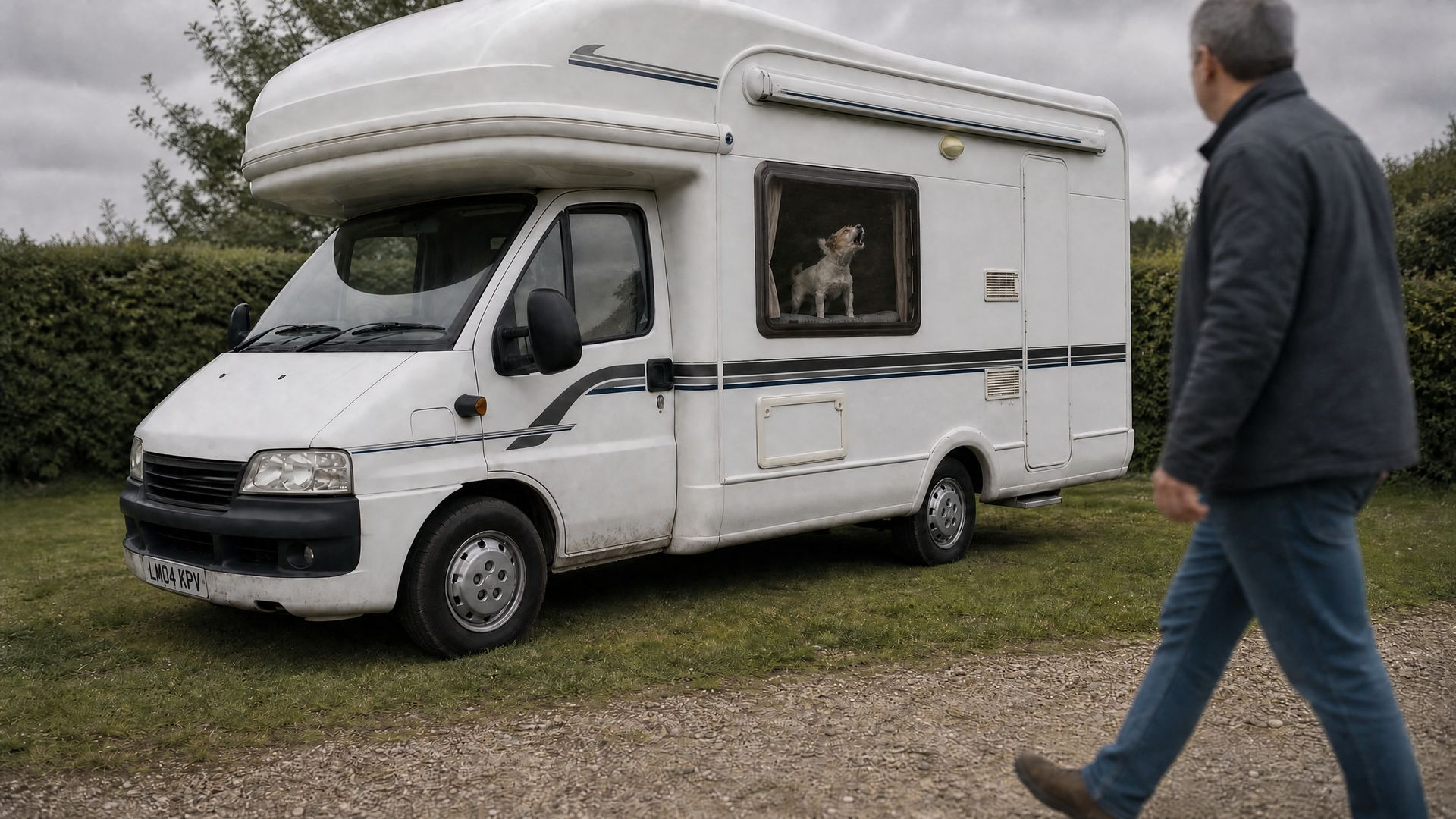
If yours is the noisy dog
Try not to take a complaint as a personal attack. Nobody is saying you do not love your dog. They are saying they cannot relax because your dog is barking, and that is useful information. Bring familiar bedding, give the dog proper exercise, position it away from busy paths where possible and interrupt barking before it becomes the background music for the entire row of pitches.
Most importantly, do not sit beside a barking dog and pretend not to hear it. Every other person can hear it. They can also see you turning up the television to drown it out. If your dog cannot settle, you may need to change your plans, stay with it or choose a quieter pitch. Responsible dog ownership occasionally means accepting that the holiday you wanted is not the holiday your dog can manage.
So, speak up or let it go?
My verdict is simple. Ignore the odd bark. Politely mention repeated barking. Ask the warden to deal with persistent barking, noise during quiet hours, an absent owner or any situation where approaching the owner feels uncomfortable. Do not spend the entire holiday fuming in silence, because by day three even the sound of the dog's collar will feel like a personal insult.
Dog friendly should mean dogs are welcome, not that everybody else must surrender their peace. Adult only does not mean silent, but it should still mean considerate. A little tolerance from neighbours and a little responsibility from owners should be enough. The real trouble begins when one side is expected to provide all the tolerance while the other side provides all the barking.
Subscribe to our newsletter and get the latest articles delivered straight to your inbox.

Right then, let's be honest. You've bought the motorhome, you've packed the tea bags, and you're...

Ever found yourself staring at your V5C logbook, utterly baffled by the 'Max. net power (kW)'...
Let us be honest for a moment. When you step into a pre-loved motorhome, you expect to be greeted...
