
.jpg?width=26&height=26&name=image%20(27).jpg)

Welcome back, fellow road-trippers! Siobhan here with the penultimate instalment of our epic...
.png?width=26&height=26&name=facebookmobile%20(Custom).png)
.png?width=26&height=26&name=instgrammobile%20(Custom).png)
.png?width=26&height=26&name=twittermobile%20(Custom).png)
.jpg?width=26&height=26&name=image%20(28).jpg)

There’s a region of Italy that seems to capture two extremes of this great country.
It’s called Veneto.
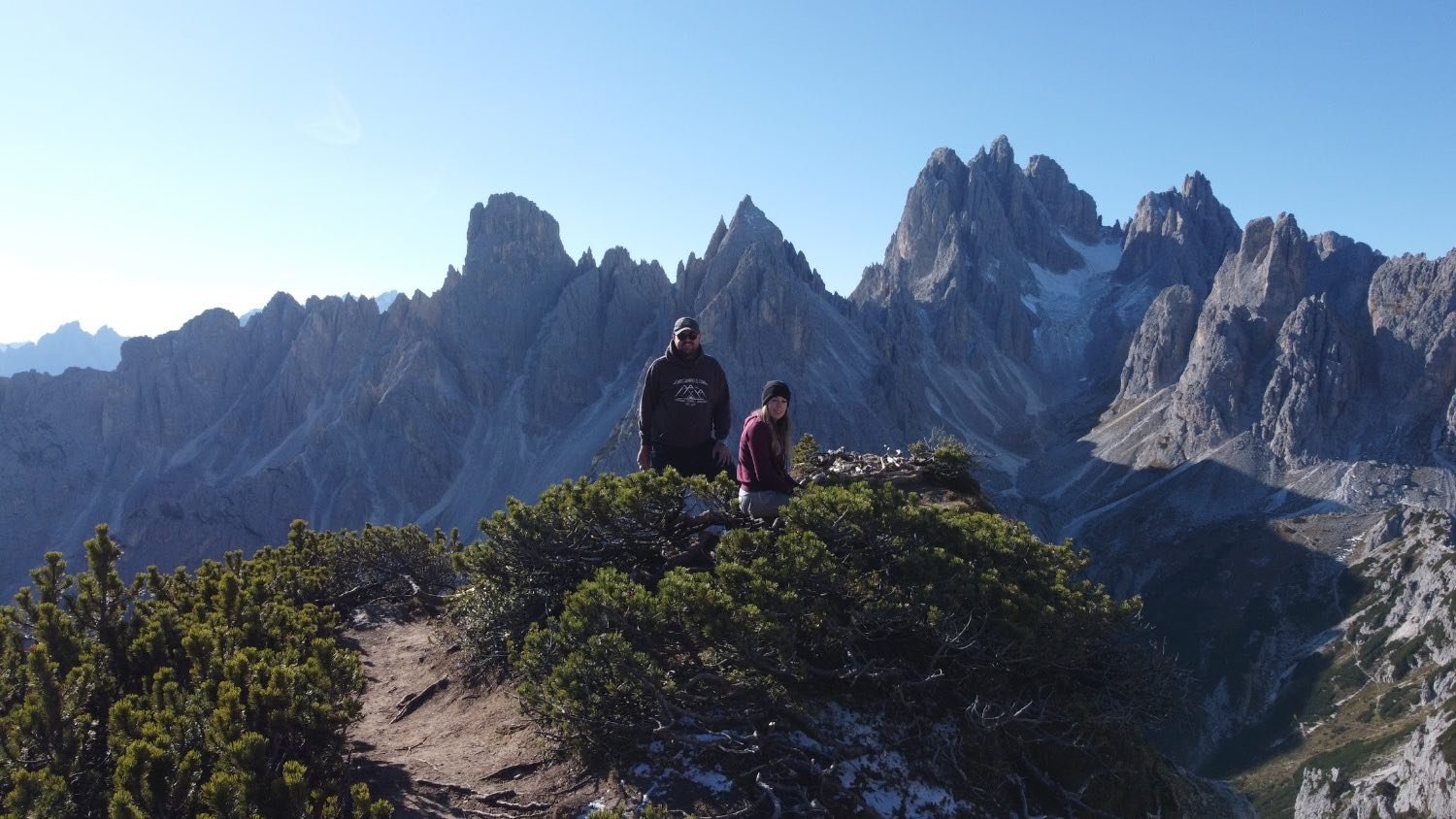
At one end, you have the stunning Dolomites, shaped by nature over millions of years. At the other, Venice, one of mankind’s most extraordinary creations.
Both sit at opposite ends of the spectrum, yet both are undeniably beautiful, and both attract millions of visitors every year.
Visiting them within a few weeks of each other really does mess with your senses.
In the Dolomites, everything feels vast. Rugged mountain landscapes, huge open spaces, solitude, and that overwhelming sense of just how big this planet really is.
Then you arrive in Venice.
Suddenly, the open space disappears. You’re funnelled through narrow streets and tight corridors that, at times, feel more like school corridors during lesson change. Everyone moves together, usually at the slowest possible pace, with very little room to stop or simply stand and take it all in.
If you want breathing space, you head for one of the piazzas, only to discover you’ve become a background extra in a thousand other people’s holiday photographs.
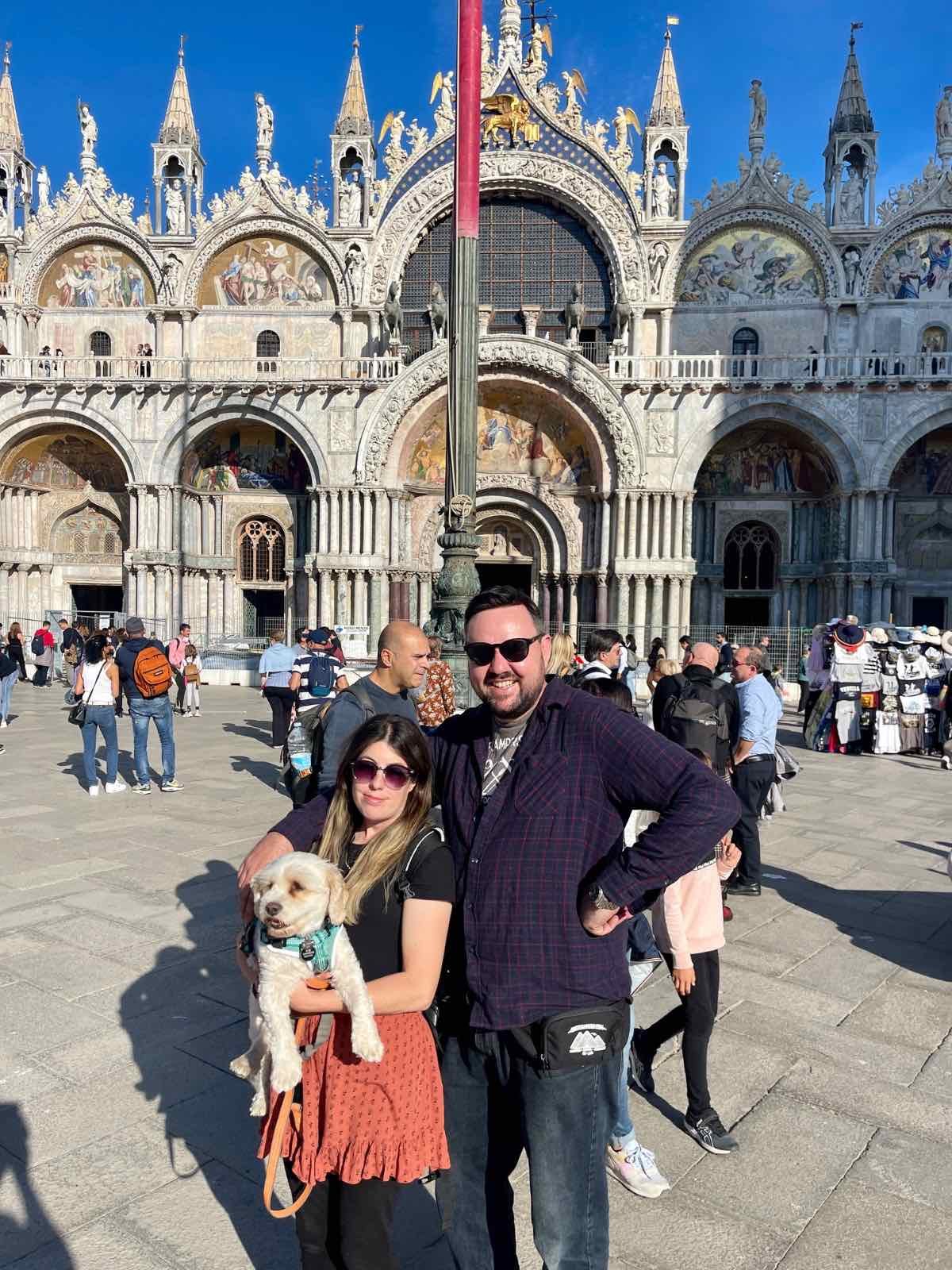
Of course, we’re all tourists when we travel. But Venice attracts a particular kind of tourism. For years, enormous cruise ships brought huge numbers of day visitors right into the heart of the city. Venice has since taken steps to manage that pressure: large ships are no longer allowed through the Giudecca Canal and St Mark’s Basin, and the city has introduced an access fee for day visitors on selected peak dates.
Its popularity has, in many ways, made Venice a victim of its own beauty.
On day one, I found the whole experience fairly average.
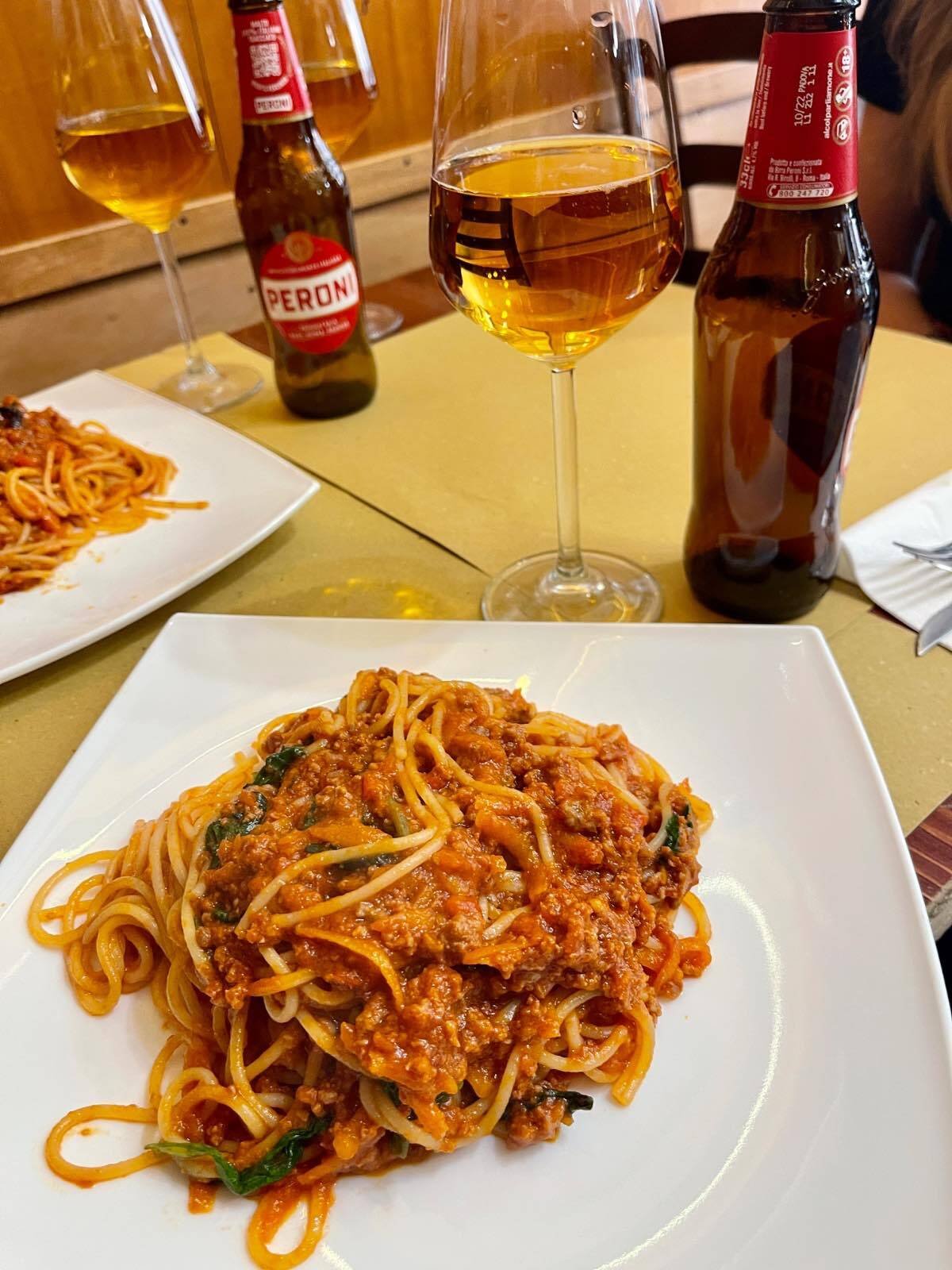
The food was much as I expected from one of the busiest tourist destinations in the world. Restaurants need to turn tables quickly, kitchens are often squeezed into tiny spaces, and the sheer volume of visitors creates its own type of catering. In many places, the location is doing more of the selling than the menu.
We tried moving away from the obvious tourist routes, but still found fairly forgettable pizza and pasta.
So on day two, we changed our approach.
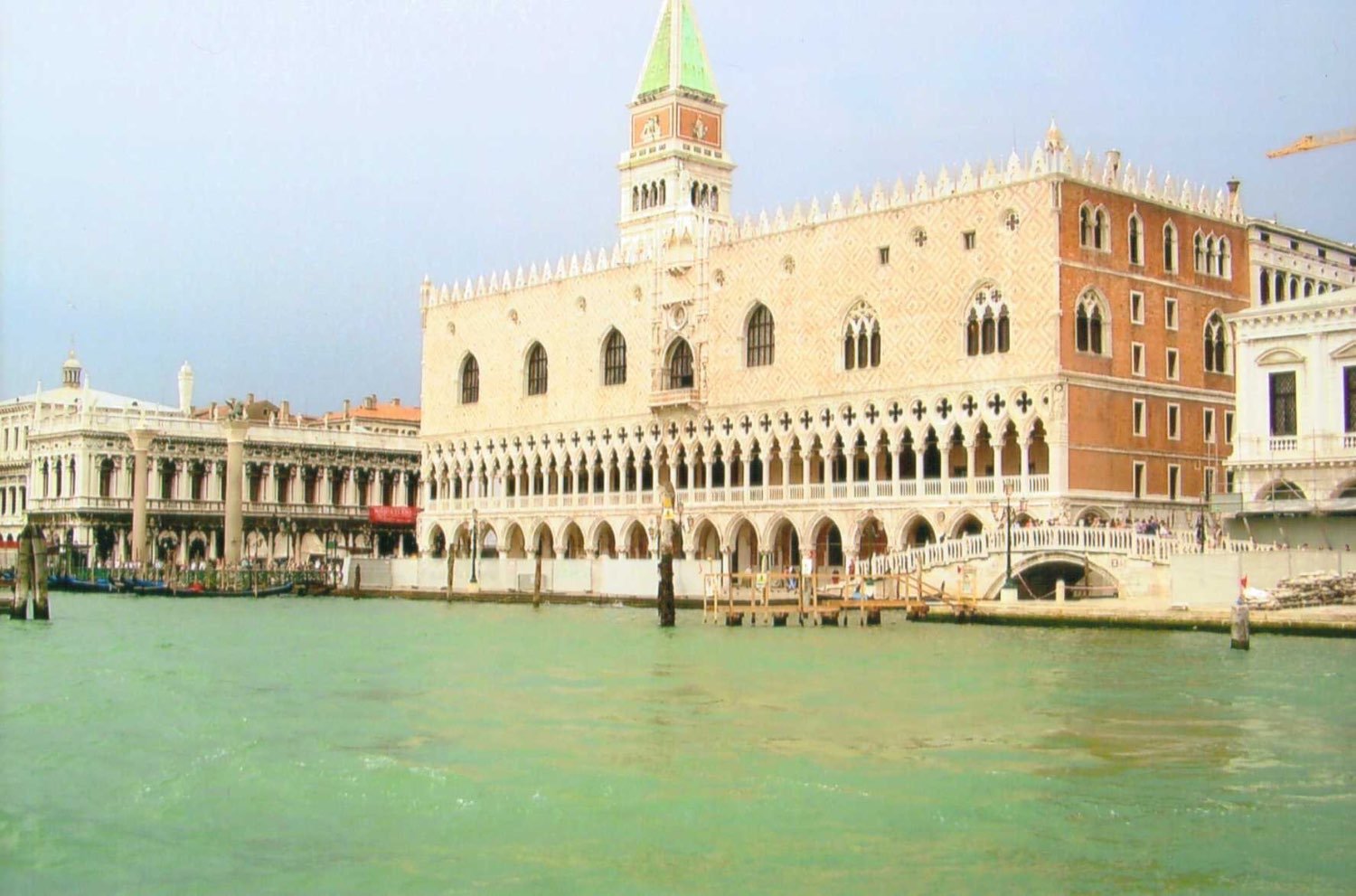
We decided to see Venice from the water. Not by gondola, but using the public water buses. Spend a little time travelling this way and suddenly the city starts to make more sense.
From the water, you see the version of Venice that gets lost when you’re squeezed through the crowded streets: the facades of the buildings, their reflections shimmering across the canals, and brief moments of calm in a city permanently in motion.
Then, as evening approaches, something else happens.
The day visitors begin to disappear back to their cruise ships.
The frantic pace drops away, the queues shorten and the city seems to exhale. We were staying at a campsite outside Venice and travelling in by train, which gave us the freedom to stay a little later.
And that was when Venice finally started to reveal itself.
Wandering the backstreets in the evening gives you time to stop. The brightly presented tourist menus seem to thin out and smaller places begin to appear: simple dining rooms, old lamps, handwritten menus and dishes that feel as though they existed long before social media decided what Italian food should look like.
For me, the older and simpler the menu, the better.
I don’t want fluorescent colours, novelty dishes or food designed primarily for photographs. I want to know what the people who live here actually eat. I want dishes that have been cooked hundreds of times, for customers who might actually come back next week.
Eventually, we found exactly that kind of place.
I have absolutely no idea where it was, and I’m fairly certain I could never find it again.
Google Maps is almost useless in Venice, which in this instance might be one of the city’s greatest strengths. The genuinely hidden places can remain hidden.
Sometimes you cannot search for the perfect restaurant, read two hundred reviews and follow a blue line straight to the door.
Sometimes you simply have to do it the old-fashioned way.
Follow your nose.
There is one ingredient that seems to link the two extremes of Veneto: polenta.
In the mountains, it feels completely at home served soft and steaming, a comforting base for rich meats, cheese and the sort of hearty food you want after a day surrounded by cold air and towering peaks.
Head south towards Venice and the same humble cornmeal is just as much a part of the local food culture. Across Veneto, polenta is an iconic staple, served with everything from meat and liver to cod dishes. In Venice, it can also appear cooled, sliced, grilled or fried alongside richer toppings.
That is the version that inspired this recipe.
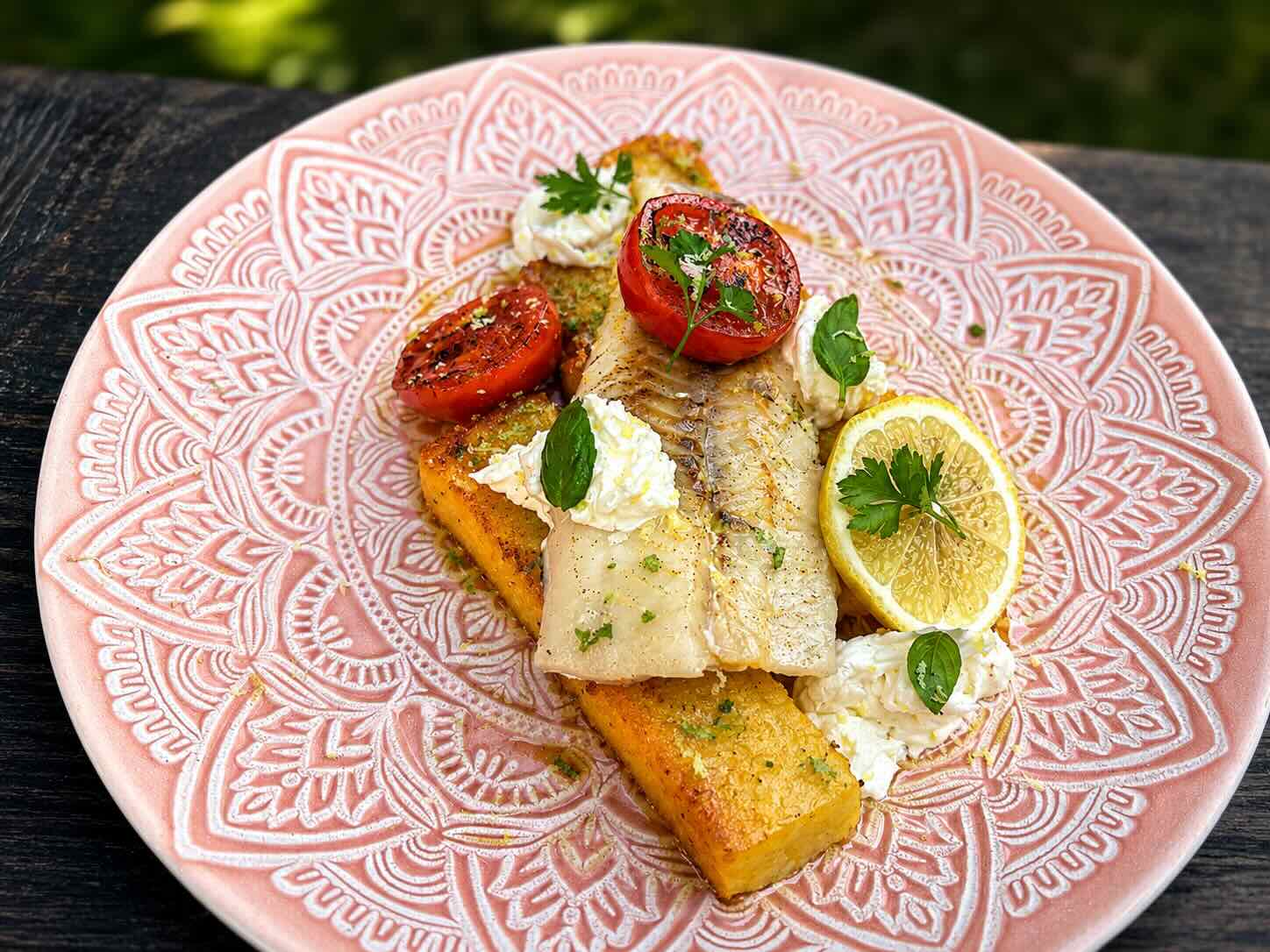
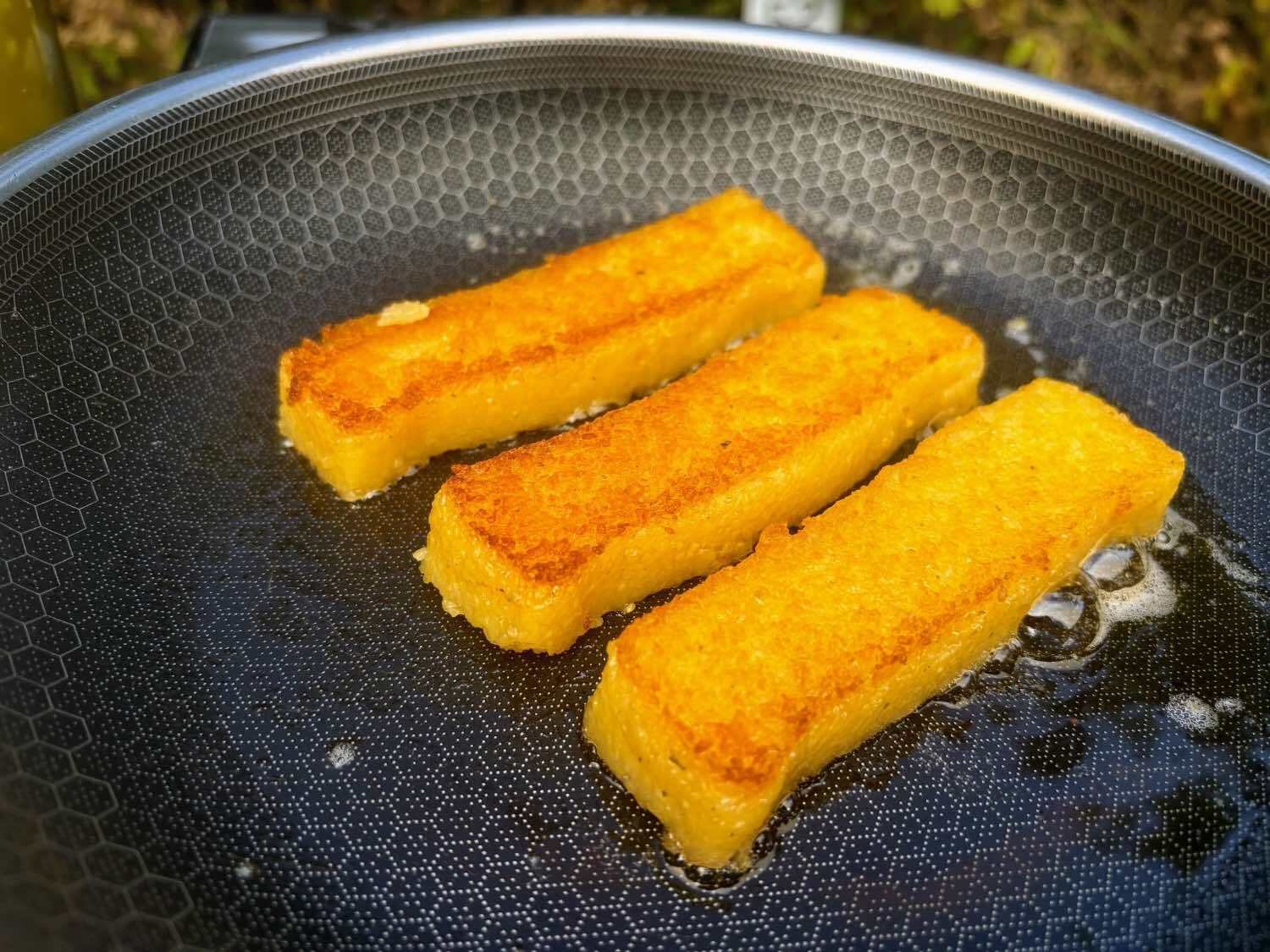
Rather than serving it as a soft porridge, I cook the polenta with Parmesan, allow it to set, then cut it into thick slabs and fry them until crisp and golden on the outside while remaining soft in the centre.
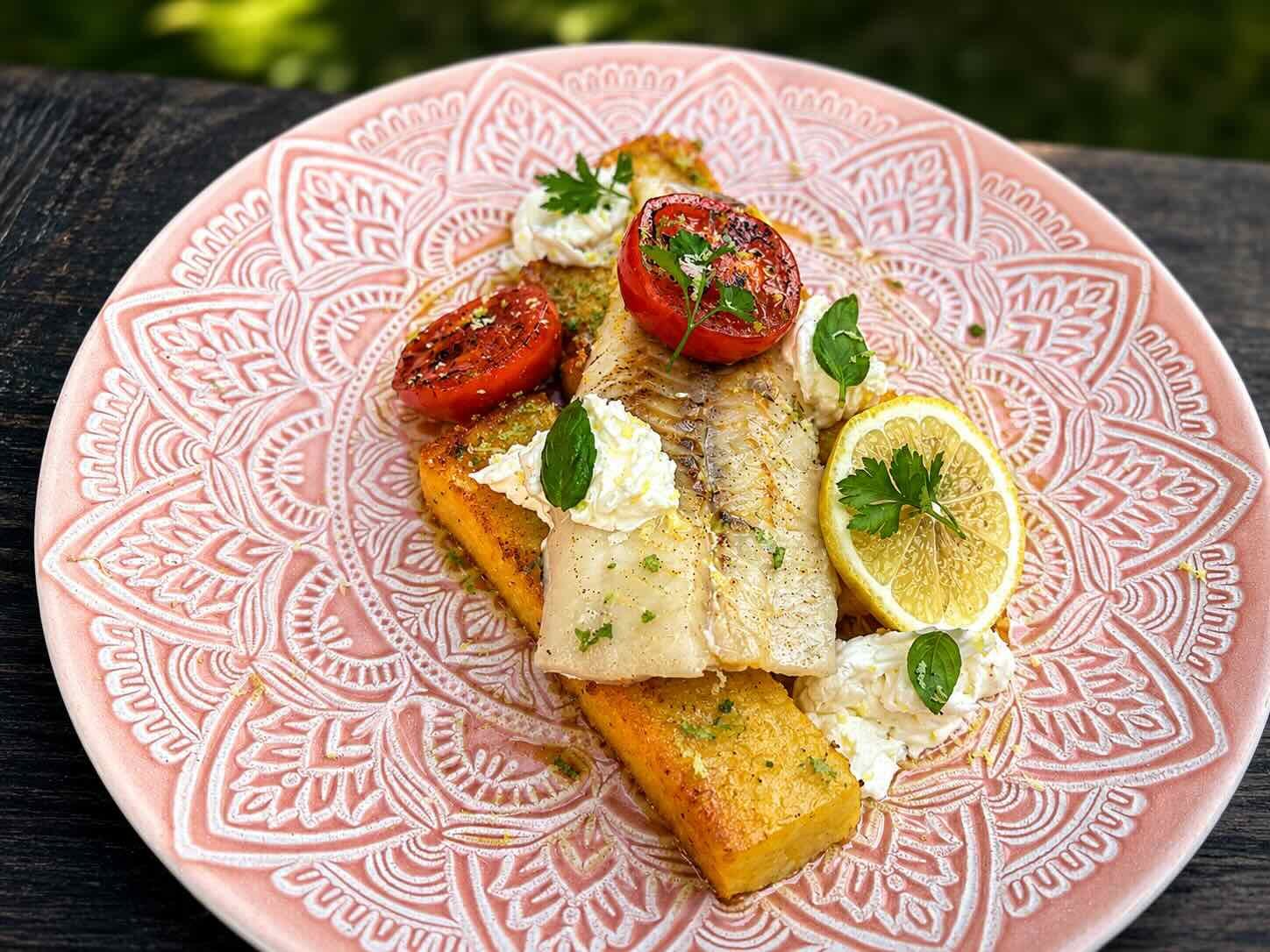
To bring it into summer, I top it with white fish, blistered tomatoes, garlic, torn mozzarella, fresh basil and another grating of Parmesan.
It may be a long way from a bowl of mountain polenta, but the ingredient underneath it is exactly the same, a simple Veneto staple that somehow feels equally at home beneath the Dolomites or beside the canals of Venice.
Crispy Polenta with Pan-Fried Fish & Blistered Tomatoes
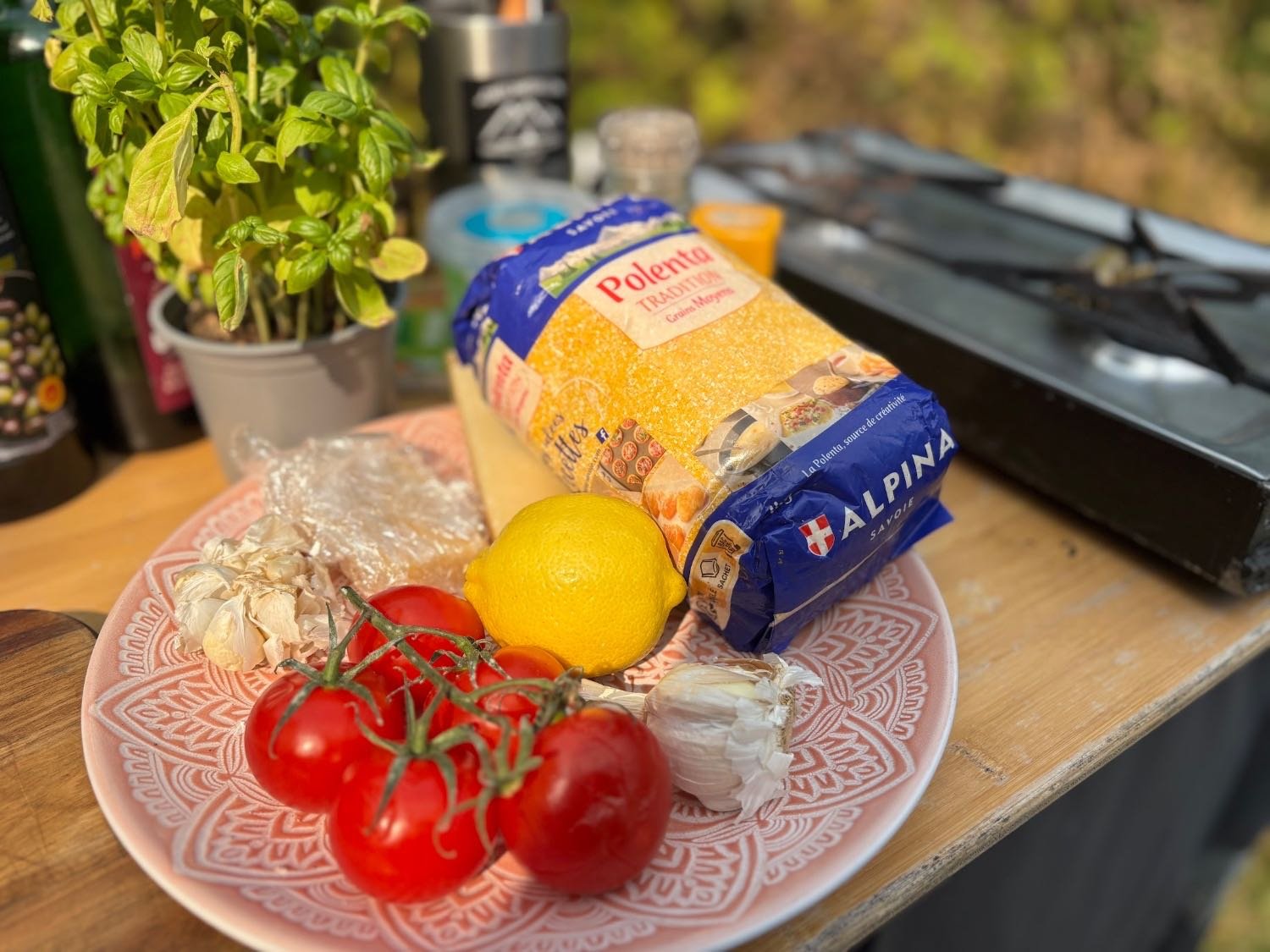
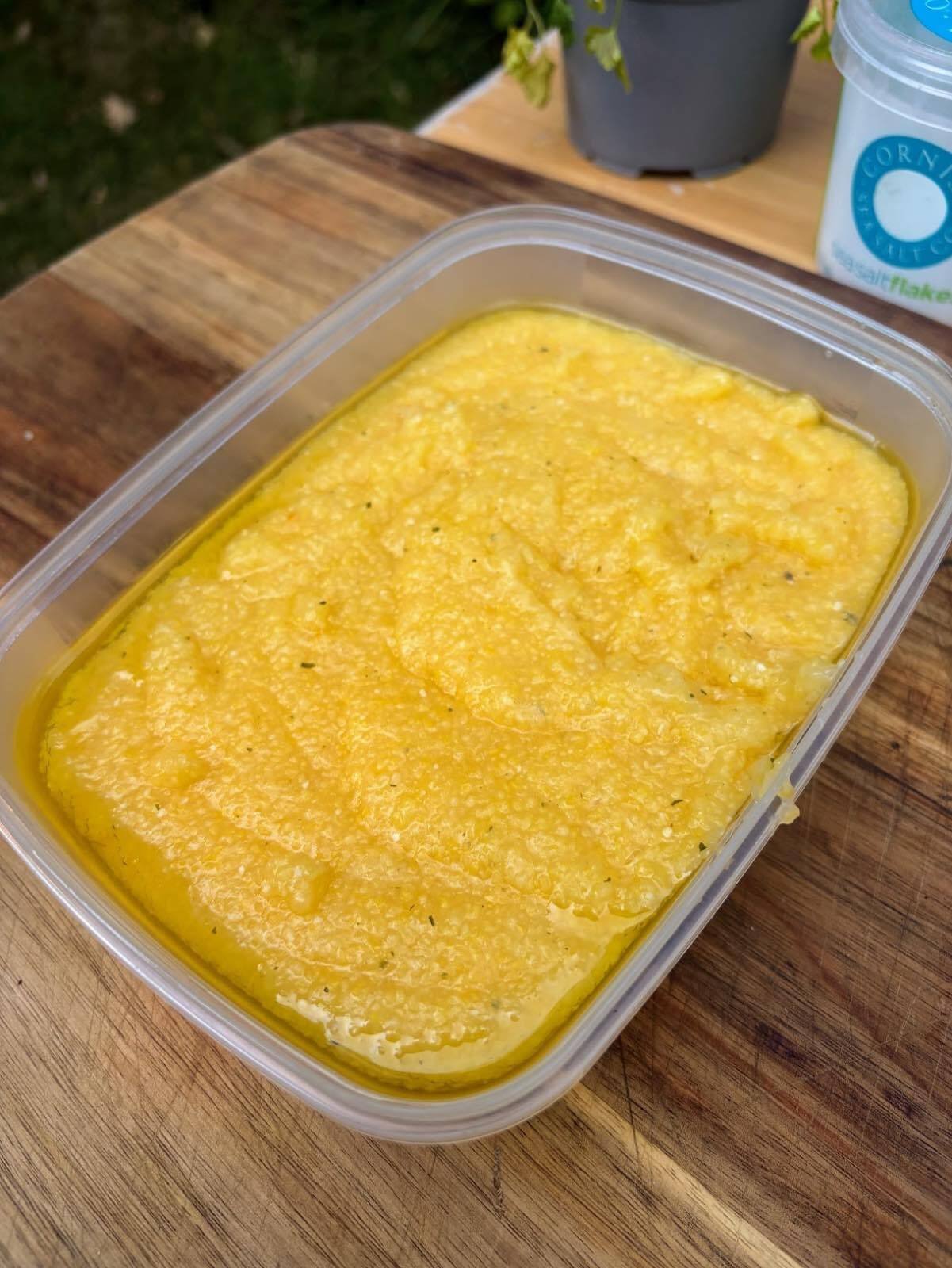
Serves 2
Subscribe to our newsletter and get the latest articles delivered straight to your inbox.

Welcome back, fellow road-trippers! Siobhan here with the penultimate instalment of our epic...

Food is the World’s currency Living in a van for the past eight years has taught me plenty. I've...