.jpg?width=26&height=26&name=image%20(27).jpg)

It's that time of year again! The air is thick with the scent of freshly valeted upholstery and the...
.png?width=26&height=26&name=facebookmobile%20(Custom).png)
.png?width=26&height=26&name=instgrammobile%20(Custom).png)
.png?width=26&height=26&name=twittermobile%20(Custom).png)
.jpg?width=26&height=26&name=image%20(28).jpg)
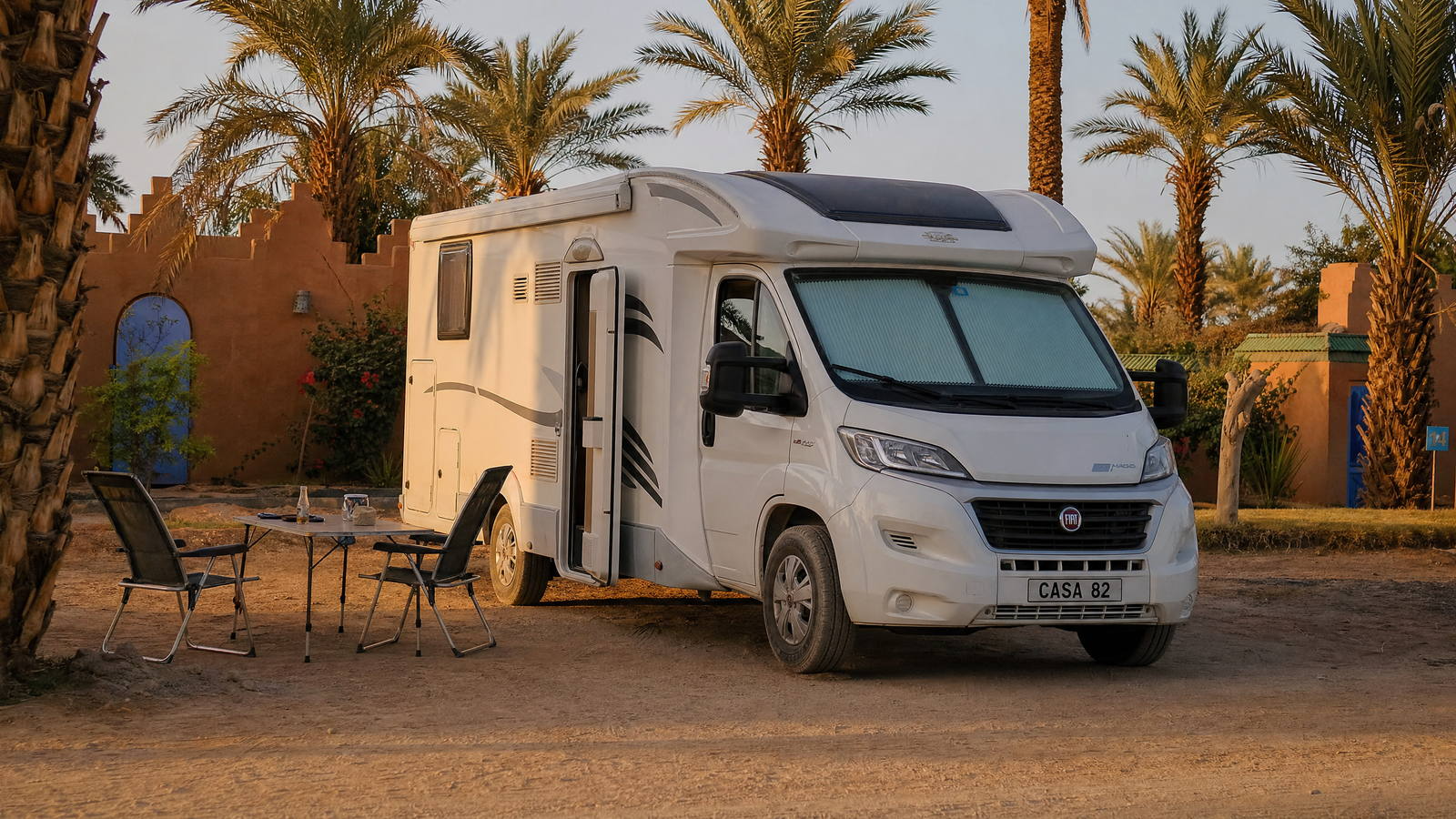
Welcome back, you lovely lot. Today we are pointing the motorhome south, beyond the familiar comfort blanket of France and Spain, across the Strait of Gibraltar and into Morocco. Yes, actual Africa. Not the themed aisle in the supermarket. Not the bit of the campsite where someone is cooking something spicy enough to make the awning flap. Proper Morocco, with mountains, deserts, souks, beaches, mint tea, wandering goats and roundabouts that occasionally feel like a group decision nobody has quite agreed on.
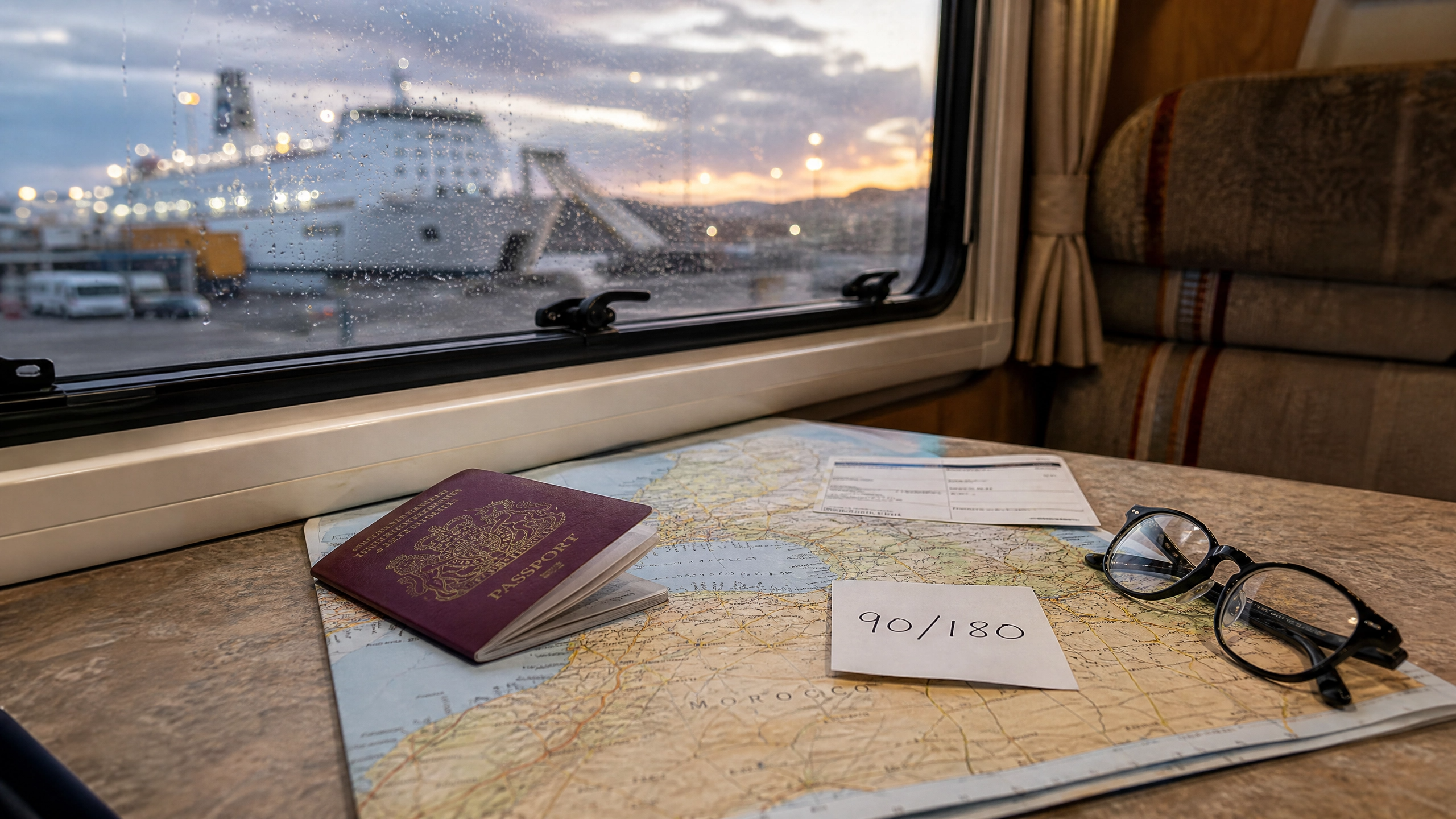
And before anyone says, “Isn’t that a bit adventurous?” yes, it is. That is rather the point. Morocco is one of those trips that sounds wildly ambitious until you realise thousands of European motorhome owners do it every winter. For UK travellers, it also has one very practical bonus: Morocco is outside the Schengen Area, so time spent there can help you manage the post Brexit 90 days in 180 days Schengen limit. Not magic. Not a loophole. Just a sunny pause while your Schengen calendar quietly sorts itself out.
Why Morocco makes sense for motorhome owners
Morocco is brilliant because it gives you a proper change of scene without needing to ship your motorhome to the other side of the planet. One minute you are in southern Spain wondering whether to buy another bag of oranges from a roadside stall, the next you are rolling off a ferry at Tanger Med with your passport stamped, your mirrors adjusted and your brain trying to remember that yes, you still drive on the right.
For winter travellers, Morocco has become a favourite for a very simple reason. It is warmer than most of Europe, generally affordable once you are there, and varied enough to keep even the fussiest passenger entertained. You can do the Atlantic coast, the imperial cities, the Atlas Mountains, palm filled valleys and desert edges without feeling like you have seen the same campsite, the same bakery and the same retired man in beige shorts every morning.
The post Brexit Schengen bit, without making your eyes glaze over
Since Brexit, most UK travellers are treated as short stay visitors in the Schengen Area. The rule is a maximum of 90 days in any rolling 180 day period, and the European Commission explains that you have to count back 180 days from each day of your stay to check you have not gone over the limit. Morocco is not in Schengen, so days spent there do not count as Schengen days.
Now, here is the important bit. Going to Morocco does not instantly wipe your Schengen slate clean like some kind of bureaucratic car wash. What it does do is give time for older Schengen days to drop out of your rolling 180 day window. So if you have spent a long stretch in France, Spain or Portugal, a Moroccan detour can be a sensible way to keep travelling without overstaying in Schengen. Use the official European Commission short stay calculator and keep your passport stamps in order, because border officers are not known for accepting “I worked it out on a napkin near Seville” as formal evidence.
Getting there: the ferry faff is manageable
Most UK motorhome travellers reach Morocco by driving down through France and Spain, then taking a ferry from Algeciras to Tanger Med. DFDS describes the crossing as around 1 hour 30 minutes, with regular daily departures, and Direct Ferries lists several operators on the route, including Balearia, FRS, Naviera Armas and AML. In plain English, this is not some once a week mystery boat where everyone gathers on the quay clutching a chicken. It is a busy, well used crossing.
There are other routes, including ferries from southern Spain to Tangier Ville or from Europe to longer haul Moroccan ports, but Algeciras to Tanger Med is the classic motorhome option because it is short, frequent and set up for vehicles. Tanger Med itself is not central Tangier, so do not roll off expecting to be immediately sipping mint tea in a pretty square. It is a big port, and like all big ports, it has the emotional warmth of a multi storey car park. Get through the formalities, take a breath, and then Morocco starts to open up.
Paperwork: boring, but cheaper than a panic
For British citizens visiting Morocco as tourists, GOV.UK says you can visit without a visa for up to 90 days, and your passport must have an expiry date at least 3 months after the date you arrive. Make sure your passport is not damaged and, very importantly, make sure it is stamped when you enter. GOV.UK warns that some travellers have had problems leaving Morocco when their passport did not have an entry stamp.
For the motorhome, Moroccan customs allows foreign tourists who are not resident in Morocco to bring in vehicles, including camping cars, under temporary admission for a maximum of six months. You normally need your passport, original vehicle registration document, and if the vehicle is not yours, permission from the owner or a rental agreement that allows the vehicle into Morocco. You should also check that your insurance covers Morocco before you go. If it does not, sort it out before the port or be prepared to buy cover at the border, which is rarely the moment anyone feels calm, well rested and full of excellent decisions.
Customs and the little bit of paper you must not lose
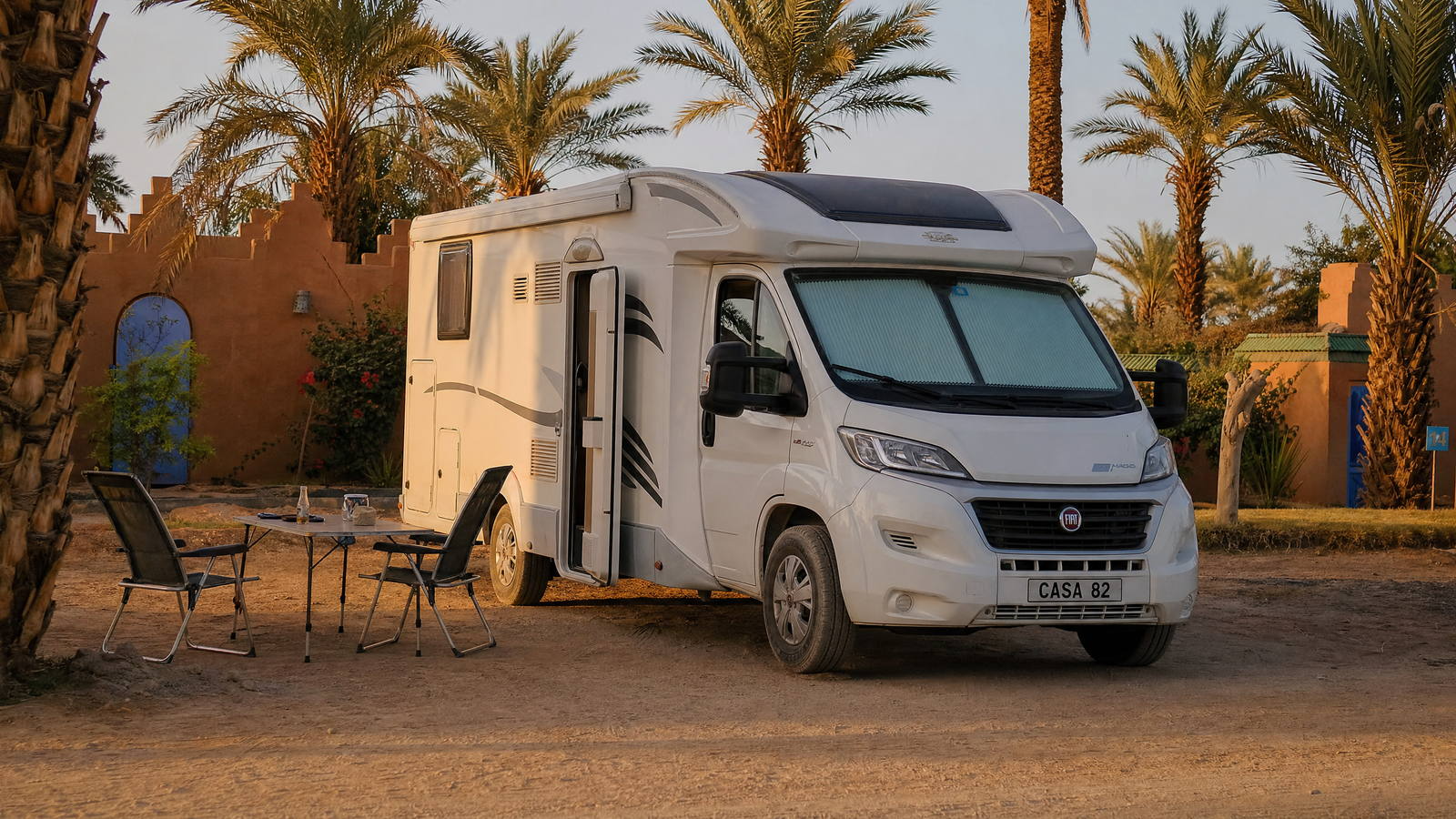
The temporary admission process for the vehicle is handled by customs, either on the ferry or at the entry office, and Moroccan customs issue a document for the vehicle that you may need to show during checks. Treat it like you treat your passport. Do not fold it into the glovebox with old fuel receipts, a melted pen and that mysterious Allen key that came from somewhere important.
The key rule is simple: the motorhome you bring in must leave again within the permitted period, unless you go through official customs procedures. If your vehicle is stolen or cannot be exported, Moroccan customs can still hold you liable for duties and taxes, so insurance matters. It is one of those subjects nobody wants to think about, a bit like grey waste smells in August, but ignoring it does not make it disappear.
What to leave at home: drones and other trouble magnets
Here is the one that catches modern travellers out. Morocco has strict rules on drones. The Moroccan customs guidance says importation by private individuals of unmanned, engine powered and remote controlled flying machines, including drones, under temporary admission is strictly prohibited, and failure to declare them can lead to confiscation and penalties.
In other words, do not tuck a drone into the back of the motorhome because “it will probably be fine”. It probably will not. You may have visions of cinematic desert footage and a YouTube thumbnail where you look windswept and profound. Customs may have a different vision involving paperwork, confiscation and you developing a twitch at the border.
Driving in Morocco: familiar enough, different enough
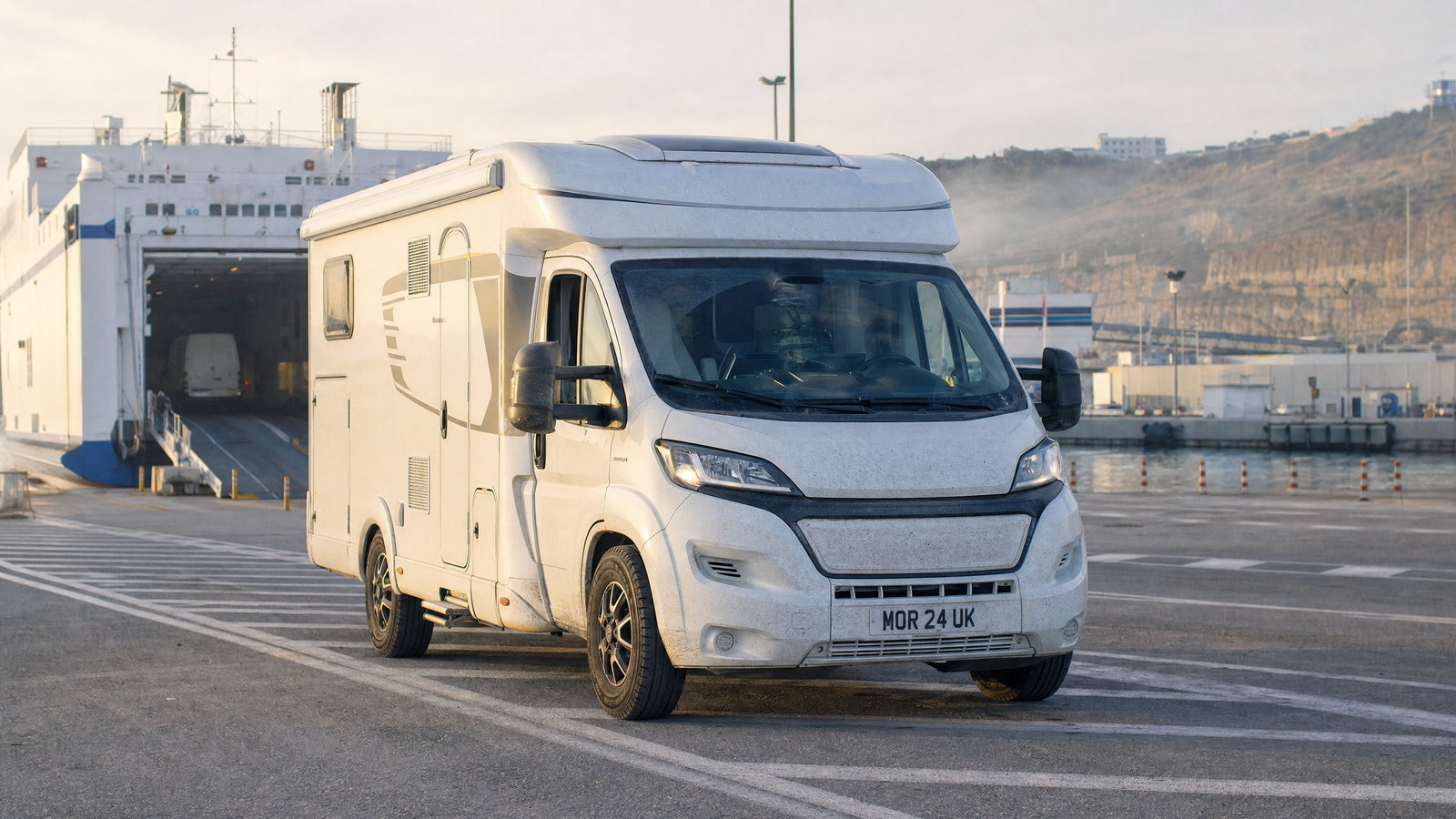
Morocco drives on the right, and many of the main roads and motorways are perfectly manageable in a motorhome. The motorways are generally good, tolls are common, and the big routes between Tangier, Rabat, Casablanca, Marrakech and Agadir are a lot less dramatic than people imagine. You pay, you drive, you try not to eat all the snacks before the next services. Standard road trip behaviour.
Away from the motorways, conditions vary. Some roads are excellent, some are tired, some become very narrow, and some mountain routes require your full attention and a passenger who can read a map without making little gasping noises. La Méridionale notes speed limits of 40 km/h in town centres, 60 km/h in other urban areas, 100 km/h outside built up areas and 120 km/h on motorways, with police checks and fines for speeding. As ever, follow local signs because they are the ones that count.
The golden rule: do not drive at night if you can avoid it
This is not because Morocco turns into a horror film after sunset. It is because roads can contain things your headlights will not appreciate meeting at speed. Donkeys, dogs, pedestrians, carts, goats, unlit mopeds and the occasional heroic lorry all become harder to read in the dark. In rural areas, you may also find road edges that are less “forgiving verge” and more “surprise ditch with consequences”.
Plan your days so you arrive in daylight, especially during the first week while your brain is still adjusting. It is much easier to find your campsite, negotiate a guarded parking area or spot the entrance to an aire when you are not tired, hungry and having a domestic over whether the sat nav said left or whether it merely implied left in a spiritual sense.
Where to sleep: Morocco is not one giant free campsite
This is where expectations need a gentle polish. Morocco is welcoming to motorhome travellers, but that does not mean you can park anywhere, wind out the awning, put the chairs out and announce that you have found paradise. Wild camping is widely discouraged and in many places you may be moved on by the authorities. The better plan is to use campsites, official parking, guarded car parks, service station stops or private land where overnight stays are accepted.
The good news is that Morocco has a decent network of campsites and motorhome friendly places, especially along the Atlantic coast and around popular destinations. Some are charming, some are basic, some have showers that build character, and some will make you deeply grateful for your own facilities. Take a long electric hook up cable, sensible water fittings, levelling ramps and a sense of humour. The last one is not compulsory, but it helps.
Water, waste, gas and fuel: the practical stuff nobody puts on postcards
Water and waste disposal are usually available at campsites, and some service stations may help with practical stops too. As always, ask politely, pay where required and do not be that person who empties waste where they should not. Motorhome travel only works when we all avoid behaving like escaped raccoons with cassette toilets.
Fuel is widely available in towns and along main routes, but do not run low in remote areas or mountain regions just because the dashboard says you have 40 miles left and your confidence says “probably fine”. Gas can be trickier if you are relying on UK or European bottles, so many travellers use a local bottle or plan their gas set up before leaving Europe. Check compatibility and safety properly. Improvised gas solutions are not quirky. They are how you turn dinner into an incident report.
When to go: winter sun, spring colour and summer sweat
Winter is one of the most popular times for motorhome owners to visit Morocco, especially for those escaping the damp grey soup of the UK. The south can be pleasantly warm by day, although nights can still be chilly, especially inland, in the mountains and along exposed coastal spots. Pack layers. Morocco can give you sunburn at lunch and a fleece by dinner, because apparently it enjoys keeping us humble.
Spring and autumn are arguably the sweet spots. The weather is more comfortable, the landscapes can be beautiful, and you avoid the worst of the summer heat. Summer is possible, but inland and southern areas can become fiercely hot. Unless you enjoy slowly poaching inside your own motorhome, summer touring is best treated with caution and a strong preference for the Atlantic coast.
A simple first route that will not scare the kettle off the hob
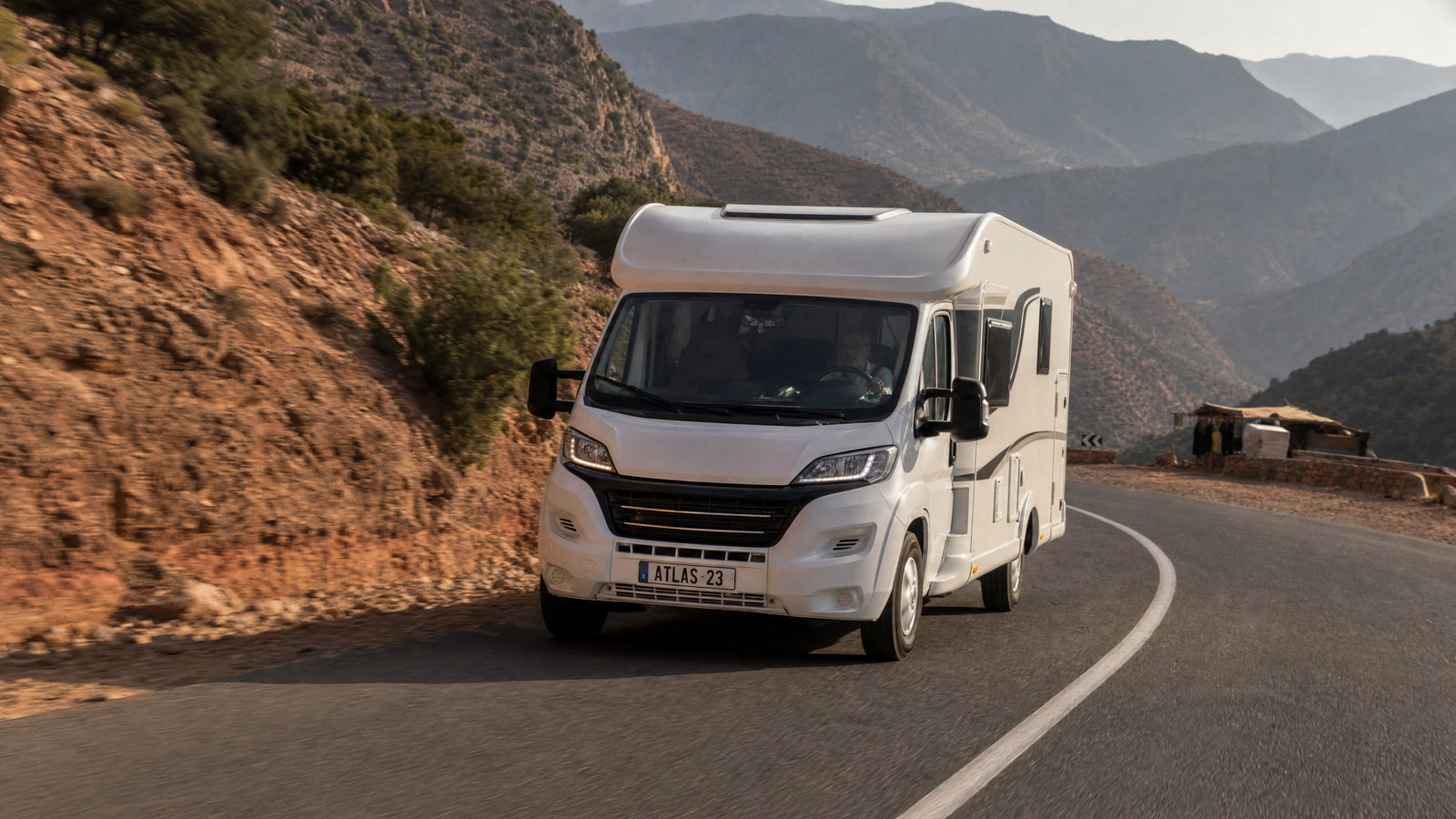
For a first Moroccan motorhome trip, keep it simple. Arrive at Tanger Med, spend a night somewhere easy nearby, then move down the Atlantic side. Asilah is a lovely gentle start, with whitewashed walls, sea air and enough calm to help you stop gripping the steering wheel like you are defusing a bomb. From there, Rabat is a manageable capital stop, and then you can continue towards El Jadida, Essaouira and Agadir.
If you have more time and confidence, loop inland to Marrakech, then towards the Atlas foothills or the famous routes around Ouarzazate and the Draa Valley. Do not try to see everything in one trip. Morocco rewards slower travel. Also, your motorhome is not a magic carpet. It has tyres, payload limits and cupboards that fling open if you get overexcited on bends.
Food, markets and the danger of buying too much pottery
One of the great joys of Morocco is the food. Tagines, couscous, grilled fish, fresh bread, olives, oranges, dates and mint tea all have a way of making your usual motorhome lunch look a bit tragic. Markets are part of the fun, but they can be busy, noisy and overwhelming at first. Go slowly, smile, haggle politely where appropriate and do not buy a rug unless you have measured the motorhome and accepted that you may have to leave a passenger behind to make room.
It is worth carrying some cash, as cards are not accepted everywhere, especially in smaller places. The Moroccan dirham is a closed currency, and GOV.UK notes there are rules on taking dirham into or out of Morocco, along with declaration requirements for large amounts of foreign currency. In normal traveller terms, use ATMs, keep sensible cash, and do not attempt to become the Bank of Agadir in your glovebox.
Culture and common sense: be a guest, not a nuisance
Morocco is a Muslim country, and while tourist areas are used to visitors, it pays to be respectful. Dress more modestly in towns, villages and religious areas than you might on a Spanish beach. Public displays of affection are best kept low key. During Ramadan, be especially considerate about eating, drinking and smoking in public during daylight hours.
Most travellers find Moroccans friendly and helpful, but like anywhere, use your common sense. Keep valuables secure, be cautious in busy markets, agree prices before accepting services, and avoid letting unofficial “helpers” attach themselves to you unless you actually want help. A firm, friendly “no thank you” is one of the most useful phrases you can pack.
Dogs, pets and the return to Europe
If you travel with a dog, do not leave the pet paperwork until the week before. Morocco is outside the EU pet travel system, so returning into the EU or UK has extra requirements compared with simply crossing between European countries. You should check the latest rules with your vet, your ferry operator and official government guidance before planning the trip.
Also think practically. Morocco has stray dogs, hot weather, different diseases and busy streets. Some dogs will take it all in their stride and consider every goat a potential new friend. Others will spend three months looking offended. Your job is to know which kind of dog you own before you discover it halfway through a souk.
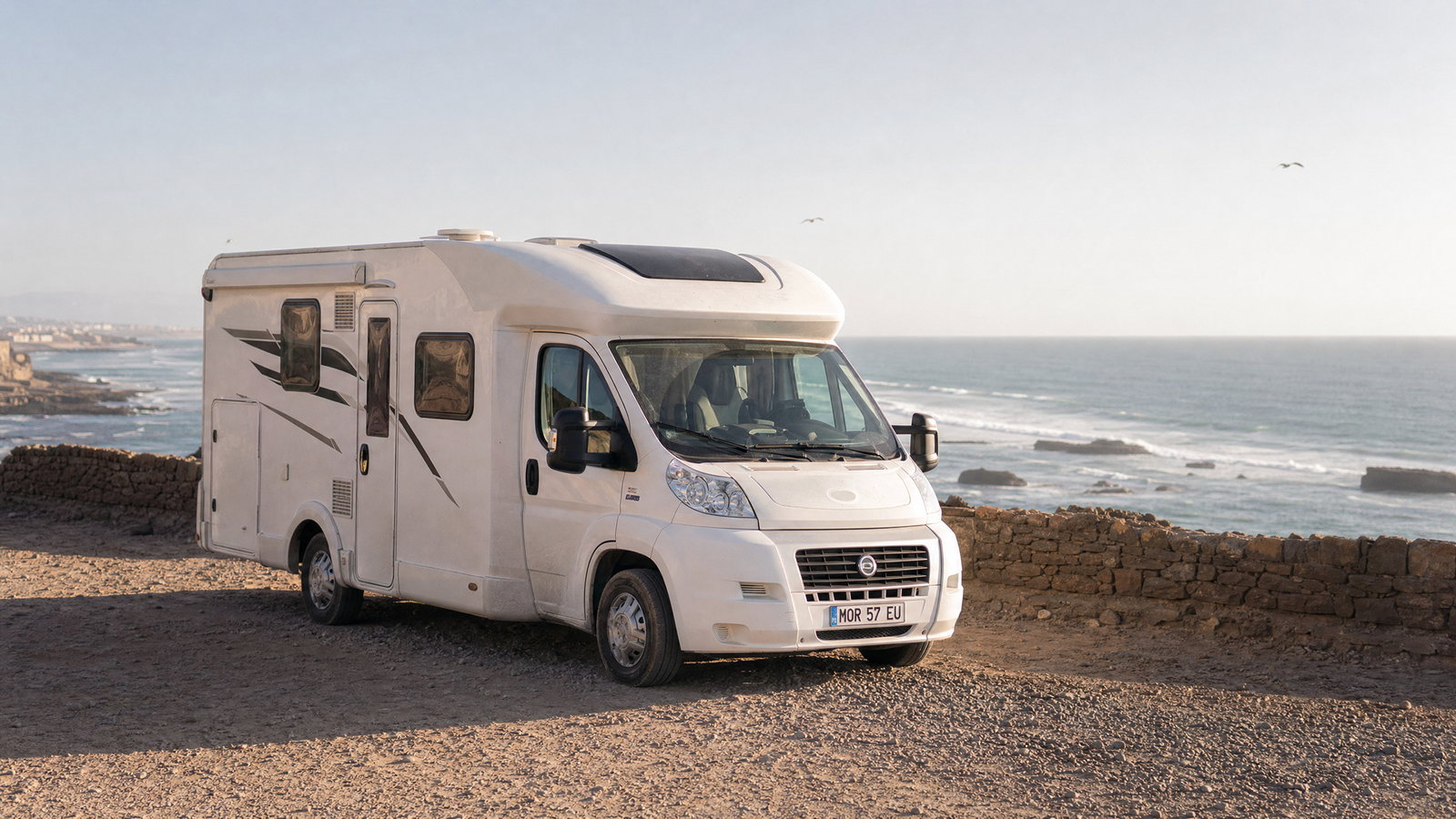
Is Morocco right for everyone? no, and that is fine
Morocco is not the easiest first foreign motorhome trip. If your idea of adventure is a campsite in Normandy with a bakery 300 yards away and a heated toilet block, start there and enjoy every croissant. Morocco asks a bit more of you. The driving can be livelier, the admin matters, the campsites vary and the cultural shift is real.
But if you are comfortable touring in Spain and Portugal, if you can handle ferry paperwork without turning into a Victorian ghost, and if you fancy something that feels properly different, Morocco is a cracking next step. It gives you sunshine, scenery, value, adventure and, for UK travellers juggling Schengen days, a very useful non Schengen pause.
Final thoughts: go prepared, then enjoy it
The secret to Morocco is not bravery. It is preparation. Check your passport, insurance, vehicle documents, pet rules if needed, customs requirements and Schengen dates before you go. Leave the drone at home. Keep copies of important documents. Do not drive at night if you can avoid it. Build in slow days. Drink the mint tea. Accept that your motorhome will get dusty. Dust is just evidence that you did something more interesting than reorganising the garage.
Morocco is not Europe with different tiles. It is its own place, and that is exactly why it is worth going. Treat it with respect, travel with patience, and you may find it becomes the trip you talk about for years. Possibly every time someone mentions winter sun. Possibly until your family starts hiding the photo album.
Subscribe to our newsletter and get the latest articles delivered straight to your inbox.

It's that time of year again! The air is thick with the scent of freshly valeted upholstery and the...
Let us be honest for a moment. When you step into a pre-loved motorhome, you expect to be greeted...
Picture this. You've just bought your first magnificent motorhome. It's gleaming on the driveway,...
